
The Temple of King Le Dai Hanh is located in the Special National Relic Area of Hoa Lu Ancient Capital (in Tay Hoa Lu ward, Ninh Binh province). This is a place that preserves many precious artifacts, associated with the history of the Pre-Le Dynasty and the formation and development of the Dai Co Viet state. Among them, the Phu Viet pair placed symmetrically on both sides of the incense table at the pagoda hall is considered a typical artifact and has been recognized as a National Treasure since 2020.
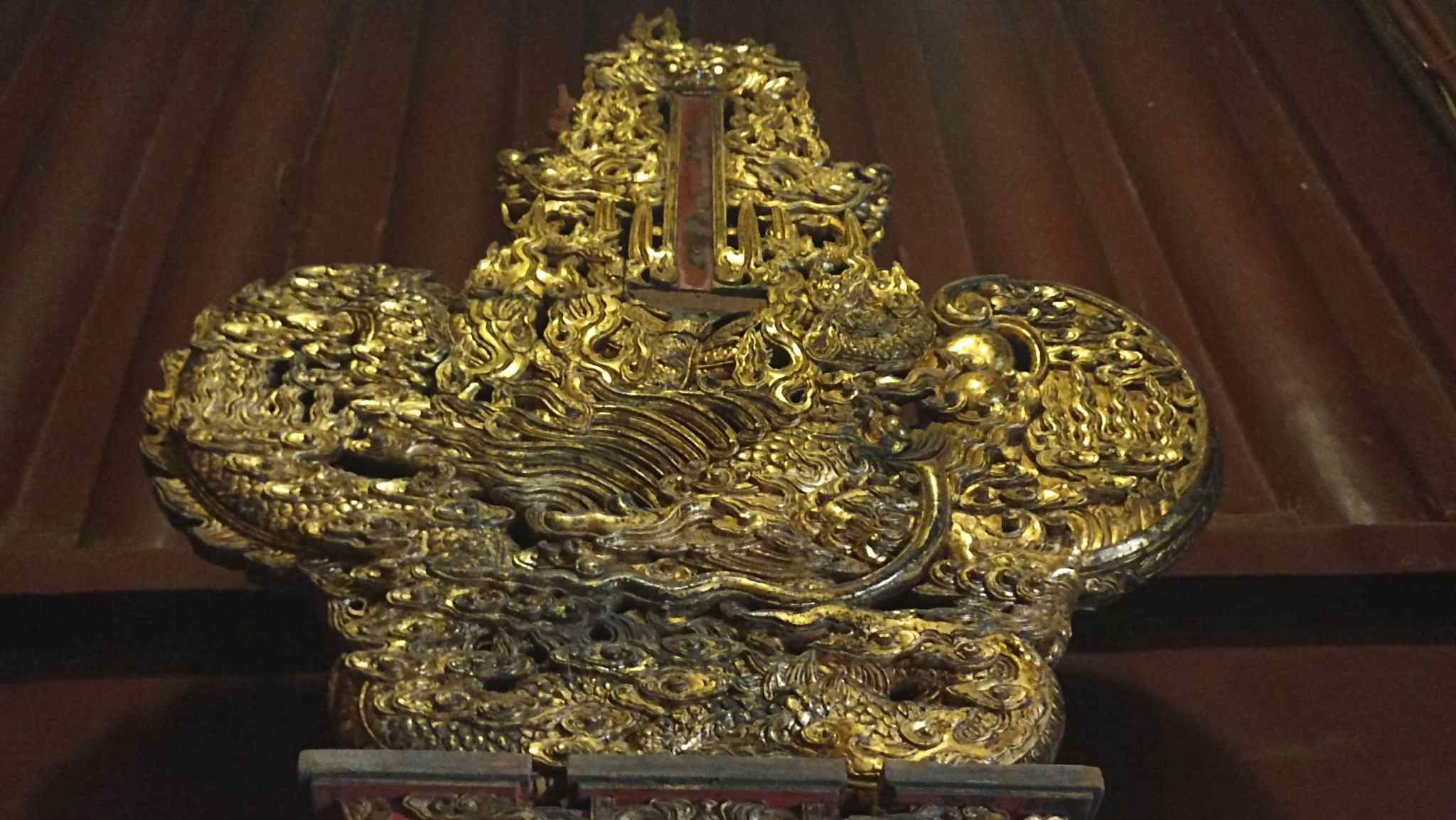
Mr. Nguyen Cao Tan - Deputy Director of Ninh Binh Provincial Department of Tourism said that the Phu Viet pair at King Le Dai Hanh Temple consists of 2 pieces, made of wood, lacquered with gold. Each piece weighs about 42kg, more than 3.1m long. Phu Viet on the left is 317cm long, on the right is 316cm long. Both artifacts are placed symmetrically in the worship space, creating a solemn and ancient look for the temple.
Also according to Mr. Tan, Phu Viet originated from a type of war axe, which was later sacredized into sacrificial objects in the worship space. At King Le Dai Hanh's temple, this artifact no longer simply carries the meaning of military weapons but becomes a symbol of power, military strength, divine power and honor for the king who has made great contributions to the nation's history.
The most special feature of the Phu Viet pair lies in the head of the artifact. This part is created into a "dragon nest", consisting of a large dragon and two dragon cubs. The mother dragon's body is bent into 5 sections, surrounded by two dragon cubs twisted, appearing and disappearing in the fire swords of the mother dragon. Although smaller in size, the dragon cubs are still fully carved with four legs, creating a lively and symbolic composition.
The top part of Phu Viet ends with the image of a devil's face, which is identified as Kala or Kirtimukha in Champa culture.
The tongue of Phu Viet is made of a fire halo sprayed from a large dragon's mouth, carved with fire sword images, elaborate cloud patterns, gold-plated in the same color as the head, with harmonious size and shape, creating a symmetrical shape for Phu Viet's overall shape.
The body of Phu Viet has an octagonal plane, unlike most Phu Viet currently in Vietnam, the body plane is usually round.
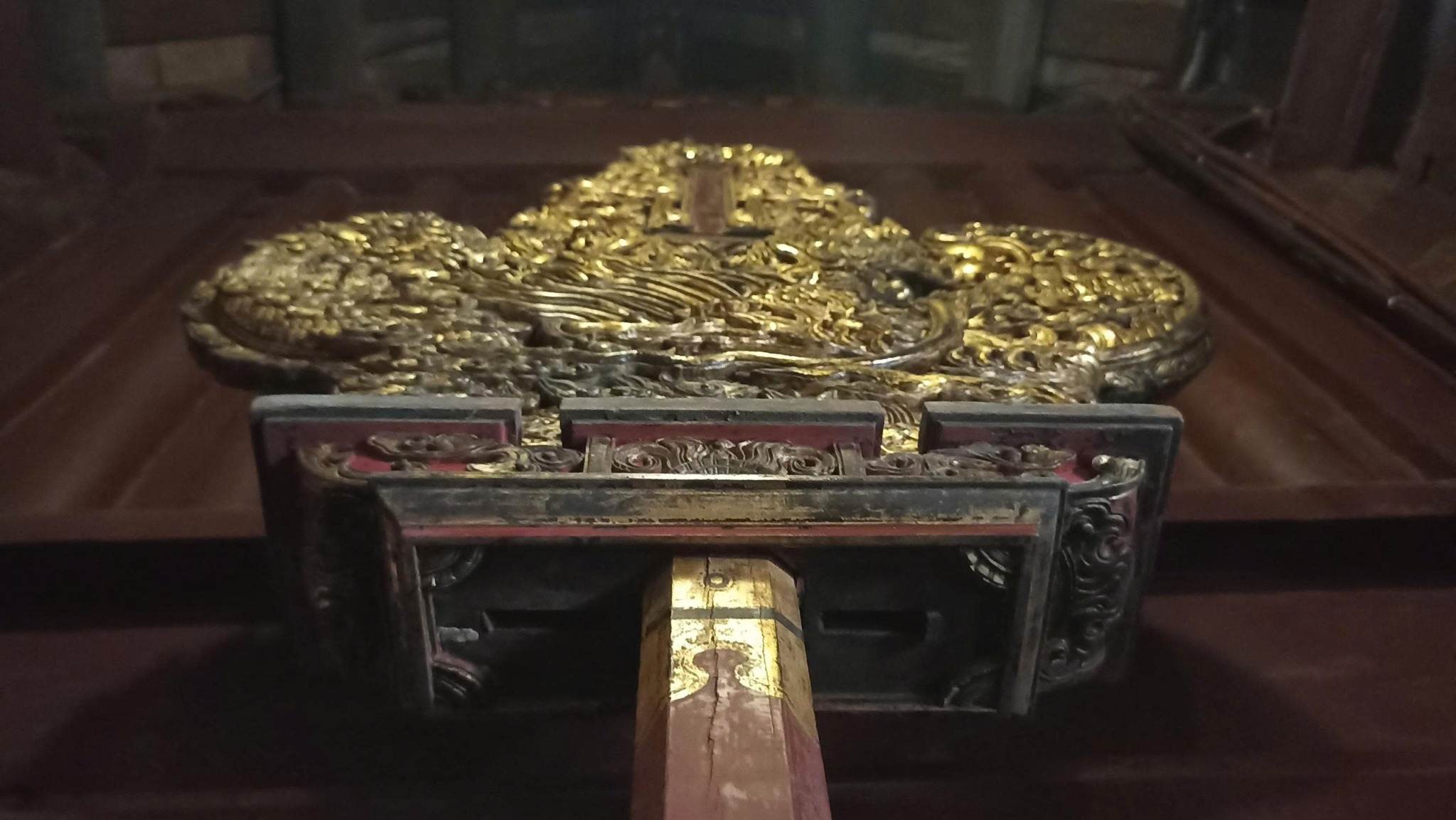
After more than 400 years of existence, the Phu Viet pair at the temple of King Le Dai Hanh is still basically well preserved. In which, Phu Viet on the left still retains intact details, Phu Viet on the right has 3 broken labels at the top. This is a rare artifact that is still relatively intact in the system of attachments and boxes in ancient worship spaces.
The outstanding value of the Phu Viet pair lies not only in its long age but also in the level of sophisticated sculpture. The elaborate carved lines, unique dragon and nest composition, and lace and gold-plating techniques show the creative talent and skillful hands of Vietnamese artisans from the 17th century" - Mr. Tan said.


