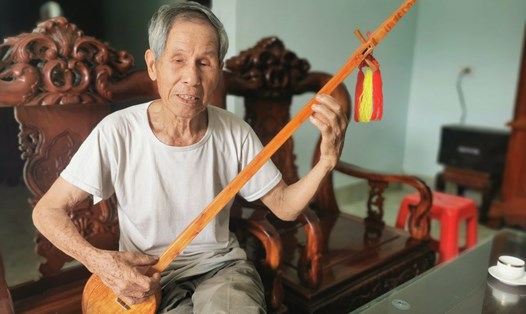
Through the research process, in your opinion, what is the most special point of Then singing and Then rituals?
- The art of performing Then rituals of the Tay people is a comprehensive whole of elements: Time, cultural space, ritual script, performer, performance method and relationship between performer - audience.
In the monograph on Then in Bac Son (Lang Son), I focused on clarifying the locality of Bac Son Then through comparison with Then in other regions, with Nung people and Hau Dong of Vietnamese people. At the same time, I deeply assessed the role, changes and reform issues on stage today to find solutions to preserve and apply heritage in contemporary life.
What is the significance of researching Then rituals and singing Then in identifying national cultural identity and what are the challenges that this heritage is facing, according to you?
- Researching Then rituals and Then singing helps identify the spiritual, religious and worldview values of the Tay people, affirming the position of Then as an important component in the picture of Vietnamese culture, creating a scientific basis for heritage protection in the spirit of UNESCO.
However, heritage is facing challenges from urbanization, faulty generational transmission and theaterization trends. Separating Then from traditional practice spaces easily reduces ritual function and social meaning. We need to correctly identify challenges to have appropriate preservation methods, maintaining the original value.
In the current context, according to you, what is the boundary between conservation of the original and bringing Then rituals and Then singing into the performance, tourism or education space?
- The boundary lies in preserving the practice subject, cultural meaning and core expression system. Adjusting the form is necessary, but it must not change the nature and cultural function of the Then heritage.
At Viet Bac College of Culture and Arts, we have built industry codes, subjects and a methodical teaching staff to go in the right direction of preservation and development in an educational environment associated with local tourism.
How do you assess the role of folk artisans and from a cultural management perspective, what solutions do we need to preserve the Then heritage sustainably?
- Artisans are creative subjects, are extremely important "people holding knowledge"; wherever artisans want to preserve, the heritage is still fully preserved.
Therefore, it is necessary to support them in terms of mechanisms, teaching conditions and livelihoods according to the community's point of view as the center of UNESCO. In terms of management, it is necessary to combine community preservation with scientific documentation, strengthen heritage education and control performance exploitation. In particular, it is necessary to update practices and link information technology applications to the research, preservation and teaching process of heritage.
What is the significance of introducing Then singing into teaching at Viet Bac College of Culture and Arts for students and the work of training upcoming human resources?
- This helps students understand heritage from a community perspective, forming a sense of responsibility to protect national culture. Students from highland villages - which are the cradle of heritage - when trained in disciplines such as: Then singing, folk songs, cultural management... will become an effective successor human resource. This is a practical and meaningful educational environment to preserve and conserve the current Then heritage.
What is the most important thing when approaching folk culture and what do you expect from the younger generation today?
- The core is a combination of scientific methods, empathy for the community and respect for the subject from UNESCO's perspective. I expect Then heritage to continue to be practiced in the community, passed on and promoted controlledly in contemporary life without losing its identity.
For young people, I hope you come to folk culture with patience, respect and responsibility. Research is not only to understand, but to join the community in keeping the heritage alive and spreading its beauty.
Thank you Dr. Nguyen Thi Tuyet Nhung!
It's a bit of a bit of a bit of a bit of a bit of a bit.
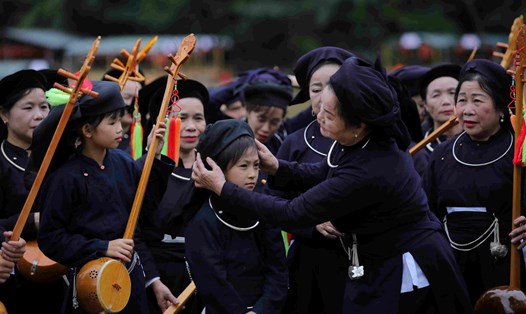
In 2019, the United Nations Educational, Scientific and Cultural Organization (UNESCO) listed the Then Practice of the Tay, Nung, and Thai people in Vietnam on the List of Representative Intangible Cultural Heritages of Humanity. Then is an indispensable ritual practice in the spiritual life of the Tay, Nung, and Thai people in Vietnam, reflecting the concepts of humans, the natural world and the universe. In which, Then singing is a synthesis of many artistic activities such as dance, piano, and singing.