Appearance is an advantage, but not a decisive factor
Immediately after the film crew announced Tang Thanh Ha playing the role of Empress Nam Phuong, many opinions said that the actress did not really evoke the image of the last Empress of the Nguyen Dynasty through documentary photos. With a historical figure that has been deeply imprinted in public awareness, that reaction is understandable.
However, cinema has never been the most prototype-like competition.
Artist Hanh Thuy shared with reporters that, for heavy historical roles, choosing experienced actors is often a safer option.
They not only have to transform into characters but also bear pressure from historical values and public expectations. According to her, the appearance resembling the prototype is just an advantage to help audiences access the characters more easily, not a mandatory condition.
Cinema also has makeup, costumes and visual language to bring actors closer to the character. More importantly, the demeanor, style and ability to convey inner feelings.
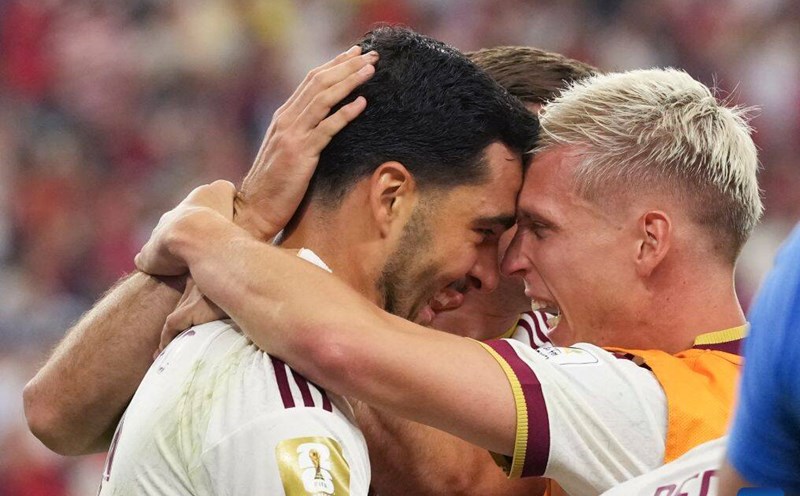
World film history has many proofs of this view. Rami Malek was once suspected of not being like Freddie Mercury in Bohemian Rhapsody, but thanks to his excellent makeup and transformation, he won the Oscar for Best Actor. Gary Oldman is also very different from Winston Churchill in physique, but his acting and styling in Darkest Hour helped him win the Oscar statuette.
Or in Asia, Sun Li when playing the role of Hi Quy Phi in "Hau Cung Chan Hoan Truyen" also does not have many similarities with the historical prototype. However, subtle acting and the ability to portray the character's journey of maturity have turned this into one of the lifetime roles of the actress. After many years, what the audience remembers is not the difference in appearance but a Hi Quy Phi full of life on screen.
These cases show that appearance is just a "entrance ticket". What keeps the character in the hearts of the public is still acting.
Let the movie answer
According to artist Hanh Thuy, if she has to choose between an actor who is very similar to the prototype but does not act enough and an actor who is not completely similar but has the ability to convey the character, she will lean towards the second option. Because if it is only similar in form but does not express the psychology and weight of the character, the persuasive power will also be greatly reduced.
From the perspective of the producer, director Hoang Vu also believes that the public has the right to agree or oppose the choice of actors, but should not rush to judge when they first see a few images. According to him, audiences currently only see a very small piece of the work. Some characters only truly "bloom" when the story reaches the end of the film and there are choices that seem unreasonable if separated but are completely convincing in the overall script.
The controversy surrounding Tang Thanh Ha also reflects the audience's high expectations for films exploiting Vietnamese historical figures. The public wants to see respect for history, but that does not mean cinema must copy the prototype of each line. Cinema still needs creative rights to recreate people with emotions, as long as it does not distort the spirit of history.
Therefore, the question "do actors need to be like the prototype or not" probably has no absolute answer. Similar appearance is always an advantage, but it only helps the audience recognize the character at first sight. What makes a role become classic is still the ability to make viewers forget the actor so that they can only see the character.