Year of the Dragon, year of the Snake, I don't look at you". On the last day of the year of the snake, it is impossible not to mention the year of At Ty 2025, which brought many disasters (floods) to our compatriots. I don't know how the ancients portrayed the snake on ceramics, I asked collector Nguyen Dong - the person who is commonly given the "title" - "King knows his face, lord knows his name" in the Vietnamese antique world.
Mr. Dong shook his head, "In the ancient pottery items of my country, I am lucky to have the opportunity to own them, none of them have decorative motifs with snakes, even the smallest ones, or in the form of complementary to the landscape, like snakes crawling on the grass".
Among the 12 zodiac animals, only 3 are majestic and majestic, and are often put on ancient ceramics, namely dragons, tigers, and horses. Compared to buffaloes and horses, buffaloes are friendly and close to Vietnamese people, with the wet rice civilization, but the popularity of images on ancient Vietnamese ceramics is still not as high as horses. I have never seen a cat. Other animals, such as dogs, appear in "supporting roles" - running under the feet of horse-riding hunters. Chickens and pigs are seen on some folk items, often drawn according to folk paintings...".
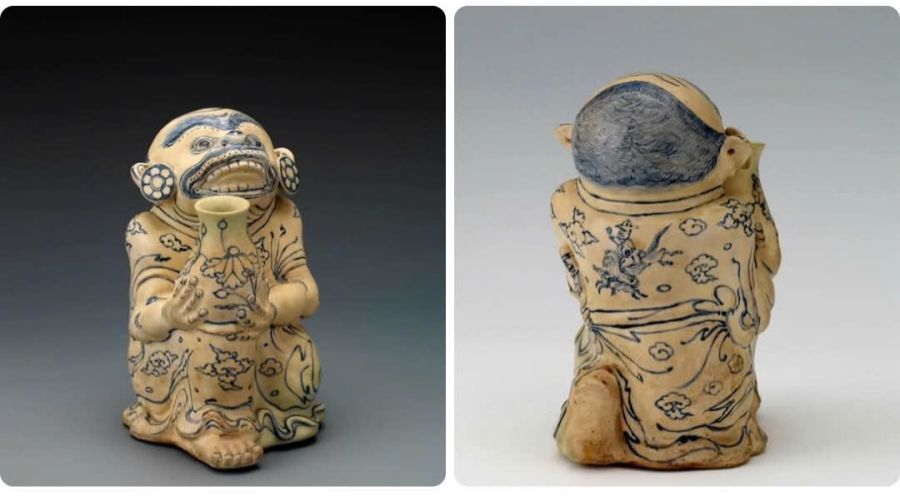
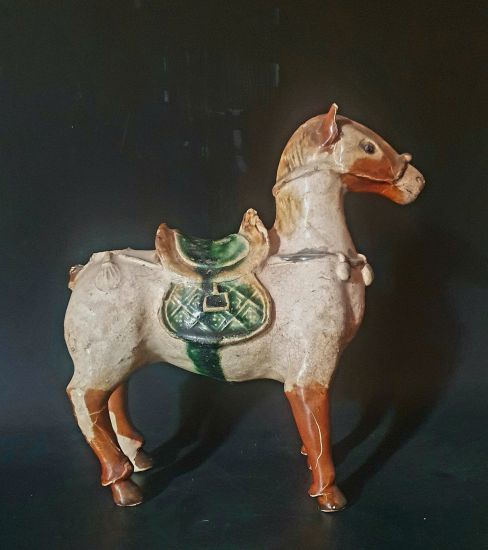
Mr. Dong entered the inner room, carefully brought out a horse; with a cautious, respectful and affectionate look, placed it on the desk. "Please take a look. This one is about 500-600 years old, around the end of the Tran Dynasty. I once thought, this is a water lily - used to pour water when grinding ink, but then, I guessed that the ancestors used this horse as a wine bottle because of its quite large capacity...".
Admiring the "horse's eyes" - the bottle poured with wine covered with green glaze, white glaze, and rare brown glaze that must be said to be the most precious, I fell in love with the "eyes" immediately. The horse's eyes - the artisan's eyes are dotted with dark blue, a very humorous look, truly in the style of "eyes attracting all eyes".
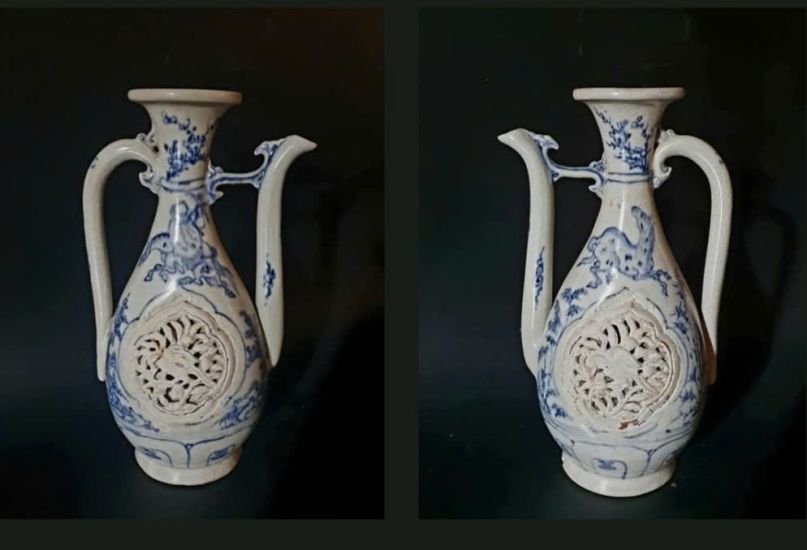
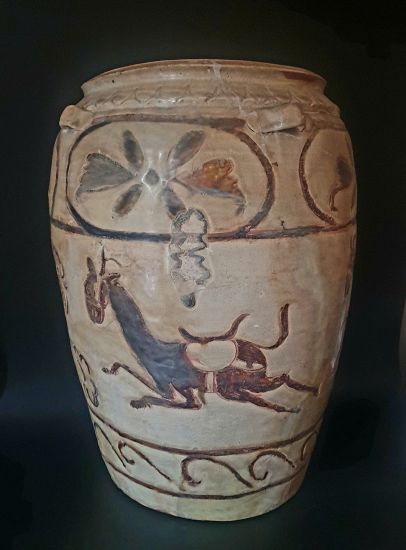
After "em ngua" - the wine jar, Mr. Dong continued to bring out a jar shaped like a zither (antiquities are often called zither jars) belonging to the Chu Dau pottery line, around the 15th century - the early Le dynasty, "the exact era is the Hong Duc period ruled by the sage King Le Thanh Tong - a peak period of the Le dynasty" - Mr. Dong said.
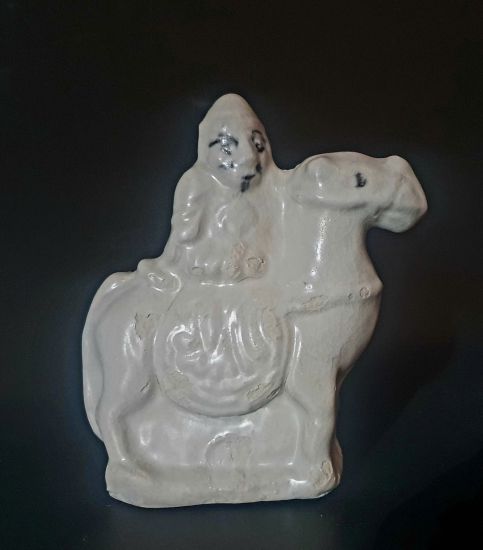
In addition to 2 reliefs carved with bird-shaped canopies on the body, the vase has illustrations of spring scenery with picturesque landscapes of mountains and rivers, on the neck of the vase is a cluster of blooming apricot blossoms, especially, on both sides of the vase's shoulders there are motifs, one side is a young horse turning its head and galloping, the other side is a mandarin riding a horse for spring travel. All motifs on the vase exude the peaceful and peaceful scenery of the Dai Viet people in the late 15th century.
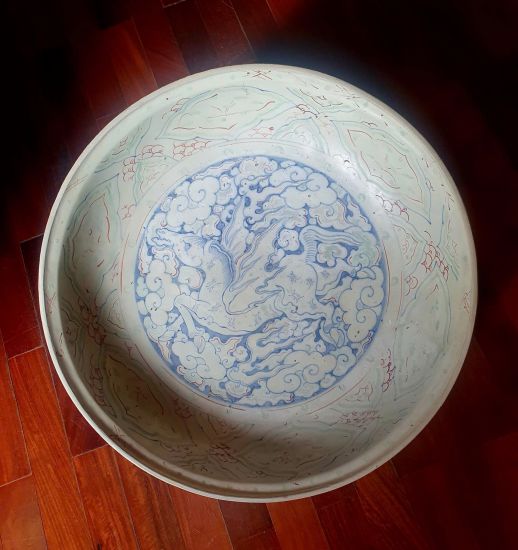
Happily opening a treasure trove of collections of up to thousands of large and small items, Mr. Dong showed me a tam thai enamel plate with a diameter of about 45cm - one of the ancient ceramics found on a shipwreck in the ocean near Cu Lao Cham (Hoi An) in the years 1997-2000.
The ceramics of the early Le dynasty (XV, XVI centuries), the decorative themes are very diverse, especially the items exported to Muslim countries in the Middle East are all belonging to the white enamel ceramic line with cobalt blue paint (commonly called blue floral ceramics) and the blue floral ceramic line combined with multi-color painting on enamel through the second firing, there are many decorative items with images of winged divine horses (Thien Ma, Pegasus - according to Greek mythology) flying among blue clouds," Mr. Dong explained.
I admired deeply, the plate was painted with a lively Thien Ma (Horse) spreading its wings amidst graceful and subtle horizontal cloud clusters, with many elegant gold borders.
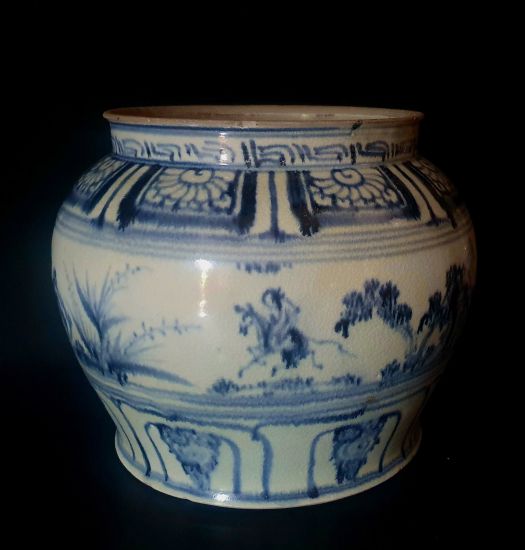
The earliest horse image of Vietnamese fine arts appeared around the mid-11th century, at Phat Tich Pagoda. The earliest horse image on ancient pottery appeared starting from items produced from the Tran Dynasty. If you have learned and remembered history well enough, you will surely understand why!" Mr. Dong smiled, then introduced me to see a few more items with "em Ngo" motifs. Many items, truly "perfect"!
At the end of the year, leisurely prepare rare items, sit and admire, especially items for the Year of the Horse - looking at each item, I don't know if he can imagine what the artisan thinks when creating such beautiful items! And what can he say about the philosophy of human vision, shaping art, and ancient pottery making techniques of Vietnamese people?", I asked Mr. Dong.
The collector said in a gentle, leisurely tone: "Horses are useful in wartime and peacetime. Horses symbolize strength but also soaringness; loyalty; advancement; good things ahead, success will come.
Enjoying the ancient beauty, a glimpse like through the image of Thien Ma allows me to think of a new year 2026 taking off and reaching far. The image of the war horse from the Tran Dynasty - showing the heroic spirit of Dong A - meaning expressing a spirit of resilience for the people and the country - will continue to this day.
Or as simple as a horse - the wine jar that she likes, imagine, in peacetime, a wine feast, even just imagine it is a new spring peace celebration feast, everyone shares the joy of a cup of wine poured from a horse's jar, peacefully discussing national plans and people's livelihoods,... Aren't you happy!