
On April 25, Mr. Mai The Trung - Deputy Director of Quang Tri Provincial Museum - said that the British cave expedition had just discovered many ancient stone axes in En cave after a survey at Phong Nha - Ke Bang National Park.
According to Mr. Trung, the British Royal Cave Expedition led by Dr. Howard Limbert found 5 stone axes at En Cave.
These are prehistoric labor tools, clearly reflecting the cultural imprints of the ancient inhabitants, showing that the process of humans conquering nature in this area has taken place thousands of years ago.
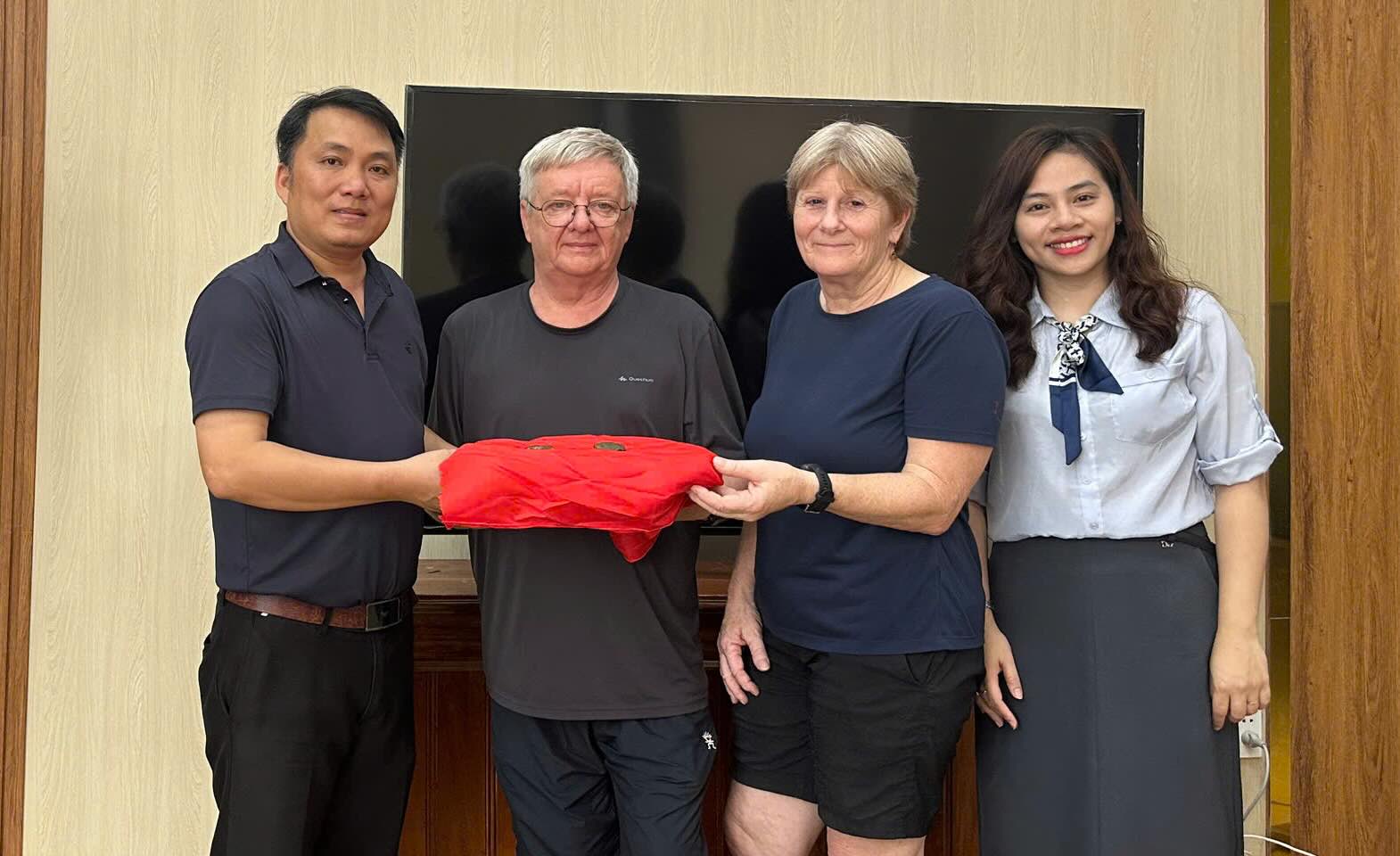
The stone axes discovered are located in sedimentary layers with traces of the cultural layer eroded by floodwaters in En cave.
Mr. Trung said that, according to initial assessments by experts of Quang Tri Provincial Museum, these artifacts belong to the Neolithic period, located in the Bau Tro cultural system, dating back about 6,000 - 8,000 years.
The artifacts are made of silica stone, including two main forms: horizontal shoulder axe and horizontal shoulder axe. On the body and blade of the axe, there are still characteristic marks of grinding and carving. Notably, the handle and blade of the axe show signs of wear and tear along with defects, suggesting that they have been used many times in the life of prehistoric people.
According to experts, this is an important archaeological discovery, contributing to affirming the presence of ancient residents in the cave system in Phong Nha - Ke Bang National Park.
Previously, in this area, many artifacts belonging to later stages such as metal objects, bronze axe molds belonging to Dong Son culture, along with bronze Buddha statues and Cham characters were also recorded. These discoveries show the continuation and continuous development of cultural classes through many periods.
Notably, Dr. Howard Limbert and his wife donated 2 stone axes found at En cave to the Quang Tri Provincial Museum and 2 to the Hanoi Museum to serve research and display work, contributing to promoting local cultural values to domestic and foreign tourists.


