
Attending the program were: Comrade Bui Thi Minh Hoai - Member of the Politburo, Secretary of the Party Central Committee, Chairman of the Central Committee of the Vietnam Fatherland Front; Comrade Pham Thi Thanh Tra - Secretary of the Party Central Committee, Deputy Prime Minister; Comrade Lam Thi Phuong Thanh - Member of the Party Central Committee, Minister of Culture, Sports and Tourism; along with comrades who are members of the Party Central Committee, former members of the Party Central Committee, alternate members of the Party Central Committee, leaders of Central and Hanoi City Departments, Ministries, and Branches.
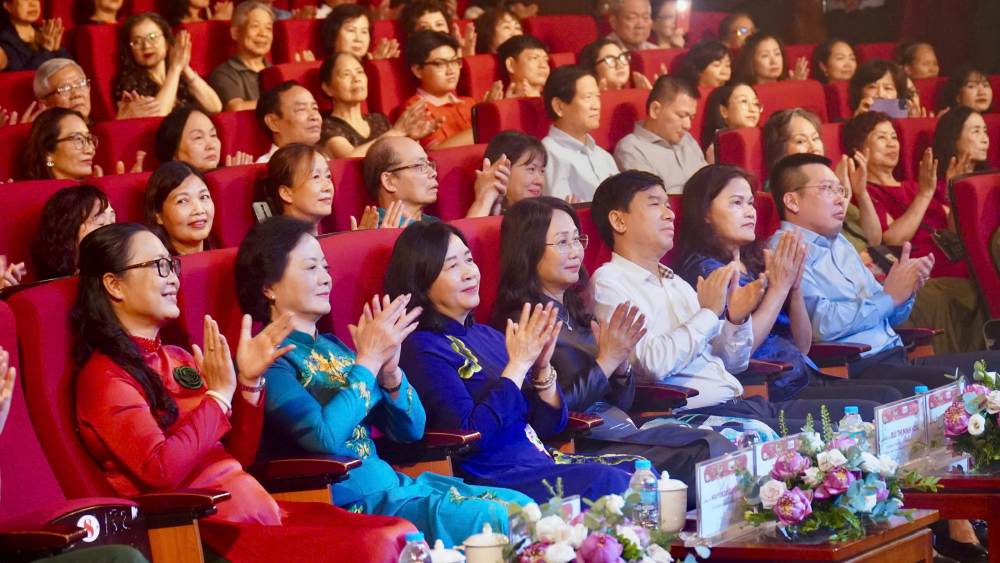
With a duration of about 80 minutes, "Sáng mãi tên Người" is staged as a continuous flow from the past to the present, recreating the journey to find a way to save the country, revolutionary ideology and the values that Uncle Ho left for the Vietnamese nation today.
Right from the first minutes, the program created emotions with the opening grand scene "Journey of Light". In the stage space immersed in darkness, the sound of sea waves, wind and footsteps echoed. The image of a small child holding an oil lamp appeared as a symbol of ideal light leading the way.
Since then, modern mapping technology has gradually opened up a historical space with milestones associated with Uncle Ho's life, from Nha Rong Wharf, the journey of wandering to find a way to save the country to the years of revolutionary activities.
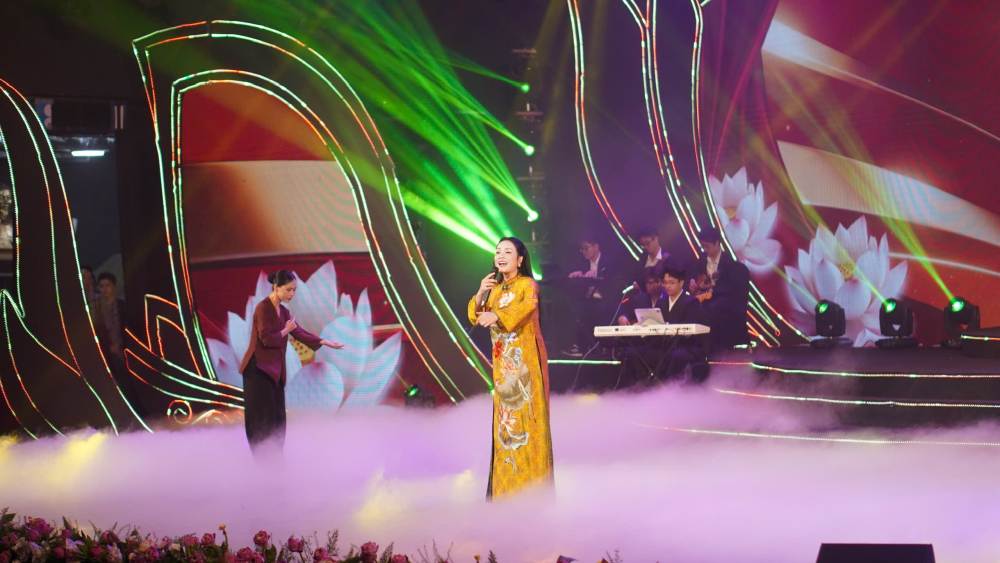
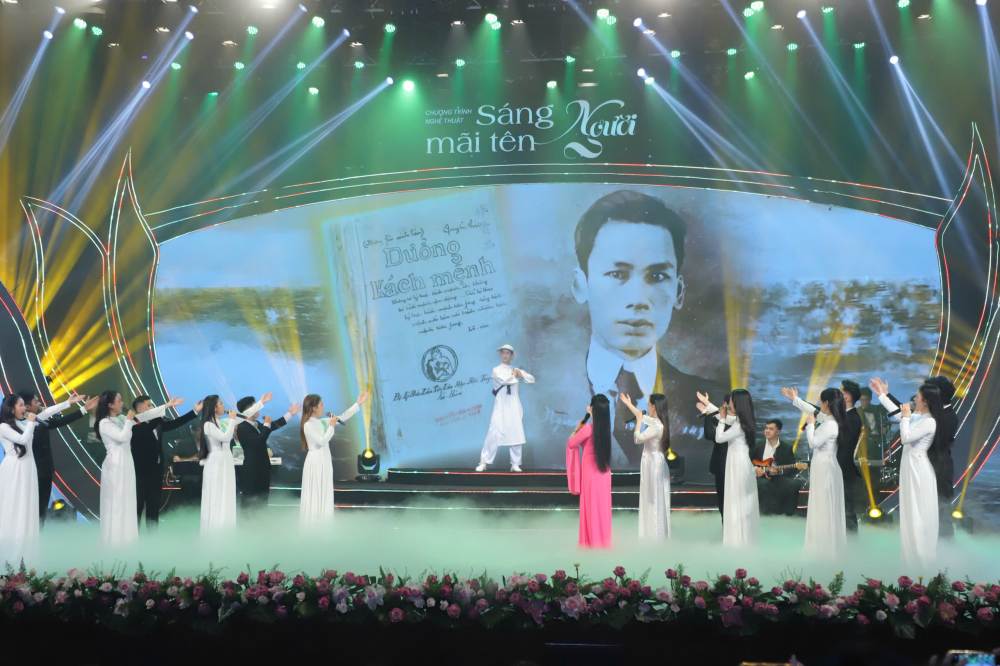
The noteworthy point of "Sáng mãi tên Người" lies in the continuous storytelling instead of simply connecting musical and dance performances. The program is divided into three distinct parts but still maintains a seamless emotional flow.
In part I - "The person who seeks the image of the country", the audience is led back to the homeland of Nghe An, the childhood of young Nguyen Tat Thanh and the burning aspiration to save the country through songs such as "From Sen village", "Night listening to boat singing remembering Uncle Ho", "Footprints ahead", "Aspiration", "The road we walk".
In particular, the scene of Nguyen Tat Thanh before leaving Nha Rong Wharf is considered one of the emotional highlights of the program. Without too many dialogues, lights, music and stage movements, it created a lingering atmosphere for the historical moment opening the nation's journey to find a way to save the country.
If the first part is about emotions and memories, then part II - "Guiding Light" has a clearer political color when focusing on depicting the ideology, morality and revolutionary path that President Ho Chi Minh and the Party have chosen.
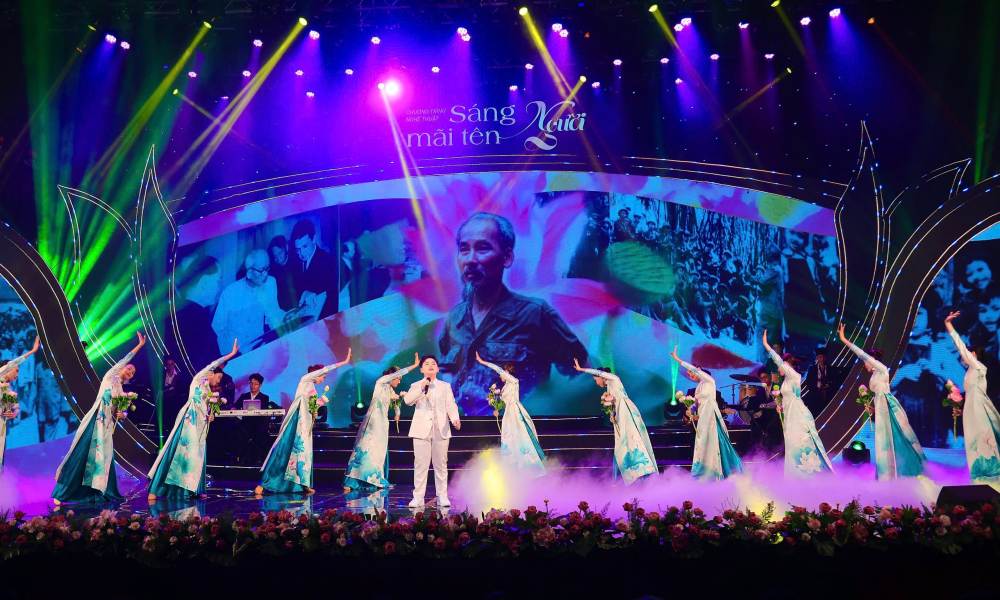
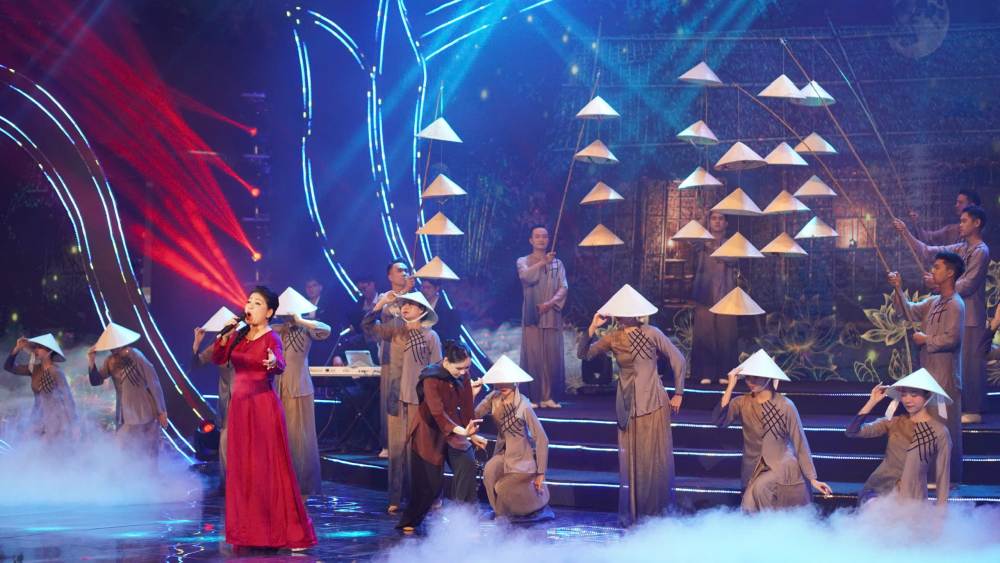
The performances "Uncle Ho's words before leaving", "Ho Chi Minh song" or the report "Ho Chi Minh - endless source of inspiration" continued to extend the emotional flow, but were expressed more softly through artistic language instead of heavily slogan-oriented interpretation.
Closing the program is part III - "Vietnam records his words" with a youthful, modern and ambitious spirit to develop the country. The performances "What's more beautiful", "Love Vietnamese smiles", "Prosperity of Vietnam shines", "The country rises" combined with the image of renovated Vietnam have brought a bright and energetic atmosphere.
Besides invested content, the program also brings together many artists such as Quoc Hung, Tan Nhan, Anh Tho, Quang Ha, Nguyen Tran Trung Quan, Hoang Bach...
Not only recreating President Ho Chi Minh's revolutionary journey in emotional artistic language, "Your Name Forever Shines" also spreads patriotism, aspiration to contribute and national pride to today's public, especially the young generation.


