Throw away the risks of the old year
Right from mid-December, many families in Ta Phin, Ta Van, Muong Bo, Ban Ho communes (Lao Cai province) have started preparing Tet offerings according to the customs of the Red Dao people. Depending on the conditions of each household, the feast can be large or small, but it must be full of rituals.
In the wooden house of Mr. Tan Van Sieu's family - Meritorious Artisan of Sa Seng village (Ta Phin commune), the Tet atmosphere comes earlier than usual. The pig raised all year round is slaughtered for rituals, banh day with pumpkin seed filling and peanut filling is pound evenly, neatly arranged waiting for worshiping time.
According to custom, the Red Dao family, no matter how difficult, must slaughter at least one pig to worship Tet. Wealthy families can slaughter two to three pigs. The pig after being cleaned is divided into three parts: head, two front thighs, two hind thighs. Along with that are six banh day cakes, three cups of water, one cup of wine, an incense bowl and banknotes, all solemnly displayed on the altar.
According to Mr. Tan Van Sieu, the host of the ceremony must be a shaman or an elderly person with prestige in the lineage. In a quiet space, in the full presence of family members, the shaman performs a ritual to ward off bad luck, dispel the risks of the old year, and invite ancestors and the deceased to celebrate Tet with their children and grandchildren.
Today, the family prepares a Tet feast including pigs, cakes, fruits, wine, gold coins... asking our ancestors to witness and bless our children and grandchildren to be healthy, plants to grow green, livestock to develop, and everything to go smoothly," shaman Ly Sai Ngan murmured prayers.
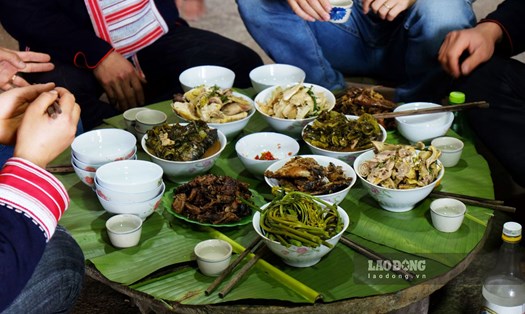
After the worshiping ceremony, the offerings are lowered and processed into Tet meal trays. Relatives and villagers are invited to celebrate with the family. The Red Dao people's Tet not only takes place in one house, but rotates around the village, house after house, creating a joyful atmosphere that lasts throughout the early spring days.
During Tet days, after wishing relatives a Happy New Year, the Red Dao people living at the foot of Hoang Lien Son mountain gather at the community living space. The elderly tell old stories, reminisce about customs, young people sing, dance, play folk games. This is also an opportunity for young men and women to meet and make love through simple songs - many couples fall in love from spring gatherings like that.
14 ancestor-leading dances
On the 30th of Tet, from adults to children, everyone chooses the most beautiful Dao Red costumes for themselves, preparing to welcome the New Year's Eve moment. The most special highlight in the Lunar New Year of the Dao Red people is the Tet Nhay festival - a ritual imbued with spiritual elements, only held in families that are qualified to perform the ceremony.
On the morning of the first day of Tet, the ritual begins with the "threatening to cut down trees" scene. The clan leader holds a knife and swings it in front of peach and plum trees, symbolizing reminding trees to multiply, bloom and bear fruit. People in the clan intervene, pray - sending wishes for a bumper crop.
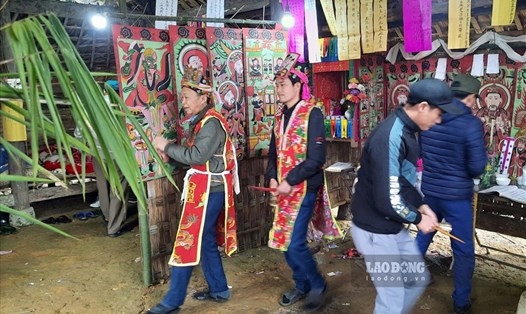
Next, young men – called "sài cỏ" – under the guidance of a shaman perform 14 sacred dances. These dances mean opening roads, building bridges to welcome ancestors, returning home for Tet, and enjoying fortune.
To greet deceased parents and ancestors, the dance is only performed with one leg, head bowed, index finger raised high. To invite fairies and young women to descend to earth, the dance is described by a stork dance, simulating the scene of storks spreading their wings and flying far, then frantically looking for a place to stop. The dance inviting gods is described by the leisurely and powerful steps of a tiger...
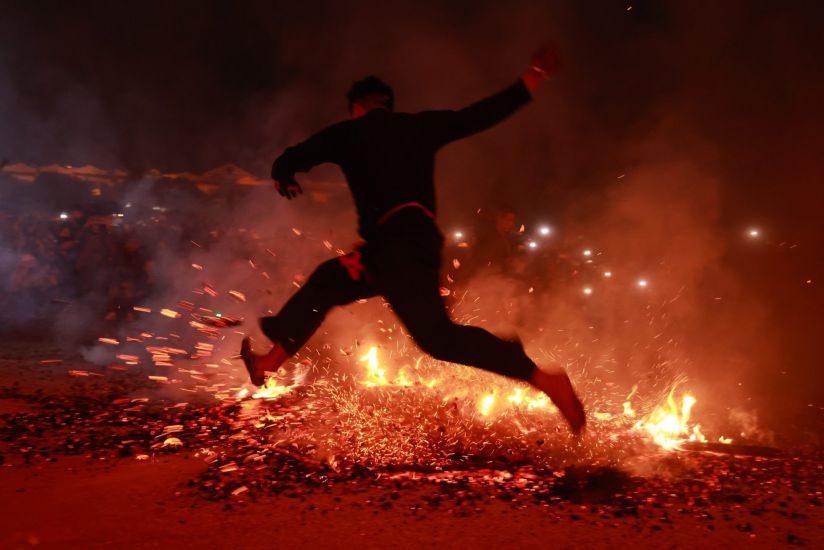
Meritorious Artist, shaman Ban A Ton (Bac Ha) shared: "According to the beliefs of the Red Dao people, the fire has a particularly important meaning in daily life and culture, spirituality. Fire is considered a god who helps drive away evil spirits and diseases, bringing warmth and a prosperous and wealthy life. Therefore, at the beginning of spring, the Red Dao villages organize fire jumping ceremonies to pray for a peaceful new year, favorable weather, and abundant harvests.
Shaman Ban A Ton said: Each dance is a story, simulating the image of ancestors descending to earth, the working life, hunting, plowing, and weaving of children and grandchildren. The sound of the trumpet and echoes in turn, the shaman turns the buffalo horns to the four directions to call the gods.
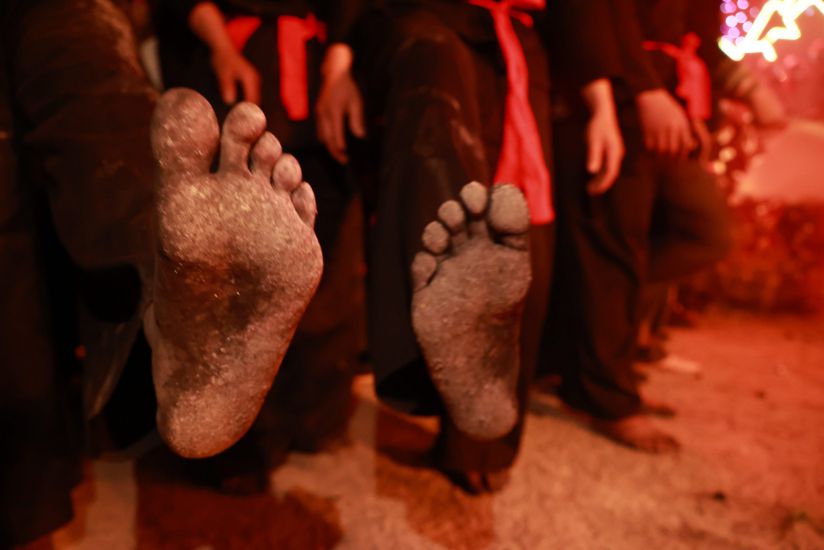
The most special is the "sài cỏ" ritual of rushing into a burning red charcoal stove to "bathe in charcoal" - washing and purifying the body and mind before welcoming ancestors. When the charcoal stove is burned red, young people in a state of high concentration, following the command of the shaman, successively jump over the charcoal fire without getting burned - a clear manifestation of spiritual belief and the protection of the gods.
According to the leader of Bac Ha Commune People's Committee, although socio-economic life is increasingly developing, the Red Dao people still maintain traditional Tet customs. The sacred dance steps of the Red Dao people are like a string connecting the past with the present. Tet dance is not only a religious activity but also a precious cultural asset, contributing to the development of community tourism, creating livelihoods for people in the Northwest highlands.