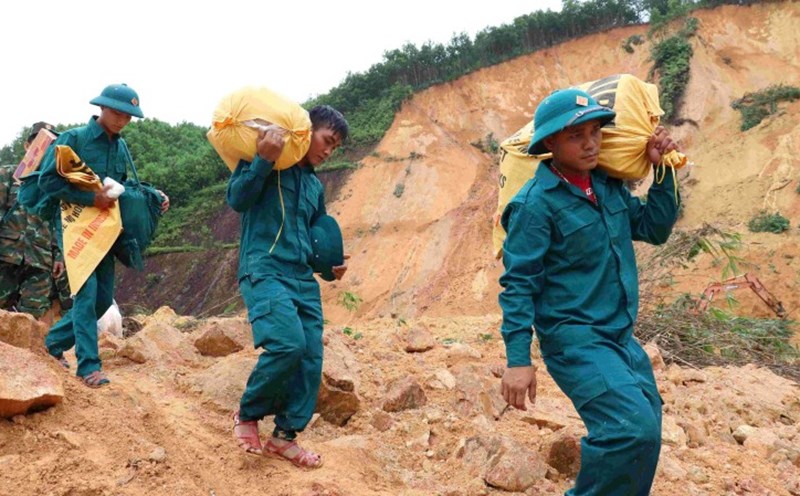
Carrying" films up the mountain
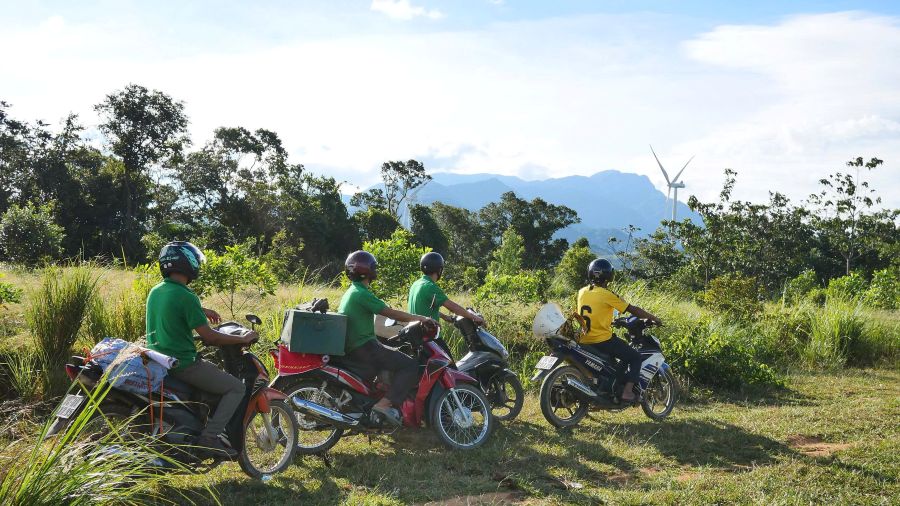
In the late afternoon, when the sunlight at the end of the day just faded behind the rolling mountains, the road to Lom village, Dan Hoa commune, Quang Tri province, seemed to lengthen because of the sharp curves and steep slopes. From the center of Quang Tri province, the vehicle carrying projectors and loudspeakers of Mobile Cinema Team No. 1 of Bac Quang Tri departed early. Nearly 200 km of mountain crossing with winding and dangerous mountain passes made the whole team only have time to set foot in the village when night had fallen.
Lom village is nestled in a valley, surrounded by a deep green forest. The whole village has 106 households with 455 Chut people living. No electricity, no audiovisual facilities, when night falls, the village is immersed in familiar silence. However, tonight, the atmosphere suddenly changes completely.
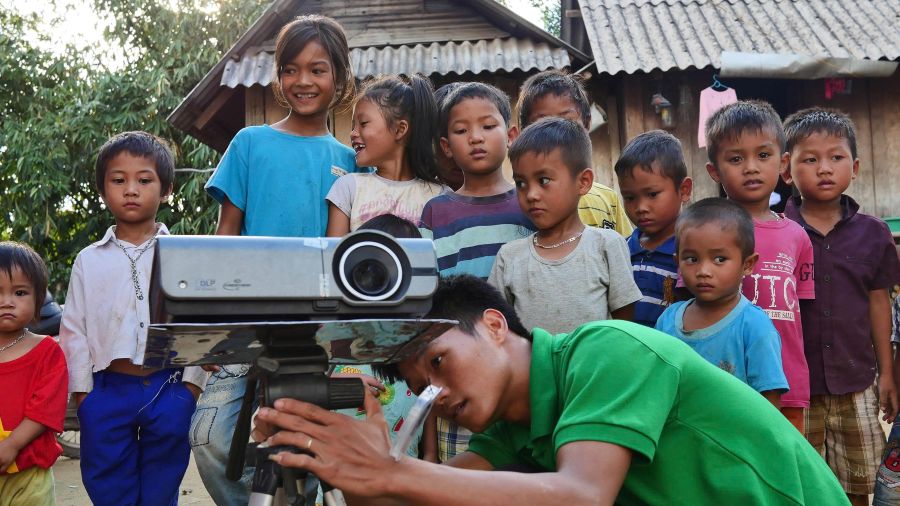
Children stained with soil and sand, round eyes watching the film crew set up the cinema in front of the cultural house. From the fires still smoking, the grandmothers and mothers temporarily put aside the rice cooker, put on their clothes and went out into the yard. "It's been a long time since the village has been so happy. Everyone is looking forward to film screening time" - Village Head Ho Bien said with a smile.
Eating a bowl of noodles quickly after a long journey, the team members quickly got to work. Some stretched tarpaulins, some installed projectors, arranged loudspeakers, and some started generators. Just a few minutes later, the cultural house yard was full. The sound of the generator rang out, tearing apart the familiar quiet space of the village.
Quickly wiping a drop of sweat on his forehead, Mr. Dinh Minh Hieu, an officer of the film screening team, smiled softly: "Every trip to the highland people is hard, the road is steep, and it is even more difficult when it rains. But when I see the people excited and joyful, all fatigue seems to disappear. When the people are happy, we are also happy too.
That night, Lom village was bustling as if it was a festival. Documentary films about Truong Son soldiers, Ho Chi Minh road, about the August Revolution, National Day September 2nd and the feature film "Địa đạo" opened up a new and attractive world for the people here.
Filmmakers" who love their profession
Attached to the profession for 38 years, Dinh Minh Hieu's youth is almost entirely devoted to film trips up mountains. His hair has turned gray, his legs are no longer agile, but his eyes still shine with joy every time the screen is lit at night.
As long as I have strength, I still want to go, because people need me. Every time I see the village light up during the movie screening night, I find my work very meaningful" - Mr. Hieu said with a smile.
At Mobile Cinema Team No. 2 in Nam Quang Tri, Mr. Tran Van Hoan is the youngest person. More than 10 years in the profession, he participates in 9 screenings each year, each lasting nearly 20 days.
Every 18-20 days, I go to film screenings with the crew. It turns out, for nearly 9 months of the year, I am away from my family, living with people in remote villages" - Mr. Hoan said.
The lives of mobile cinematographers are associated with long journeys. At night, they set up film screens, and during the day, they continue to cross forests and slopes. Wherever it is home, wherever it is bed, they live with their compatriots like blood relatives.
According to Mr. Duong Truong Khanh, Deputy Director of the Center for Culture and Cinema, working as a mobile film projectionist means accepting to stick with a large area, high mountains, deep forests, and harsh weather. In some places, vehicles cannot enter, and equipment must be transported by motorbike, even walking many kilometers or rowing boats to reach the projection point.
Difficulties are like that, but people in the profession have never thought about stopping. Because more than anyone else, they understand that in those remote villages, people are still waiting. The footage not only brings laughter, moments of relaxation but also conveys policies and guidelines closer to the people, contributing to narrowing the gap between the plains and the mountains.