
On July 23, at the 48th session of the World Heritage Committee held in Busan, South Korea, a report on the conservation status of the World Heritage Site Thang Long Imperial Citadel Center - Hanoi was approved.
According to Decision No. 48 COM 7B. 25, the World Heritage Committee commends Vietnam for the results achieved in building and making intentions related to the restoration and future structure expected for the heritage site, as well as continuing to promote the preparation of technical documents for the restoration of Kinh Thien Palace in the coming time.
At the same time, the Committee also encourages and promotes the use of the heritage site to become a meeting place, organize festivals, cultural and political events, and through intangible cultural heritage to restore the original function of the heritage site as a cultural, religious, and political center of Vietnam, making the heritage meaningful to the community and stakeholders, bringing vitality and sustainability to the heritage space.
According to the assessment of the Committee, the organization of activities such as Lunar New Year and traditional rituals right in the space that was once the capital of many dynasties contributes to affirming that Thang Long Imperial Citadel is a living heritage, meaningful to the community and creating sustainable vitality for the heritage site.
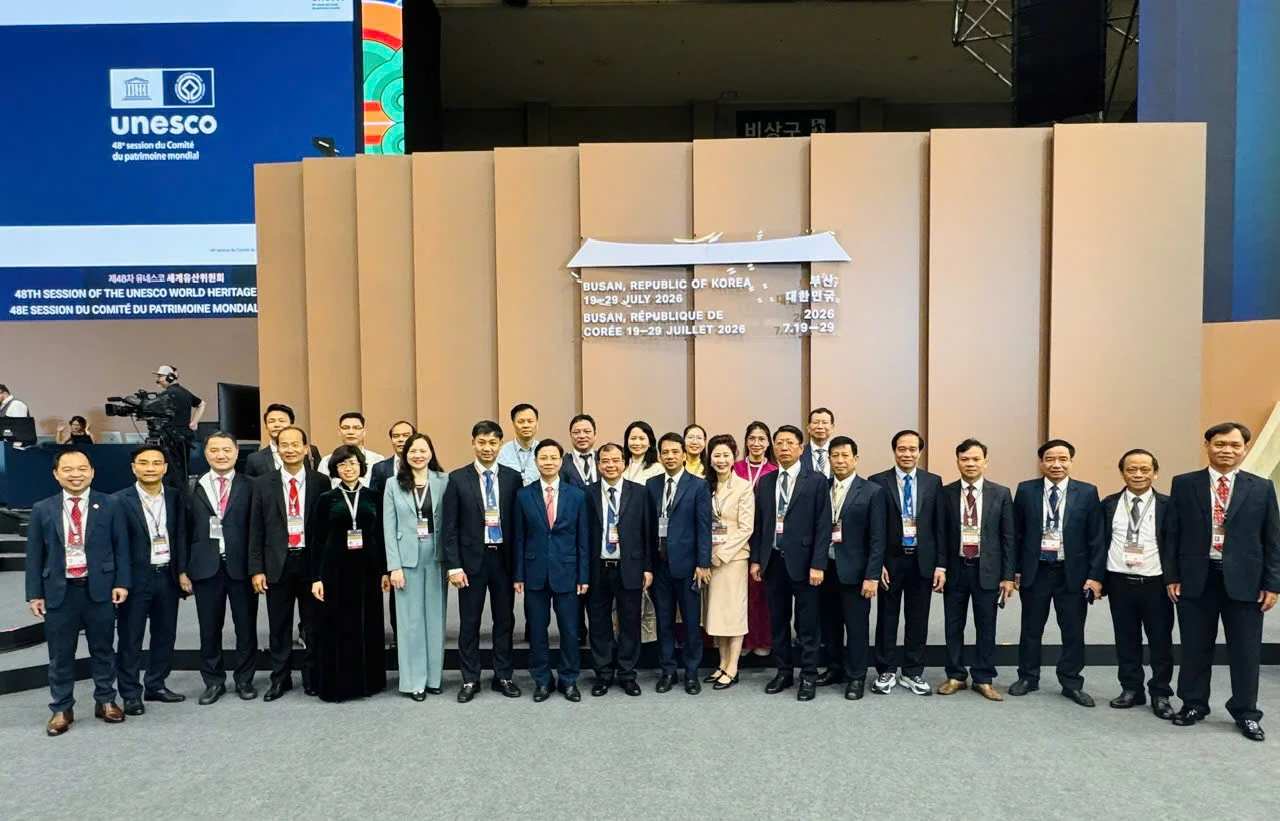
At the working session with the General Director of ICOMOS, Assoc. Prof. Dr. Le Thi Thu Hien - Director of the Department of Cultural Heritage highly appreciated the assistance and companionship of the International Council on Monuments and Sites (ICOMOS) in supporting the conservation activities of the World Cultural Heritage Site - Thang Long Imperial Citadel Center - Hanoi in the past time, especially the fact that the UNESCO/ICOMOS Advisory Group directly came to Thang Long Imperial Citadel (first time in July 2023; second time in July 2025) to help orient the conservation of the heritage area according to scientific standards for conservation.
The Department of Cultural Heritage under the Ministry of Culture, Sports and Tourism, with the function of state management of cultural heritage, has advised, submitted, and the National Assembly of the Socialist Republic of Vietnam has promulgated the 2024 Law on Cultural Heritage, along with 03 Decrees of the Government, 08 Circulars of the Ministry of Culture, Sports and Tourism guiding the implementation of the Law on Cultural Heritage, which has made an important contribution to the preservation of national cultural heritage (including the Central Area of Thang Long Imperial Citadel - Hanoi).
Mr. Nguyen Thanh Quang - Director of Thang Long - Hanoi Heritage Conservation Center said that in the past time, with the enthusiastic help of ICOMOS Organization, UNESCO World Heritage Center, Hanoi city has made efforts to implement research work, proactively implementing the recommendations of the World Heritage Committee and UNESCO/ICOMOS Advisory Group to propose technical solutions, propose activities to repair and restore Kinh Thien Palace, restore Ngu Dao, foundations of side corridors, and Kinh Thien Mon, ensuring to meet the scientific basis for conservation.
Through heritage conservation coordination activities, the relationship between the ICOMOS Organization and relevant agencies, of Hanoi city, and Vietnamese heritage experts is increasingly close. From there, the heritage site has learned many valuable experiences from international experts of the ICOMOS Organization, UNESCO World Heritage Center, in order to apply them to the preservation of the outstanding global values of the World Cultural Heritage Thang Long Imperial Citadel Center - Hanoi in a sustainable direction for today's and future generations.
It is expected that from September 27 - 30, 2026, the Ministry of Culture, Sports and Tourism, Hanoi People's Committee, UNESCO Vietnam National Committee, Thang Long Imperial Citadel Center - Hanoi will coordinate to organize the "Asia-Pacific Dialogue on Heritage and Authenticity".
The forum gathers UNESCO member countries, the World Heritage Center, consulting agencies, experts and the community to exchange views on the authenticity of heritage in the context of urbanization, climate change, technological transformation and the requirement to promote heritage values, thereby proposing recommendations and appropriate conservation tools according to UNESCO's 1972 Convention on the Protection of the World Cultural and Natural Heritage.


