
According to statistics from Ho Chi Minh City, after arranging administrative units, the city still has 52 commune-level units (including 48 wards and 4 communes) that do not meet the area standards according to Resolution No. 112/2025 of the National Assembly Standing Committee.
According to the resolution, wards must have a minimum natural area of 5.5 km2 and a population of 21,000 people or more. For mountainous communes, the minimum area is 100 km2 and the population is from 5,000 people; island communes have an area of 15 km2 and a population of 2,500 people; the remaining communes must have a minimum area of 30 km2 and a population of 16,000 people.
Notably, among the wards that have not met the standards in terms of area, there are 16 wards with very large population sizes, all exceeding the 100,000 people mark. Many wards have populations 5 - 9 times higher than the minimum level according to regulations.
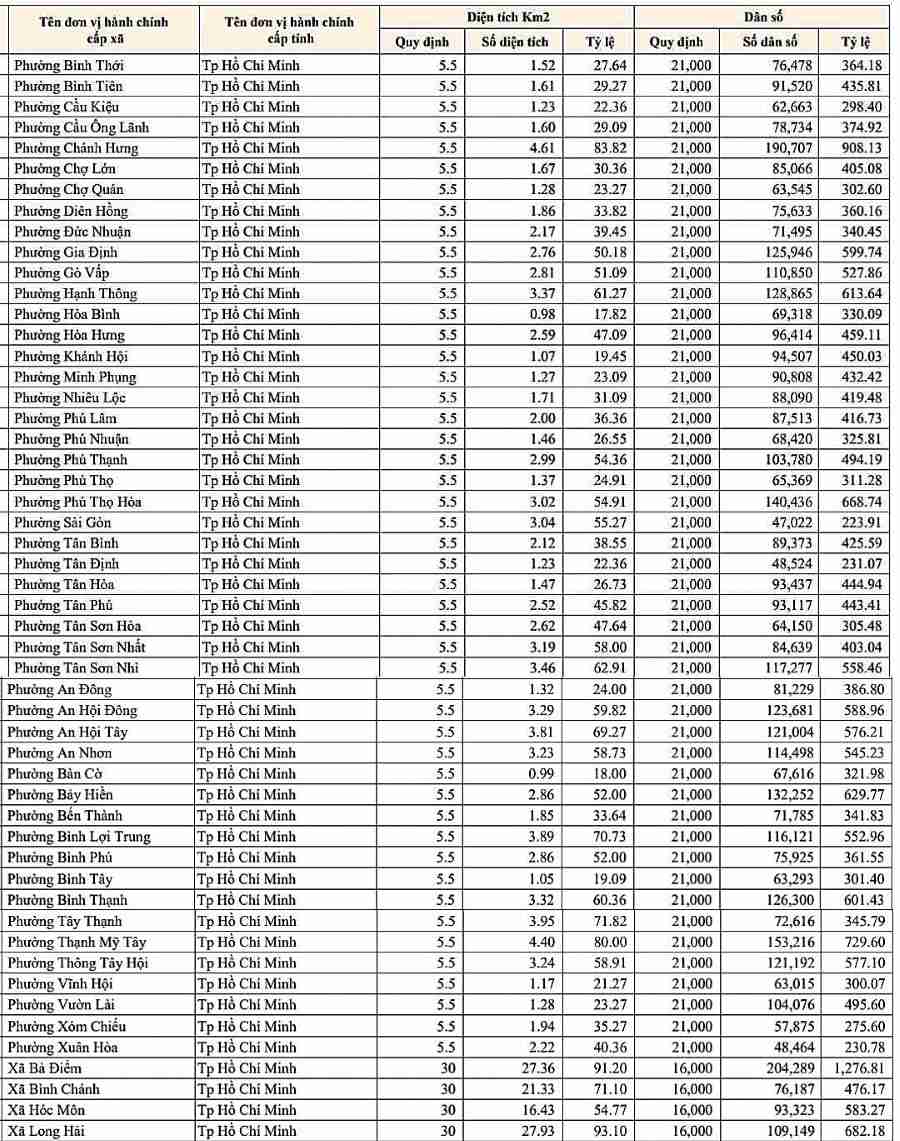
The most prominent is Chanh Hung ward, established on the basis of merging Wards 4, 5, Rach Ong and Hung Phu of old District 8. The ward has an area of about 4.61 km2, not meeting the minimum standard of 5.5 km2 but the population is up to 190,707 people, about 9 times the minimum level according to regulations.
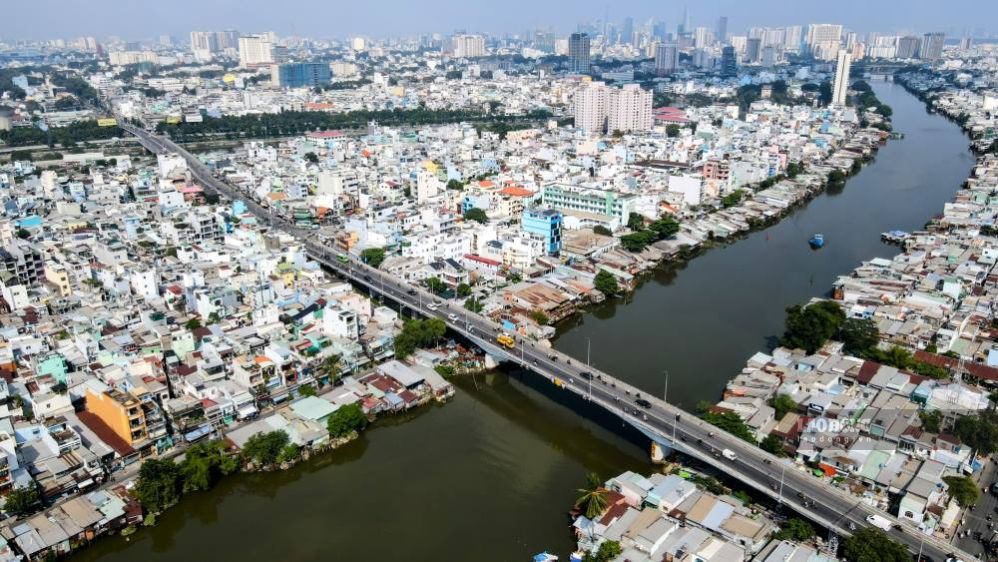
Next is Thanh My Tay ward, established from Wards 19, 22 and 25 of the old Binh Thanh district. The ward has an area of 4.4 km2, reaching about 80% of the area standard, while the population is more than 153,000 people, about 7.3 times the minimum level.
Also in the old Binh Thanh district area, Binh Thanh ward has an area of 3.32 km2 with about 126,300 people. Gia Dinh ward is only 2.76 km2 wide, reaching more than 50% of the area standard but has nearly 126,000 people, about 6 times the minimum level. Binh Loi Trung ward also has an area of 3.39 km2 with 116,121 people.
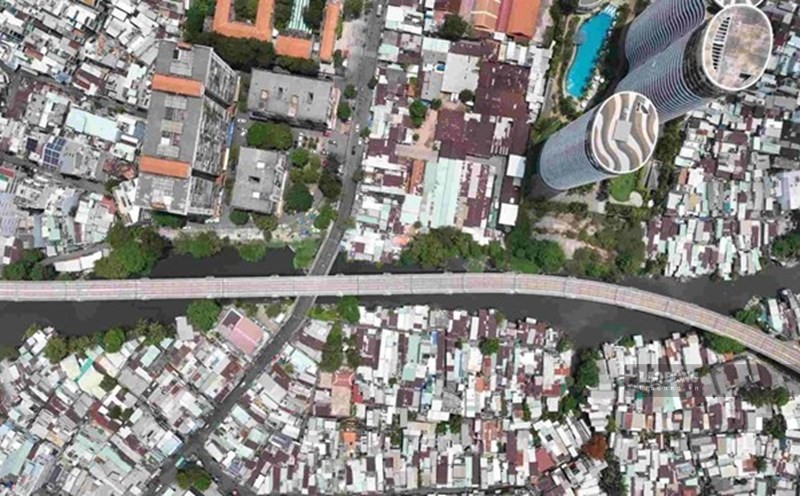
In the old Tan Phu district area, Phu Tho Hoa ward has an area of about 3.02 km2, only reaching nearly 55% of the standard, but the population is up to 140,436 people, nearly 6.7 times the minimum level.
Two other wards in the old Tan Phu district also have a population scale of over 100,000 people: Phu Thanh with 103,780 people on an area of 2.99 km2 and Tan Son Nhi with 117,277 people on an area of 3.46 km2.
Notably, all 6 new wards established from the old Go Vap district have not met the standards in terms of area, but all have populations exceeding 100,000 people.
Specifically, Hanh Thong has an area of 3.37 km2 with about 128,865 people; An Hoi Dong is 3.29 km2 wide with about 123.681 people; An Hoi Tay is 3.81 km2 wide with about 121,000 people; Thong Tay Hoi is 3.24 km2 wide with about 121,192 people; An Nhon is 3.23 km2 wide with about 114,498 people; while Go Vap ward is only 2.81 km2 wide but has about 110,850 people.
In addition, Bay Hien ward (old Tan Binh district) has an area of 2.86 km2 with 132,252 people, while Vuon Lai ward (old district 12) is only 1.28 km2 wide but has 104,706 people.
Speaking at a dialogue with Ho Chi Minh City officials yesterday (July 28), Politburo member, Secretary of the Ho Chi Minh City Party Committee Tran Luu Quang affirmed that the consideration of reorganizing administrative units is not only based on population and area criteria but also must consider development potential, position, defense and security requirements and actual management conditions.
According to the expected process, the Party committees of communes and wards will assess needs, unify plans and report to the Standing Committee of the Ho Chi Minh City Party Committee. Before completing the proposal, localities must organize to collect people's opinions.
At the same time, the Ho Chi Minh City Development Research Board will conduct independent research based on criteria on development potential, position, national defense, security and actual conditions to serve as a basis for advising the Standing Committee of the Ho Chi Minh City Party Committee for consideration.


