
On the morning of August 29, Ho Chi Minh City started construction and inaugurated 11 traffic, environmental, social housing and urban embellishment projects to celebrate the 81st anniversary of the National Day of the Socialist Republic of Vietnam (September 2, 1945 - September 2, 2026).

Among these are two projects starting to expand National Highway 13 and National Highway 1, with a total investment of more than 37,000 billion VND.
At the Northeast gateway, National Highway 13 is a vital traffic axis connecting Ho Chi Minh City with old Binh Duong and Binh Phuoc, passing through a densely populated residential area and leading to Mien Dong Bus Station.
While the section of National Highway 13 through Binh Duong has been upgraded, the section from Vinh Binh bridge to the center of Ho Chi Minh City has become a bottleneck for many years, often congested.
Previously, this section of the route belonged to the Binh Trieu 2 bridge and road project, which was formed in 2001 in BOT form but could not be implemented due to investment plans.
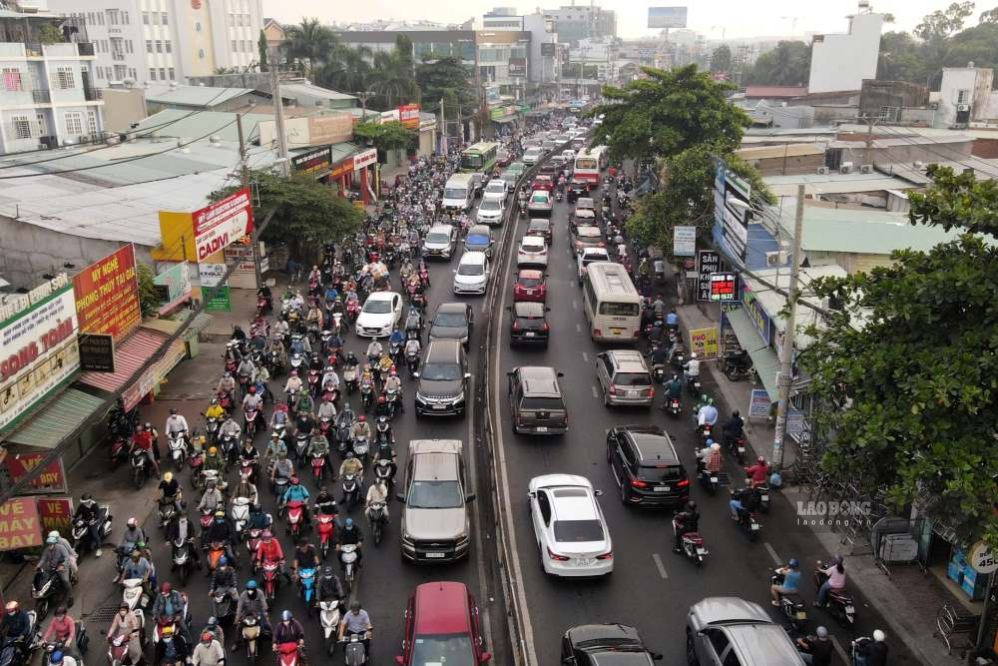
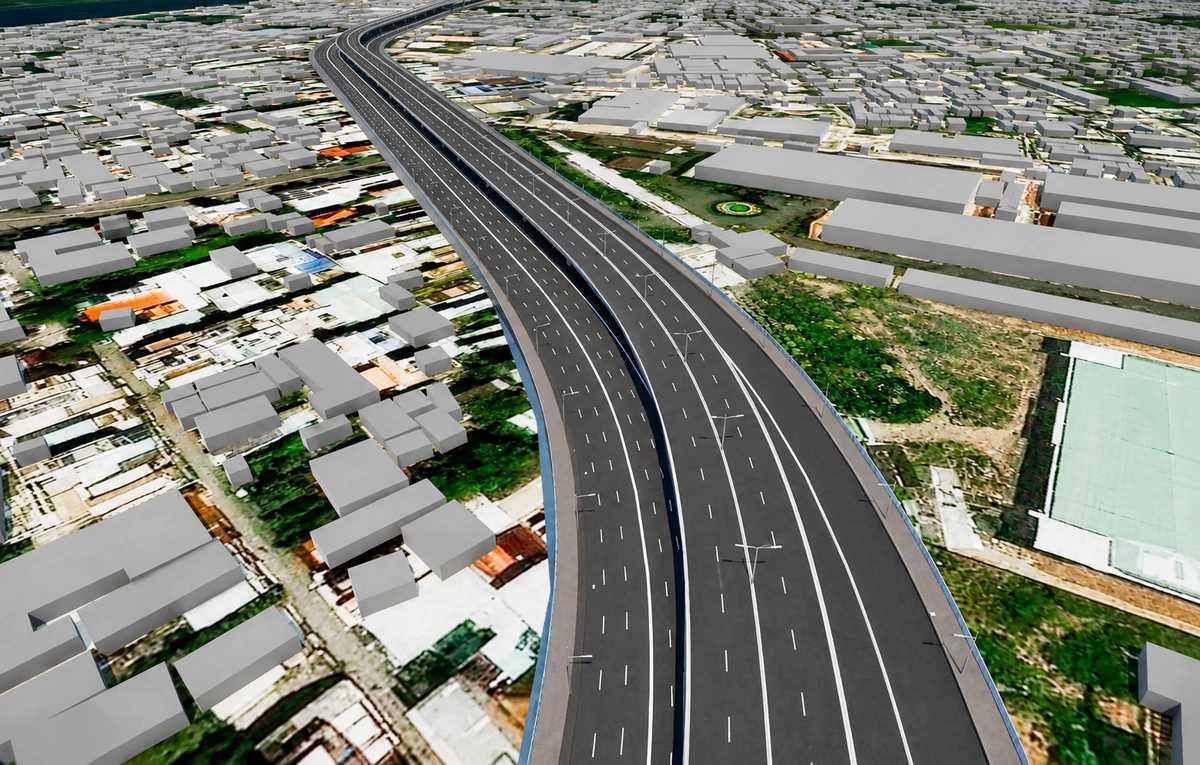
According to the new project, the National Highway 13 section, about 6 km long, from Binh Trieu bridge to Vinh Binh bridge, will be expanded from 19 - 27 m to 60 m, with a scale of 10 - 14 lanes. Notably, an elevated road will be built in the middle of the route.
The project has a total investment of nearly 21,000 billion VND, of which compensation, support and resettlement costs are about 9,611 billion VND; the construction part according to PPP method, BOT contract is about 6,674 billion VND. The project is expected to be completed by the end of 2028.
At the western gateway, National Highway 1 section from Kinh Duong Vuong to the border of Tay Ninh province is an important traffic route connecting Ho Chi Minh City with the Mekong Delta provinces.
The route is also connected to many major traffic axes such as Vo Van Kiet Avenue, Nguyen Van Linh Avenue, Ho Chi Minh City - Trung Luong expressway and leads to Mien Tay Bus Station.
For many years, this section has been frequently congested due to narrow road surfaces. In 2012, Ho Chi Minh City planned to expand this section of National Highway 1 but could not implement it due to lack of capital.
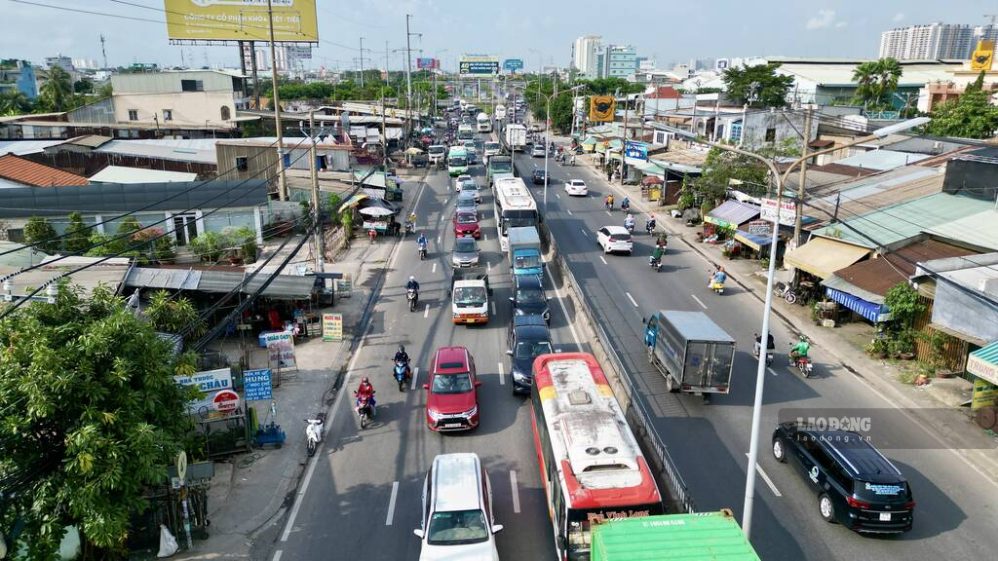
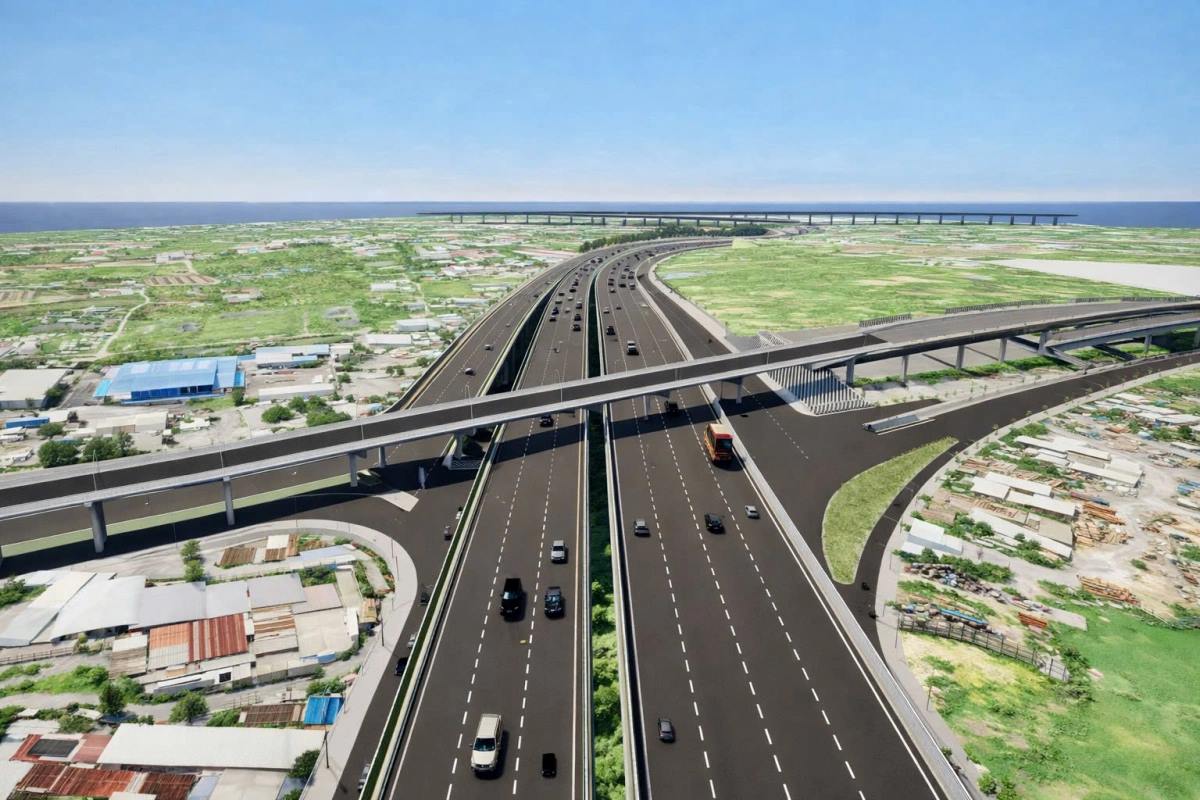
According to the new project, the nearly 10 km long section will be expanded from about 25 m to 60 m, with a scale of 10 - 12 lanes.
In which, the main route has 6-8 lanes, design speed of 80 km/h; 4 parallel lanes are arranged on both sides, design speed of 60 km/h.
On the route, an additional 6-lane Binh Dien bridge is built. Binh Thuan, Tan Kien intersections and Ben Luc - Long Thanh expressway intersections are also upgraded and expanded synchronously. In addition, the project to build new grade-separated intersections at Kinh Duong Vuong and Doan Nguyen Tuan street.
The total investment of the project is about 16,285 billion VND. Of which, compensation, support and resettlement costs are about 9,611 billion VND; the construction part is implemented according to PPP method, BOT contract, with a cost of about 6,674 billion VND.
According to the plan, the project will be completed in 2029, expected to reduce congestion, limit accidents and increase connectivity with the Ben Luc - Long Thanh expressway, Ho Chi Minh City - Trung Luong - My Thuan expressway, Ring Road 3, Ring Road 4 and inter-regional traffic routes.
Speaking at the groundbreaking ceremony, Vice Chairman of Ho Chi Minh City People's Committee Nguyen Cong Vinh said that the expansion of National Highway 1 and National Highway 13 will gradually remove traffic bottlenecks that have existed for many years, improve transport capacity and expand the development space of the Southern key economic region.
Ho Chi Minh City requests investors and contractors to ensure progress, quality and safety during construction. Compensation, site clearance and resettlement must be carried out synchronously, with the goal of ensuring that people's new housing is equal to or better than the old housing.


