
On January 17, the Ho Chi Minh City Urban Railway Authority (MAUR) said it is urgently preparing investment procedures for two metro lines connecting the Binh Duong area after merging into Ho Chi Minh City.
These are important urban railway lines, playing a vital traffic axis between the central city and the satellite areas of the North.
Urban railway line No. 1 (Binh Duong - Suoi Tien New City) is 31.6 km long, all elevated.
The route starts from the central station of Binh Duong New City and ends at Suoi Tien Bus Station, which is directly connected to the existing Metro Line No. 1 (Ben Thanh - Suoi Tien).
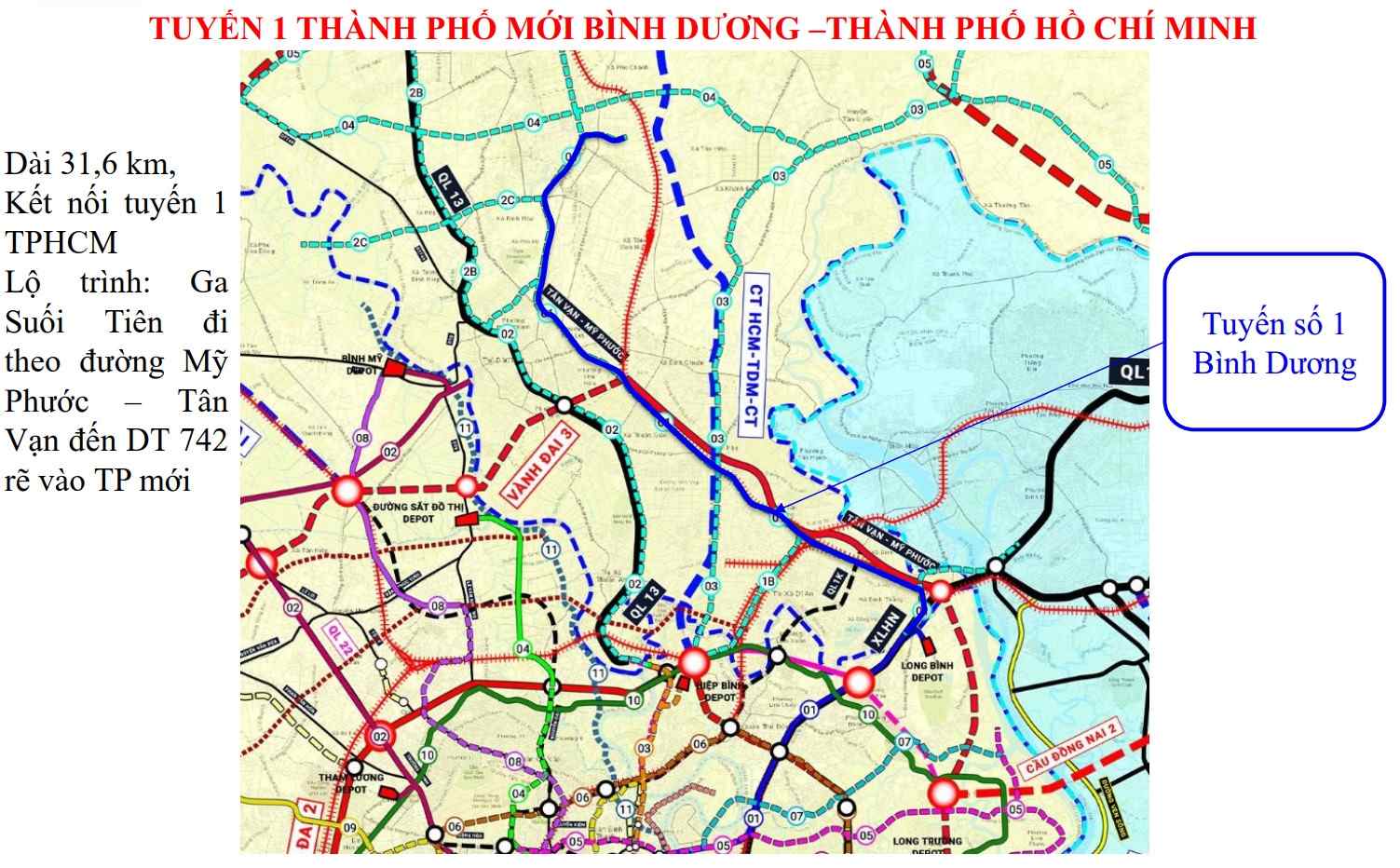
This metro line is expected to have 17 elevated stations, sharing Long Binh depot with Metro Line 1. The total investment of the project is about 46,725 billion VND.
According to MAUR, the metro line is invested to connect synchronously with Metro Line 1, forming a large-capacity and efficient transport axis between the central urban area and the satellite urban area.
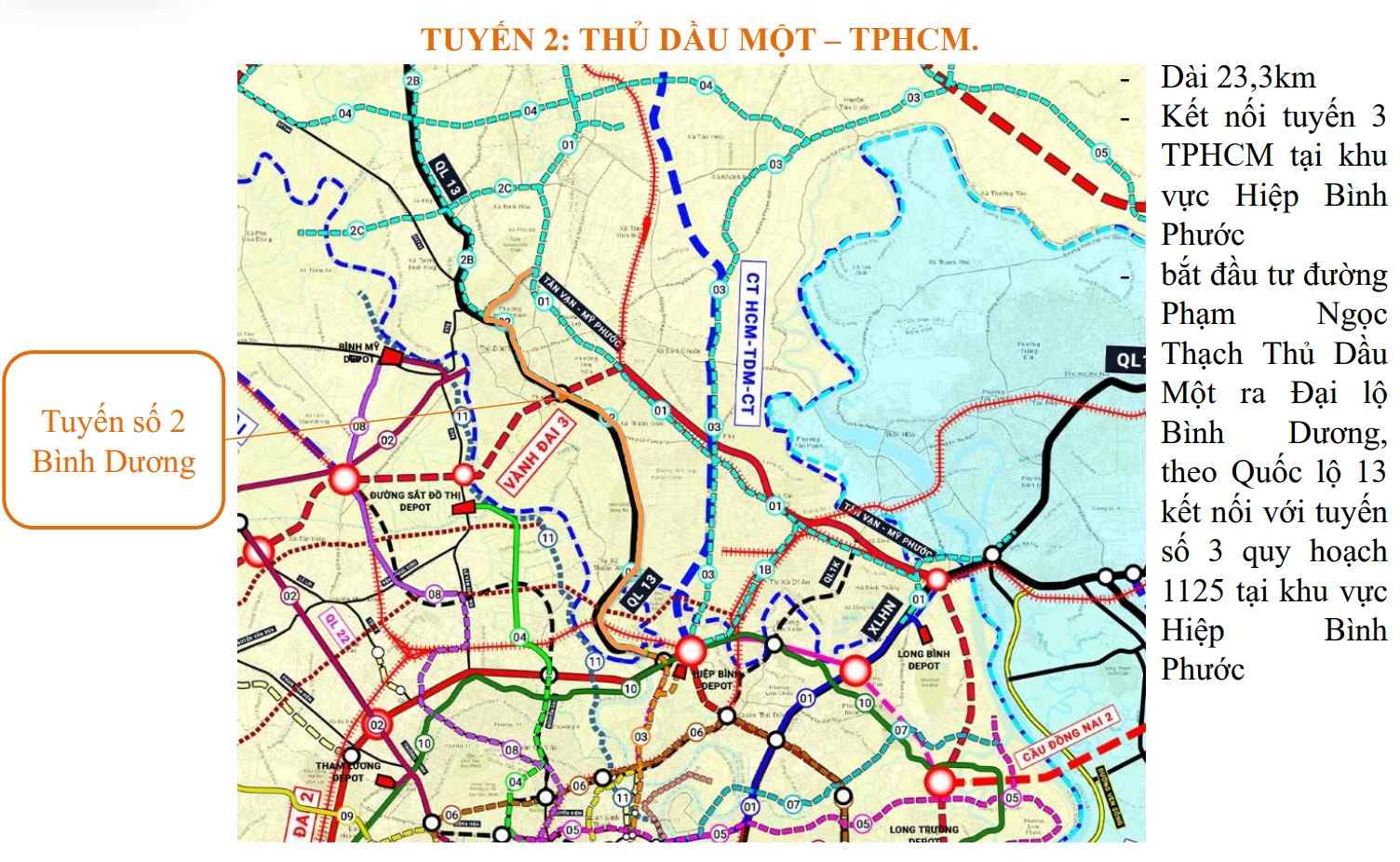
Urban railway line No. 2 (Thu Dau Mot - Ho Chi Minh City) has a length of 23.3 km, and is also designed to go completely elevated.
The route starts from the S5 station area in Phu My ward (formerly Thu Dau Mot City), and ends in Vinh Phu ward (formerly Thuan An City).
At the end point, the line will connect to Metro Line 3 (Hiep Binh Phuoc - An Ha).
The project is expected to have about 13 elevated stations, using the same depot as Metro Line 3 in the Hiep Binh Phuoc area. The total investment of the line is about 53,000 billion VND.
When put into operation, this metro line connects Thu Dau Mot ward with the center of Ho Chi Minh City, reduces congestion on National Highway 13 and interconnects with Metro Line 3, creating a trans-center transport axis.
According to MAUR, two metro lines connecting Ho Chi Minh City - Binh Duong have been added to the appendix attached to Resolution 188 of the National Assembly on piloting a number of specific and special mechanisms and policies to develop the urban railway network system in Hanoi and Ho Chi Minh City.
The application of specific mechanisms is expected to help shorten investment preparation time, accelerate deployment progress, and soon form an inter-regional metro network.
Dr. Tran Quang Thang - Director of the Institute of Economics and Management of Ho Chi Minh City - said that after the merger, Ho Chi Minh City will move from a unipolar urban model to a large multi-center urban area, in which the metro plays the role of a vital traffic axis, effectively connecting the central area with satellite cities in the North such as Binh Duong, instead of being too dependent on roads.
According to Mr. Thang, currently travel between Ho Chi Minh City and Binh Duong mainly relies on National Highway 13 and radial axes that are already overloaded. The two metro lines will create stable and sustainable transport capacity, contributing to reducing congestion, traffic accidents and environmental pollution.
Not only solving the traffic problem, the metro also reshapes the urban development space after the merger. When this system comes into operation, people can live in Binh Duong and work in the center of Ho Chi Minh City with shorter travel time, creating conditions for population expansion in the core area and urban development according to the TOD orientation.


