
Information from Hai Phong City Hydrometeorological Station, due to the impact of storm No. 4, in Bach Long Vi special zone there were strong winds of level 8, gusts of level 9, Phu Lien Meteorological Station had strong winds of level 6, gusts of level 7. The whole city had moderate rain, heavy rain, to very heavy rain. Total rainfall from the evening of August 22 to 7 am on August 23 was commonly 100-150 mm.
At 7:00 AM on August 23, the storm center was located at about 20.7 degrees North latitude; 107.8 degrees East longitude, over the sea area of Quang Ninh-Hai Phong, about 100 km east of Quang Ninh, about 120 km east of Hai Phong, about 70 km north of Bach Long Vi special zone. The strongest wind near the storm center is strong at level 8 (62-74 km/h), gusting at level 10. Moving in the South-Southwest direction, speed about 3 km/h.
The Gulf of Tonkin area (including special zones: Bach Long Vi, Cat Hai; Hon Dau island) and the coastal sea area have strong winds of level 6-7, the area near the storm center passing through strong level 8-9, gusts of level 11; sea waves are 2-4 m high; very rough seas.
On land, coastal communes/wards of Hai An, Dong Hai, Nam Trieu, Do Son, Nam Do Son, Duong Kinh, Chan Hung, Hung Thang, Kien Hai and communes/wards in the Northeast and Southeast areas of Hai Phong city have strong winds of level 6, sometimes level 7, gusts of level 8-9.
From August 23 to the early morning of August 25, Hai Phong city will have moderate rain, heavy rain, in some places very heavy rain and thunderstorms. Common rainfall is 100-200 mm, locally over 250 mm. In thunderstorms, beware of tornadoes, lightning, strong gusts of wind. From August 25, heavy rain tends to gradually decrease.
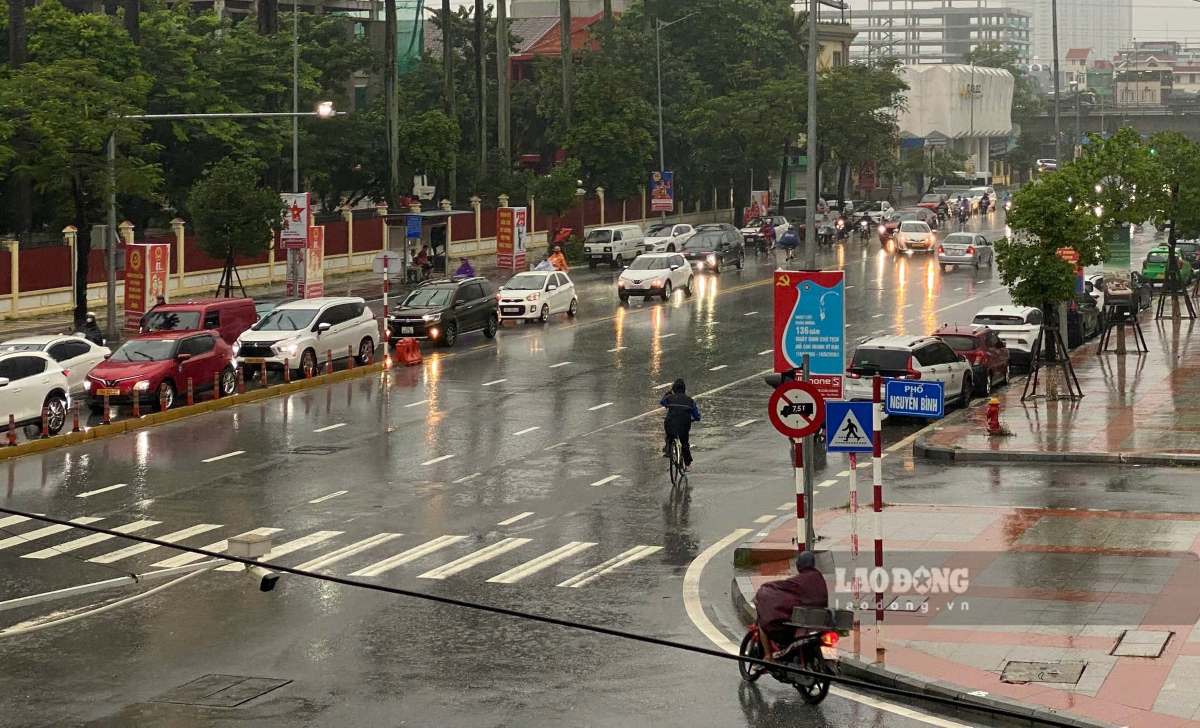
On the morning of August 23, in an exchange with Lao Dong Newspaper, leaders of Hai Phong Drainage One Member Limited Liability Company said that as of 8:30 am this morning, the city has not recorded deep flooding points due to heavy rain. The unit is implementing a plan to respond to storm No. 4, which focuses on lowering the water level at lakes and ditches before the rain; flexibly operating the tide control gate system and pumping station to increase drainage capacity. At the same time, arrange drainage forces to clear drainage gates, collect garbage and water hyacinth in lake ditches, clean water inlets, be on duty at frequent flooded points and open drainage manhole covers when it rains heavily.
Units also continuously monitor rainfall, water levels and flooding points, prepare mobile pumps, generators, manpower and vehicles to quickly handle flooding points, limiting impacts on people and traffic.


