
Step by step replacing old cars with green vehicles
On August 13, the Office of the People's Committee of Ca Mau province said that the Provincial People's Committee issued an action plan to transform green energy in the transportation sector, with the goal that by 2050, 100% of vehicles and bus station, port, and station infrastructure will meet green standards.
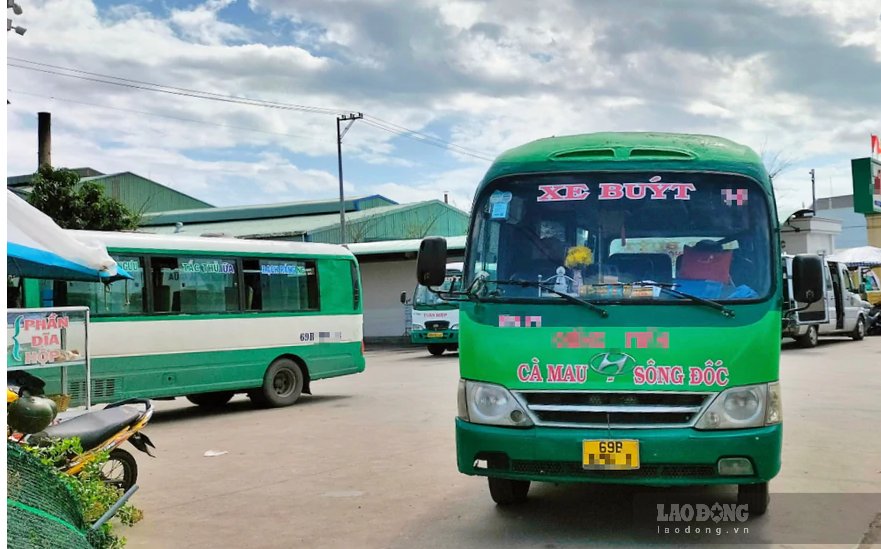
Currently, inter-provincial and inter-provincial bus routes in the province still mainly use diesel fuel. Among them, 54 vehicles operating on the Ca Mau - Thoi Binh, Ca Mau - Khanh Hoi, Ca Mau - Song Doc routes are put into operation before July 1, 2025, with a lifespan of 15 - 18 years.
Most of these vehicles are old, degraded, frequently damaged, and have peeling paint. Interprovincial bus and passenger transport vehicles do not use clean energy, and are not equipped with assistive devices for people with disabilities.
Meanwhile, the taxi sector has undergone a transformation. Ca Mau province currently has 12 taxi transport business units, of which Bao Gia Ca Mau Joint Stock Company and An Phu Seafood Service Co., Ltd. have switched to using electric vehicles with a total of 347 vehicles.
Mr. Nguyen Truong Han - Deputy Director of the Department of Construction of Ca Mau province - said that the province will prioritize selecting and supporting businesses to invest in public transport vehicles using clean fuels such as electricity, biofuel, and integrate equipment to support people with disabilities.
According to Mr. Han, gradually replacing old vehicles with vehicles using green energy both improves the quality of transport services and contributes to reducing greenhouse gas, carbon and methane emissions.
Covering charging stations, moving towards comprehensive green traffic
Ca Mau divides the roadmap for green energy conversion in road, inland waterway and urban transport into 2 phases.
In the period 2026 - 2030, the province encourages people and businesses to switch to electric vehicles or use clean energy. Charging station systems and green energy infrastructure will be prioritized for development in urban areas, administrative centers, industrial parks, tourist areas, bus stations, rest stops and traffic hubs.
Notably, from 2027, 100% of replacement or new investment buses on inner-city routes must use electricity or green energy. For waterway transport, the province encourages vehicle conversion and pilots the criteria "green port", "green wharf".

In the period 2031 - 2050, Ca Mau will gradually limit and move towards eliminating vehicles using fossil fuels. By 2031, at least 50% of public passenger transport vehicles and taxis must switch to green energy; 100% of new taxis must use clean energy.
By 2040, all newly built inland waterway vehicles and newly built waterway ports must meet green criteria.
By 2050, the province aims for 100% of road motor vehicles, construction motorbikes, inland waterway vehicles and the entire system of bus stations, rest stops, ports, and wharves in the area to meet green standards, synchronously with the electrical charging station system.
To realize this goal, Ca Mau will integrate green transport into urban planning and traffic planning; build preferential policies to attract investment in charging station infrastructure, accelerate replacement with low-emission vehicles and upgrade traffic infrastructure.
Along with infrastructure investment, Ca Mau applies artificial intelligence, smart transportation systems, green technology in operation; trains new technology human resources and propagates to change people's travel habits.
Ca Mau is gradually reducing dependence on fossil fuels, building a modern and environmentally friendly transportation system, contributing to the implementation of the goal of net zero emissions.


