Saving every bone to identify martyrs after nearly 60 years

Tâm Tú |

Ho Chi Minh City - At the sampling and storage room at Le Thi Rieng Park, bone and tooth samples of martyrs' remains are processed extremely strictly to serve DNA testing.

Meticulously extracting DNA samples from each set of remains

Responding to the 500-day and night campaign to search, repatriate and identify martyrs' remains launched by the National Steering Committee 515, Dr. Vuong Gia Bao, forensic expert of the Ho Chi Minh City Forensic Center, volunteered and was fortunate to be selected to participate in supporting the collection of DNA biological products of martyrs' remains at Le Thi Rieng Park.

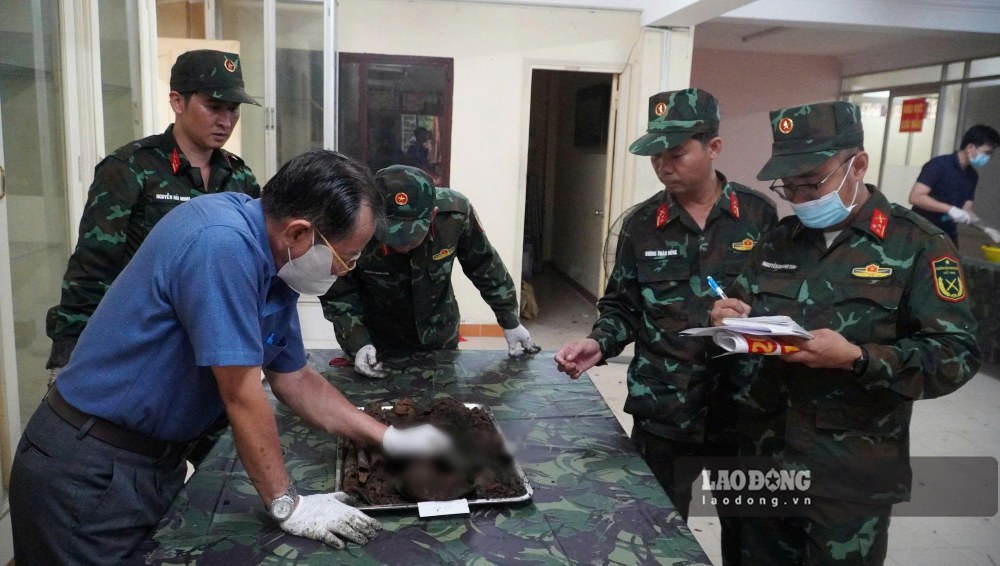
The work takes place regularly during office hours, starting from 7:30 am to about 4:00 pm - 5:00 pm. Early in the morning, Dr. Bao cleans the space and prepares specialized equipment carefully. When functional forces bring the found remains to the sample room, the examiners will meticulously dissect, clean mud and carefully classify each bone segment. This step requires high concentration to ensure accuracy, absolutely not to mix different sets of remains.
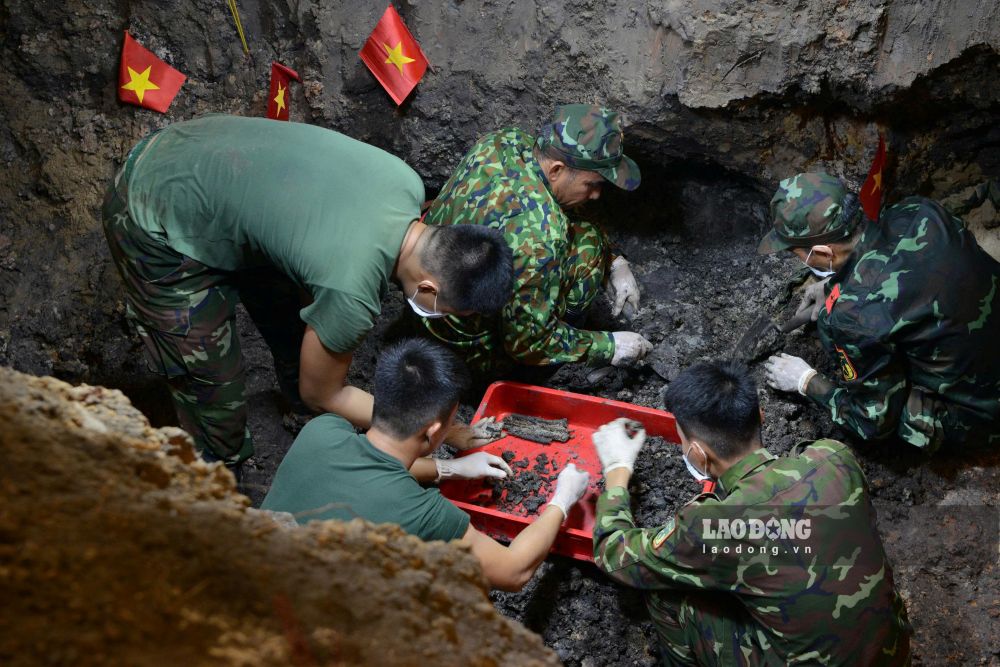
Các bộ hài cốt được cất bốc từ các rãnh mộ tại công viên Lê Thị Riêng sẽ được di chuyển vào khu vực lấy và lưu mẫu. Ảnh: Anh Tú
The remains exhumed from the grave trenches at Le Thi Rieng Park will be moved to the sample collection and storage area. Photo: Anh Tu
  Tổ lấy mẫu liên ngành cẩn trọng phân loại từng đoạn xương đã bị thời gian và đất sâu bào mòn. Ảnh: Anh Tú
The inter-sectoral sampling team carefully classifies each bone segment that has been eroded by time and deep soil. Photo: Anh Tu

Because bones buried underground for many years have heavily decomposed, doctors are required to prioritize choosing the femurs, tibias and teeth, the hardest parts, playing the role of "arms" protecting the genetic structure inside. Only when teeth are not found or there is no other choice, the team must use porous bone fragments. The sample after being taken is cleaned and stored in a preservation box at room temperature of 20 - 25 degrees C.

According to Dr. Vuong Gia Bao, extracting DNA from tooth and bone samples is an extremely complex technique. A solid calcium layer, although helping to protect DNA from environmental destruction, is also a solid "wall", requiring a specific set of chemicals to break it down. At the same time, bones that have been underground for many years are very easily soaked in impurities. If not washed and cleaned meticulously, these impurities will hinder the reaction of machines, damaging the entire analysis process.
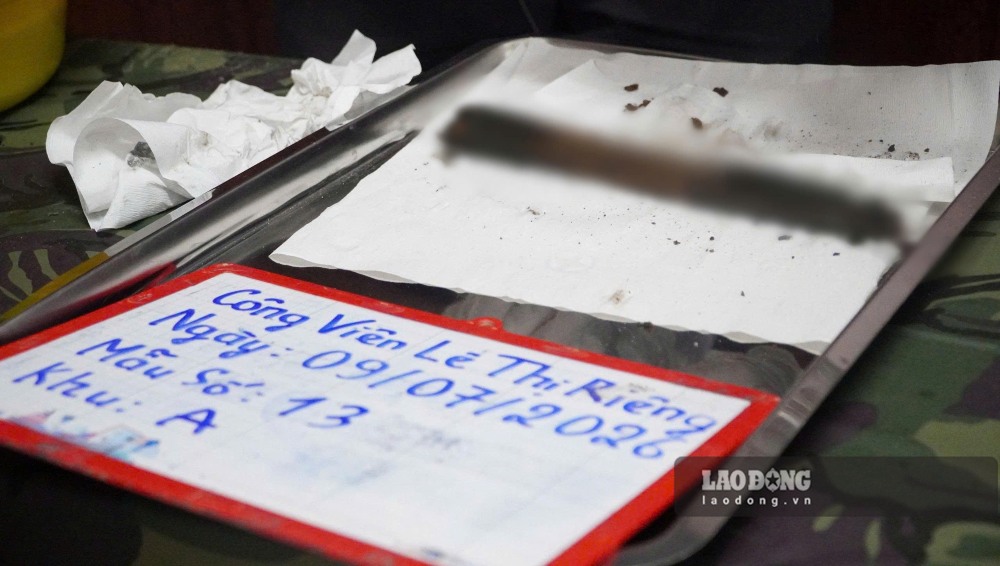
 Răng và xương ống những bộ phận cứng chắc nhất được ưu tiên chọn lựa để lấy mẫu xét nghiệm ADN. Ảnh: Anh Tú
Teeth and tibia, the most solid parts, are prioritized for DNA testing samples. Photo: Anh Tu

However, cleaning samples is only the beginning. After nearly 60 years buried underground, most of the nuclear DNA (DNA located in the cell core) inside the bone samples have been broken and decomposed. To overcome this barrier, experts are forced to find alternative solutions: decoding mitochondrial DNA.

In terms of science, if ordinary DNA is very easily damaged over time, then mitochondrial DNA is like "backup copies" with abundant quantity and superior durability. This characteristic significantly improves the rate of successful detachment and identification profiles from long-standing skeletons.

However, mitochondrial DNA has strict genetic laws: only passed down through the mother line. Therefore, to have data to compare and identify martyrs, biological samples must be collected from relatives on the maternal side (such as biological mother, maternal grandmother, siblings of the same mother, or children of sisters/brothers of martyrs).
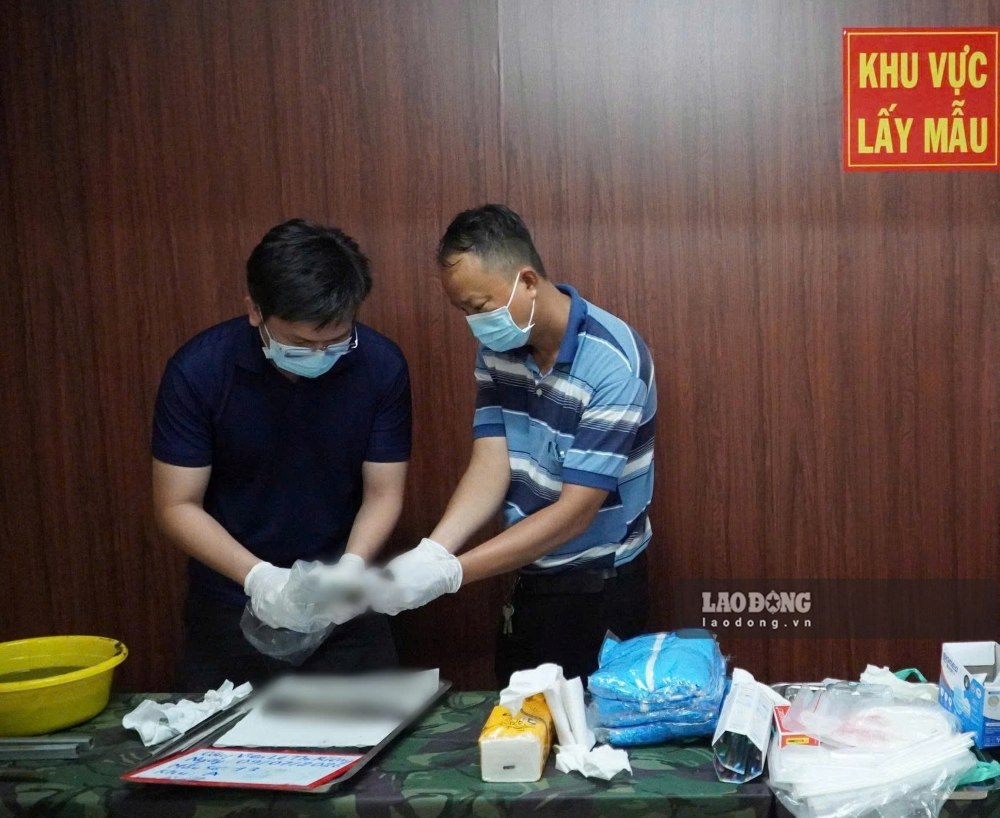
a
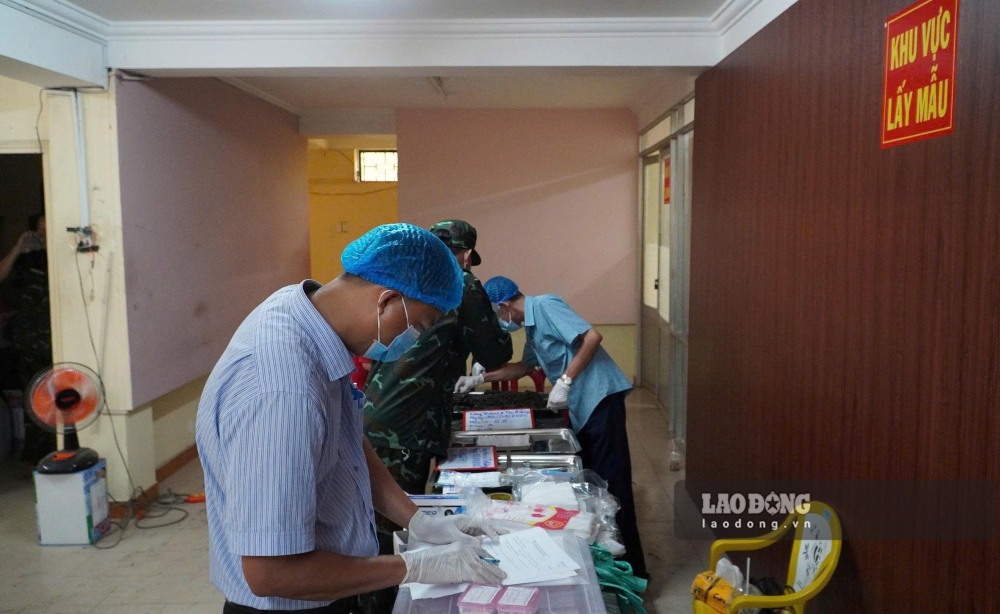
Examiners are extracting each bone sample to take samples. Photo: Anh Tu

After taking samples, the biological products are brought to the laboratory to grind into fine powder and use chemicals to filter out pure DNA. This meager amount of DNA will be "cloned" many times, then put into an analyzer to create a complete genetic profile. Testing time is not fixed; if the sample is bad and the machine cannot read the signal, the examiners must persistently test again and again until the sample is exhausted.
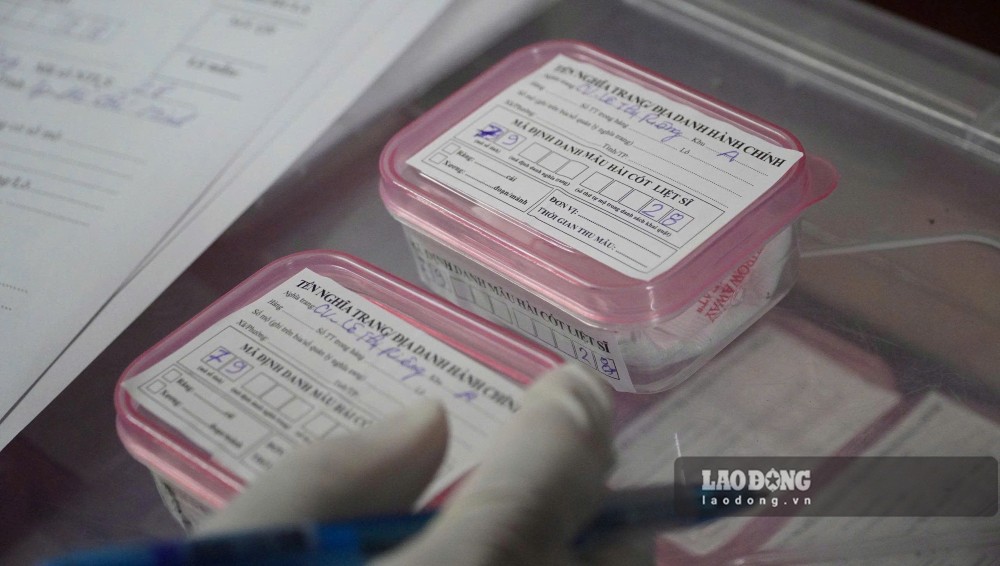
Sau khi cắt tách, từng mẫu sinh học được đóng gói riêng, niêm phong rồi chuyển vào phòng lạnh chuyên dụng để bảo quản ổn định ở nhiệt độ dưới 20 độ C. Ảnh: Anh Tú
After separation, each biological sample is packaged separately. Photo: Anh Tu

Wondering about the limits of science and the command from the heart

Finding the remains is only halfway through, and DNA is the last "golden door" to bring the heroic martyrs back to their families.

According to Dr. Vuong Gia Bao, the biggest concern of a forensic expert is when encountering bone samples that are sturdy on the outside but do not give a genetic signal when put into analysis.

Standing before the limits of science, regret did not make the whole team flinch, but on the contrary, it further urged them to try their best. Instead of giving up, the examiners persistently did it over and over again, cherishing every bone fragment, every bit of the last biological product with the faintest hope.

We always tell ourselves to try our best, do everything possible so as not to regret or be ashamed of the great sacrifice of previous generations," Dr. Bao confided.
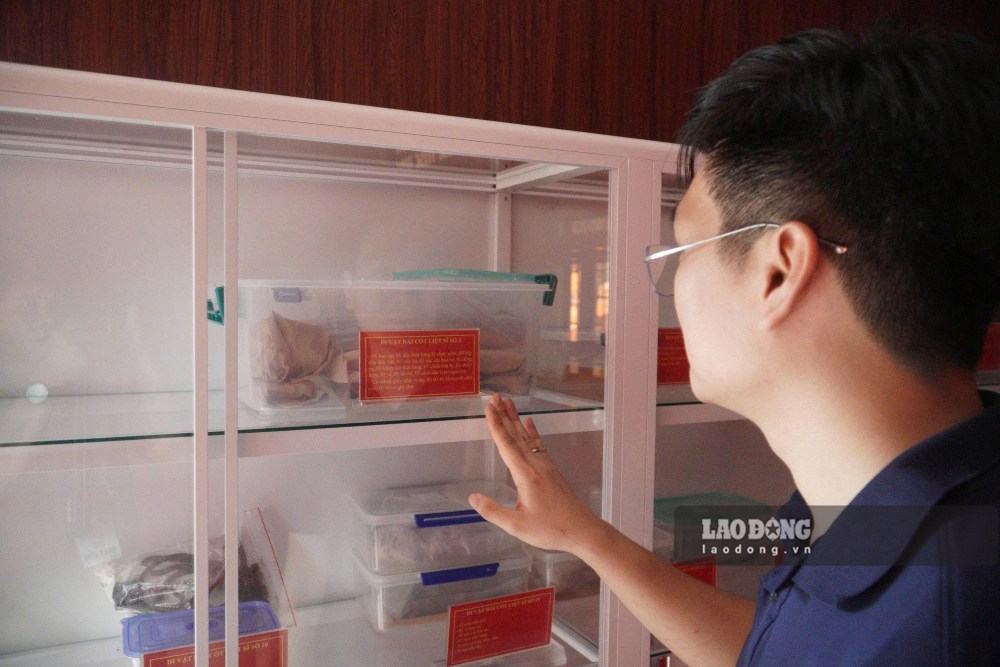
Những kỷ vật của các liệt sĩ sau khi thu thập cũng được mang đi bảo quản cẩn thận nhằm tránh sự tác động của môi trường. Ảnh: Anh Tú
The artifacts of the martyrs after being collected are also taken for careful preservation to avoid environmental impacts. Photo: Anh Tu
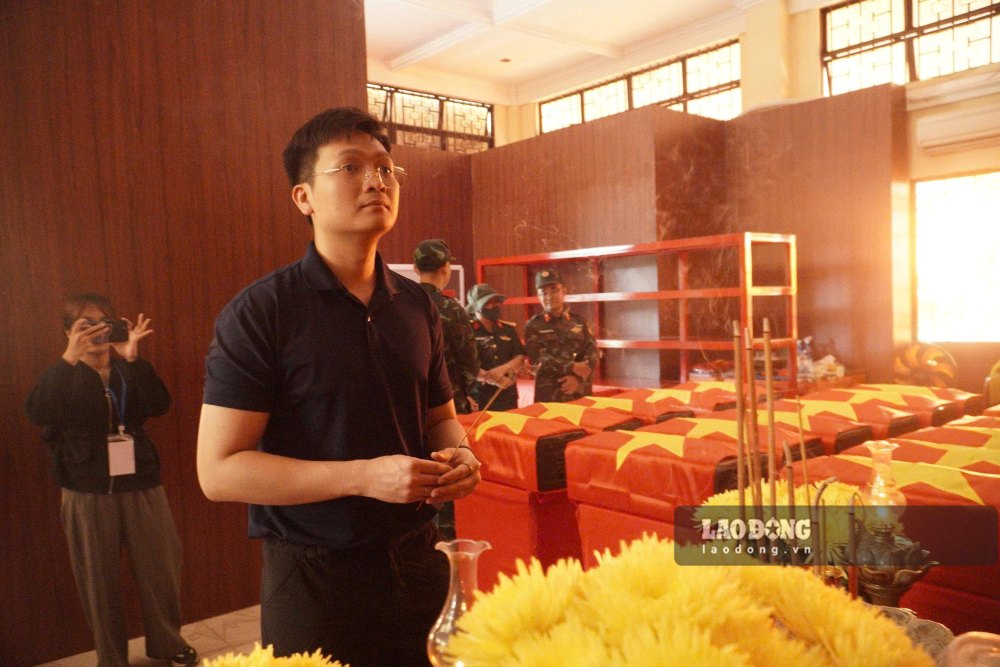
Trước mỗi ca làm việc, bác sĩ Vương Gia Bảo luôn dành phút tĩnh lặng, thắp nén nhang thành kính tri ân các liệt sĩ. Ảnh: Anh Tú
Before each shift, doctor Vuong Gia Bao always spends a moment of silence, lighting incense to respectfully pay tribute to the martyrs. Photo: Anh Tu

For more than a week, the working rhythm of the sample taking team has always been maintained in a hurry from early morning to late afternoon. For each member, this is not simply a dry forensic procedure, but an order from the heart, a deep gratitude of the young generation to those who fell for national independence. All share a high determination: dedicating all their strength and meticulousness in every smallest operation to keep every opportunity to identify identities, with the greatest desire to soon bring them back to their homeland and family.

Tâm Tú
RELATED NEWS

Repatriation of remains of martyrs who sacrificed in 1946 to rest at the Martyrs' Cemetery

|

Khanh Hoa - After many days of searching, the Provincial Military Command gathered the remains of martyr Mai Van Dieu to be buried at Ninh Thuan Martyrs' Cemetery.

MtDNA is the type of DNA best preserved in martyrs' remains

|

The type of DNA that is best preserved in martyrs' remains is usually mitochondrial DNA (mtDNA), which is only transmitted from mother to child.

Dong Nai searches for witnesses to help identify martyrs' remains in Minh Duc commune

|

Dong Nai - Steering Committee 515 of the city, Team K72 searches for witnesses who participated in combat and served in combat at the Minh Duc commune front in the period 1968 - 1975.

Nearly 100 sets of remains and many artifacts have been found at Le Thi Rieng Park

|

Ho Chi Minh City - As of the afternoon of July 15, the Repatriation Team has exhumed 93 sets of martyrs' remains and 2 sets of collective martyrs' remains at Le Thi Rieng Park.

Tricks of a fake perfume production line have just been dismantled

|

Thanh Hoa - A perfume production line fakes many booths on e-commerce platforms, advertising them as smuggled goods, decanted goods to deceive consumers.

Warning of heavy rain in 3 provinces, dangerous weather risk in the next 6 hours

|

The meteorological agency warns that Lao Cai, Tuyen Quang and Cao Bang have had moderate to heavy rain; risk of flash floods and landslides in some communes and wards.

Decoding DNA, closing the long wait of martyrs' relatives

|

Inside the DNA testing center, each successful DNA test result is an additional martyr whose identity is found again.

VN-Index falls 62 points amid sell-off pressure

|

Liquidity and margin pressure are the main reasons leading to the sharp decline that caused VN-Index to lose more than 62 points.

Repatriation of remains of martyrs who sacrificed in 1946 to rest at the Martyrs' Cemetery

Phương Linh |

Khanh Hoa - After many days of searching, the Provincial Military Command gathered the remains of martyr Mai Van Dieu to be buried at Ninh Thuan Martyrs' Cemetery.

MtDNA is the type of DNA best preserved in martyrs' remains

Quang Việt |

The type of DNA that is best preserved in martyrs' remains is usually mitochondrial DNA (mtDNA), which is only transmitted from mother to child.

Dong Nai searches for witnesses to help identify martyrs' remains in Minh Duc commune

HÀ ANH CHIẾN |

Dong Nai - Steering Committee 515 of the city, Team K72 searches for witnesses who participated in combat and served in combat at the Minh Duc commune front in the period 1968 - 1975.

Nearly 100 sets of remains and many artifacts have been found at Le Thi Rieng Park

Anh Tú |

Ho Chi Minh City - As of the afternoon of July 15, the Repatriation Team has exhumed 93 sets of martyrs' remains and 2 sets of collective martyrs' remains at Le Thi Rieng Park.
