
pine trees with tangerine roots on the rock and soil
When mentioning the Dong Thap Muoi area (Dong Thap province), people often think of a large lowland area, which is affected by acrid fenugreek and flooding all year round. At one point, this place was considered the "forest haven, flood haven" of the Southwest region, with harsh land, unstable agricultural production, and many difficulties in people's lives.
However, from a change in farming thinking, from a seemingly simple crop, pineapple has been writing a story of persistent poverty reduction for thousands of households in the Dong Thap Muoi area. Today, pine trees are grown by people in communes including: Tan Phuoc 1 commune, Hung Thanh commune, Tan Phuoc 2 commune, Tan Phuoc 3 commune in Dong Thap province.

Mr. Phan Van Nguyen (48 years old, living in Tan Phuoc 1 commune, Dong Thap province) recalled: "At that time, growing rice year after year was a waste. When the rice is blooming, it will encounter alum, water, and be considered empty-handed. There were years when my family had to work for hire in another country to make ends meet.
According to Mr. Nguyen, in that context, converting crops has become an urgent requirement. From initial pilot models, pine trees are a type of tree that is resistant to alum and is better suited to flooding and are gradually being used for cultivation. Many farmers were initially hesitant and worried about risks. However, reality has proven that pineapple not only "lives well" on alum soil but also has outstanding economic efficiency compared to many traditional crops.
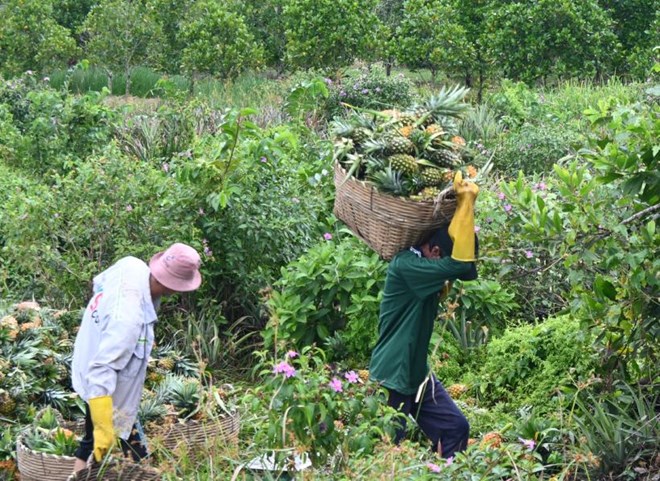
As a pineapple trader for more than 11 years in Tan Phuoc district, the old Tien Giang province (now Dong Thap province), Mr. Trinh Anh Phong (residing in Ho Chi Minh City) shared: Coming to the Dong Thap Muoi area today, it is like being lost in the "kingdom" of pineapple trees. Everywhere is pineapple, from vast, vast pineapple fields in the eye, to the roads along inter-commune and inter-hamlet traffic routes, farmers also take advantage of growing pineapple.
"The pine tree is the salvation for people to escape difficulties and eliminate poverty. Thanks to this tree, the lives of the people here have improved, said Mr. Phong.
When agriculture is associated with experiential tourism
A new highlight in the story of pine trees in Dong Thap Muoi is the combination of agriculture and tourism. The vast pine fields, interspersed with characteristic canals of the flooded land have become an attractive destination for tourists.
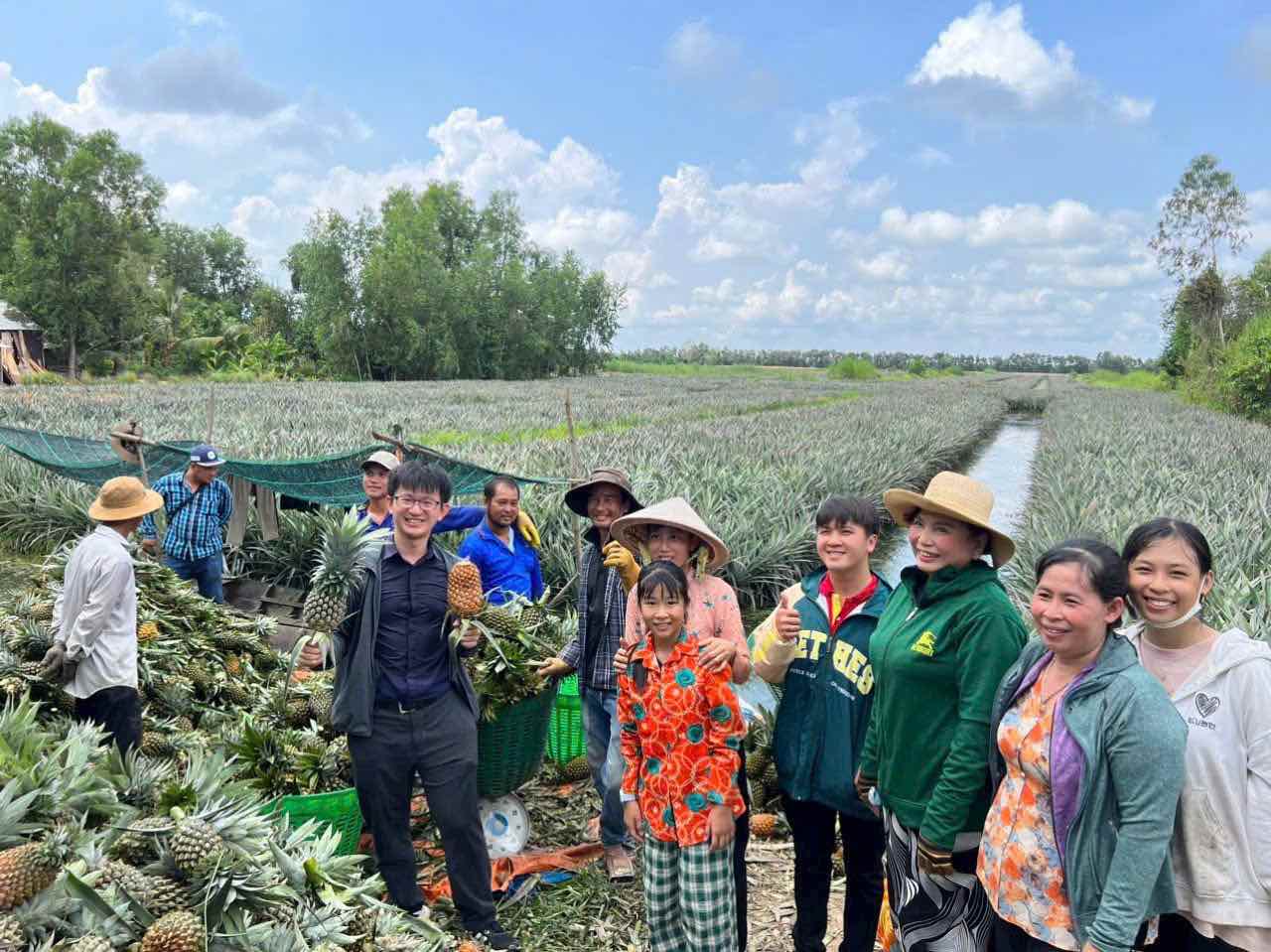
Mr. Le Thanh Tuan - Director of the Dong Thap Muoi Conservation Area (Dong Thap province) - said that tourists really like the experience of going by boat in the pineapple fields, harvesting pineapple by hand and enjoying dishes processed on the spot. This both promotes local agricultural products and creates more livelihoods for people.
"Not stopping at agricultural production, combining pineapple cultivation with ecotourism development is opening a new direction for the Dong Thap Muoi area. Since the beginning of 2025, this model has attracted about 6,000 visitors to visit and experience the Dong Thap Muoi Conservation Area," said Mr. Tuan.
According to Mr. Tuan, the tourism model associated with pine trees not only brings in new sources of income but also contributes to changing the face of the countryside. Currently, there are about 20 local workers having jobs right in their hometown, limiting the situation of homelessness.
Mr. Le Thanh Tuan said that in order for pine trees to continue to promote their role as " hunger eradication and poverty reduction", it is necessary to continue investing in transportation infrastructure, irrigation, expanding production - consumption linkages, promoting processing and building the Dong Thap Muoi pineapple brand. At the same time, the combination of agriculture with eco-tourism needs to be planned systematically, avoiding spontaneous development, ensuring harmony between the economy and environmental protection.
From a land once considered the alum navel, the flood navel, Dong Thap Muoi is today wearing a new look. Amidst the thousands of green pine trees, the story of poverty reduction of the people here is not only a testament to the effectiveness of crop conversion, but also a lesson in adaptability, perseverance and the desire to rise up on the homeland, said Mr. Tuan.
Escaping poverty from his homeland
The success of pine trees in Dong Thap Muoi does not only come from suitable natural conditions, but more importantly, the change in farmers' production thinking. From the place of expectation and dependence, people have boldly transformed, applied science and technology, and linked up to do business.
Mr. Phan Van Nguyen shared: "Thanks to pine trees, I no longer have to leave my hometown. Having a stable income, family reunion, that is the most precious thing".
Mr. Nguyen recalled: More than 30 years ago, in response to the policy of migration to exploit Dong Thap Muoi by the Party and the State, his parents came here to start a business. In those years, the population was sparse, the land was devastated, and lacking in all aspects. Mr. Nguyen's parents have just planted 3 hectares of rice for testing. However, the first rice crop failed due to the soil being heavily contaminated with alum. After converting rice land into garden land, combined with flood-prevention dykes and switching to pineapple cultivation, pine trees have contributed to increasing income, improving the material and spiritual life not only for his family but also for the people here. "Thanks to the pine tree, my family has been able to harvest the land quite well until now, and has a spacious and fully equipped space," said Mr. Nguyen.
According to Mr. Nguyen, not only escaping poverty, many households from growing pineapples have risen to become well-off, built solid houses, and allowed their children to study well. Therefore, the pine tree is affectionately called by the people as a tree to eliminate hunger and reduce poverty.
Mr. Nguyen Anh Khoa - Director of Quyet Thang Agricultural Cooperative (Tan Phuoc 3 commune, Dong Thap province) - shared that the cost of planting a new hectare of pineapple in the 2.5 year cycle (2 crops) is nearly 300 million VND. In the first crop, farmers harvested about 50 tons/ha, with a fixed purchase price of VND9,000/kg, earning VND450 million. In the second crop, the people did not process the fruit but separated the potholes to sell the young plants, earning an additional 160 million VND. After deducting costs, farmers earn a profit of over 310 million VND/cycle, twice as much as traditional pineapple varieties.
The MD2 cluster of the Cooperative has been exported to Japan, Korea, and the Middle East. According to the plan, in 2025, the Cooperative will expand the MD2 pineapple production area to 100 hectares, then to 200 hectares," said Mr. Khoa.
Not only stopping at selling fresh fruits, many businesses and establishments have participated in processing pineapple products such as cakes, jams, candy, refined pineapple juice... with increasingly diverse processing products, helping to increase the value of this characteristic fruit.
Mr. Nguyen Chi Thien - owner of a pineapple candy production facility in Tan Phuoc 3 commune - said that each day the facility consumes about 1.6 tons of type 2 pineapple for farmers, this is a type of pineapple that is difficult to consume or sell at low prices. Every month, the facility supplies the market with nearly 2.5 tons of pineapple candy, a product that meets 3-star OCOP certification. In the future, we will invest in more machinery, improve product quality and aim for export, said Mr. Thien.
The whole province of Dong Thap currently has more than 16,000 hectares of pineapple, concentrated in Tan Phuoc 1, 2, 3 and Hung Thanh communes, with an annual output of more than 260,000 tons. This is the largest pineapple growing area in the Mekong Delta and one of the important " pineapple basins" in the country.


