
On August 26, US Ambassador to Vietnam Jennifer Wicks and a working delegation arrived at the scene to search for missing US soldiers in the war in the mountainous forest area of Kim Lich village, Dong Le commune, Quang Tri province.
From Dong Hoi ward, the delegation traveled more than 100km, then continued walking about 1.5km through many forest and mountain sections, steep slopes to reach the scene.
The search area is located on a high stone cliff, next to the North-South railway line.
The search work is coordinated by the Vietnam National Missing Persons Agency (VNOSMP), the US Department for the Search for Displaced Prisoners and Soldiers (DPAA), along with local authorities and people.
There were 65 workers involved at the scene, including Vietnamese and US soldiers.
This area has been searched and investigated many times in 1990, 2019, 2024 and some other times. In the 2024 search, functional forces discovered a sample of protective gear of a US pilot.
According to the on-site commander, the method being applied is dry scooping. Soil is dug up, passed through the scoop to check for remaining objects. Unidentified objects will be kept for experts to evaluate and identify.
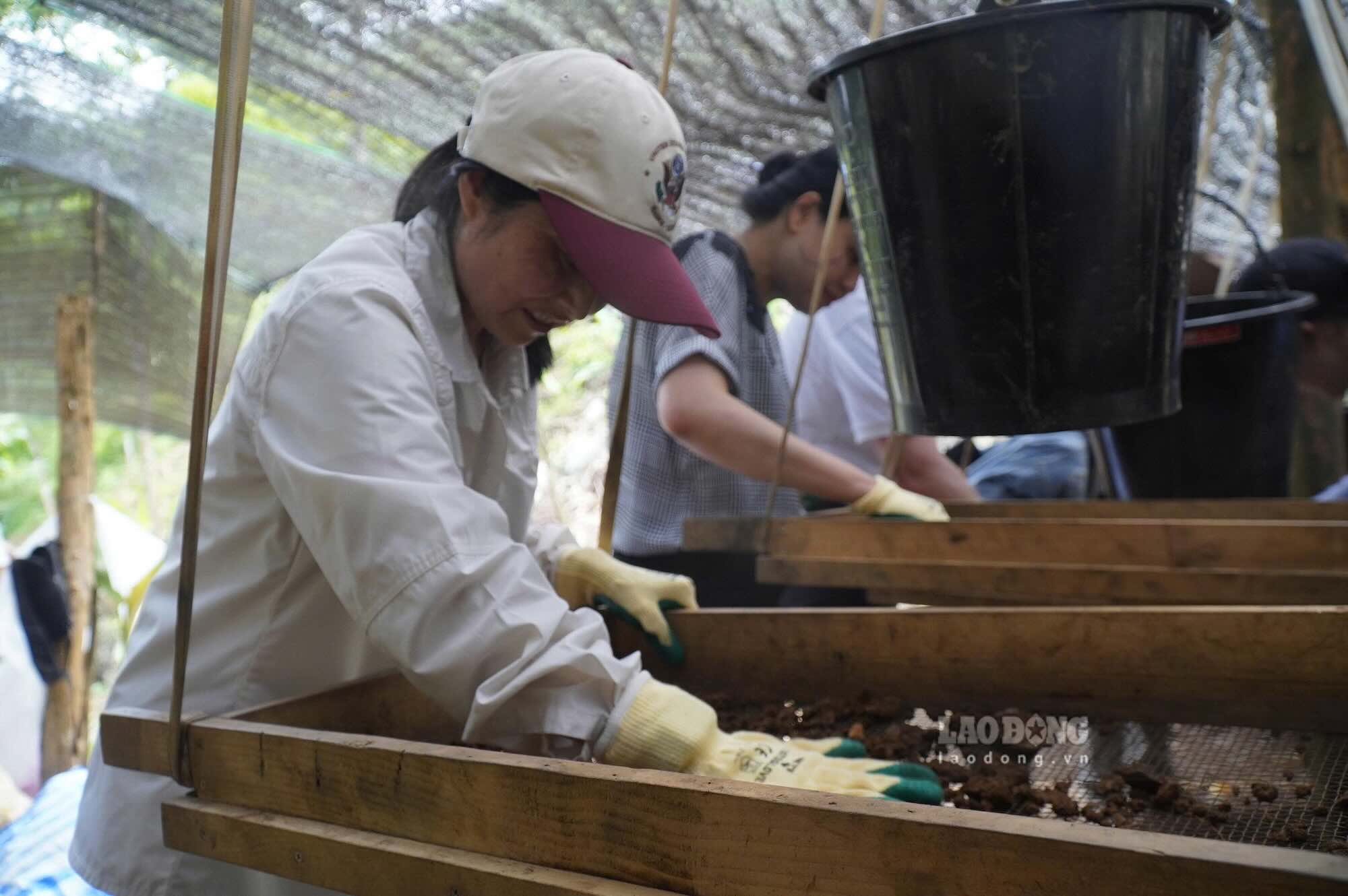
After listening to reports on the progress and search methods, Ambassador Jennifer Wicks directly participated in soil screening. She also spoke with local people working at the scene.
The US Ambassador thanked the government and local people for supporting the search operation. She said she was impressed with the coordination between the Vietnamese and US forces, especially in difficult terrain and weather conditions.
According to Ms. Jennifer Wicks, the US will continue to coordinate with Vietnam in searching for and identifying missing American soldiers in the war. At the same time, the US will support Vietnam in searching for and identifying Vietnamese martyrs.
The US Ambassador also said that the two countries have signed a new memorandum of understanding, identifying key cooperation contents related to searching for missing people and overcoming the consequences of war.
In addition to search activities, cooperation programs also include bomb and mine clearance, unexploded ordnance disposal, dioxin treatment and support for people with disabilities.


