
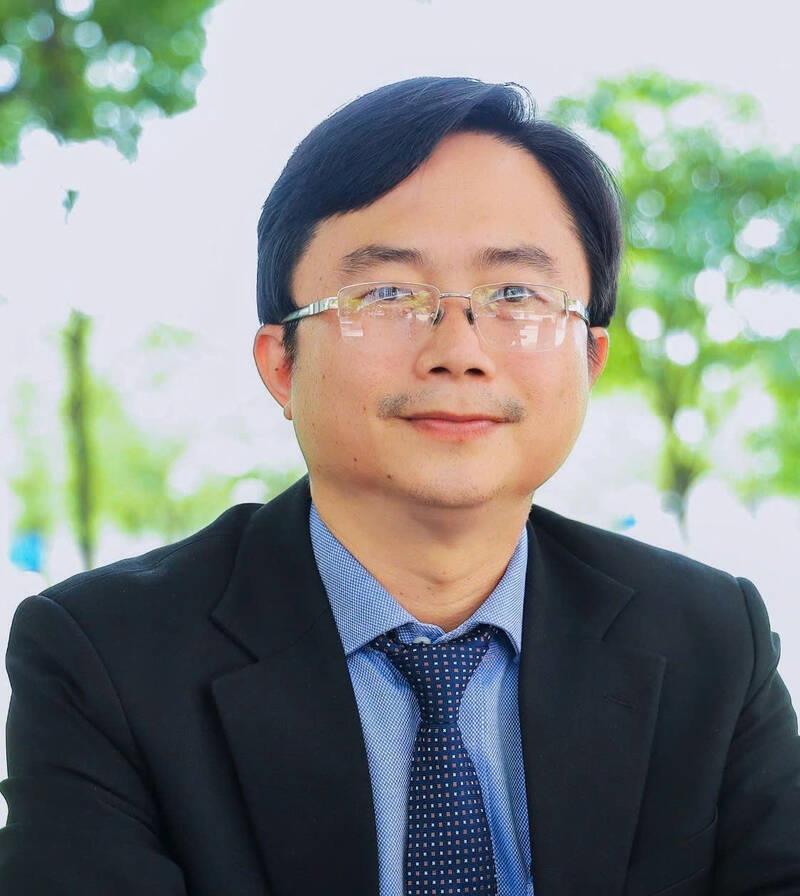
On July 2, speaking at the Ceremony to celebrate the 50th anniversary of Saigon - Gia Dinh city honorably named after President Ho Chi Minh, General Secretary and President To Lam requested the Party Committee, government and people of Ho Chi Minh City to focus on implementing 6 key tasks well. To be able to realize these tasks, Lao Dong Newspaper had an exchange with Assoc. Prof. Dr. Do Phu Tran Tinh (photo) - Director of the Policy Development Institute, Vietnam National University Ho Chi Minh City; University of Economics and Law.
According to you, what does Ho Chi Minh City need to do to transform the special mechanism into specific results?
- In my opinion, the biggest requirement today is that Ho Chi Minh City must shift from the "mechanism-based" thinking to the "productive" thinking. Special mechanisms are not achievements. Mechanisms are only valuable when they are transformed into completed projects, projects are unlocked, businesses are supported, new jobs are created, procedures are shortened and people's quality of life is improved.
Therefore, each specific mechanism must be associated with specific measurement indicators. Decentralization must be measured by the shortened processing time of procedures. Financial mechanism must be measured by the social capital mobilized. Investment mechanism must be measured by the number of projects implemented on schedule. Innovation mechanism must be measured by the number of technology enterprises, new products and commercialized experimental models.
The biggest challenge today is the risk of "strong mechanism but weak implementation". If procedures are still slow, coordination is still fragmented, officials are still afraid of responsibility, and resources are still dispersed, special mechanisms will be difficult to create breakthroughs. To have different results, there must be a team of officials who dare to think, dare to do, dare to take responsibility. But we cannot just call on officials to dare to do without a mechanism to protect them.
Ho Chi Minh City needs to clearly distinguish between wrongdoings for self-interest and policy risks in the process of innovation for the common good. Officials who act within their authority, in accordance with procedures, with transparent motives, for the public interest must be protected. If they do not protect those who dare to do it, the apparatus will choose safety; and a safe apparatus cannot create breakthrough growth.
In planning the development space towards multi-center, how should Ho Chi Minh City prioritize infrastructure and regional linkages?
- The multi-center model is the right direction, but if there is a lack of connecting infrastructure, then multi-center is just an idea on the planning. To form new growth poles, Ho Chi Minh City must let infrastructure go first, but not spread out. The focus must be on public transport, urban railways, ring roads, regional highways, seaports, logistics, digital infrastructure, energy infrastructure, flood prevention and green space.
To achieve double-digit growth, infrastructure is not only a condition for people's livelihoods, but must become a driving force for growth. Metros, beltways, expressways, seaports, logistics centers, new urban areas and digital infrastructure must be considered "economic blood vessels" of megacities. If infrastructure is slow, logistics costs are high, congestion is prolonged, and flooding is not controlled, urban productivity will be reduced.
Regional linkage also needs to be viewed with a new mindset. Ho Chi Minh City is not only linked to share infrastructure, but also to reorganize the growth space. The city needs to play the role of a financial, commercial, service, education, health and innovation center; while the remaining provinces of the Southeast, Mekong Delta and Central Highlands are industrial spaces, high-tech agriculture, logistics, seaports, energy, tourism and supply chains. At that time, Ho Chi Minh City will not develop alone, but become the engine of a large economic region.
What is the role of science - technology, innovation, digital transformation and green economy in the new growth model, sir?
- This must be the central driving force, not an accompanying slogan. Ho Chi Minh City cannot grow quickly and sustainably if it still mainly relies on capital, land, labor and traditional services. The space of the old model is narrowing. The city must shift to growth based on productivity, knowledge, technology, data, innovation and high added value.
The city needs to build a substantive innovation ecosystem. There, universities, research institutes, businesses, investment funds, high-tech parks and authorities must jointly solve the city's major problems such as transportation, health, education, environment, logistics, finance, urban data and clean energy.
Digital transformation must be redesigning management methods, not just putting procedures online. Digital government must help people travel less, businesses wait less, data is more interconnected and policy decisions are more accurate. Green economy is also not just adding green trees, but transforming energy, clean transportation, clean production, sustainable consumption, circular economy and higher environmental standards in all projects.
This is a very large development space for businesses and young people. When science - technology and innovation become the main driving force, young people will have the opportunity to start a business, experiment and contribute. A global megacity not only needs high-rise buildings, but also strong businesses, young talents and a creative ecosystem capable of international competition.
- Thank you!


