
According to experts, to overcome this situation, it is necessary to soon develop a common set of standards for the Vietnamese urban railway system, in order to ensure intercommunication and avoid wasting resources.
Technology mismatch, lack of connection
Reality shows that some urban railway lines, although operational, lack intercommunication due to the application of different standards and technologies from trains, tracks to signal systems. The lack of synchronization makes it impossible for the lines to connect directly, reducing operational efficiency and attractiveness to passengers.
According to the General Plan for Construction of Hanoi Capital to 2030, vision to 2050 (Decision No. 1259/QD-TTg dated July 26, 2011), Hanoi's urban railway network includes 8 lines with a total length of about 318km. However, after more than a decade of implementation, only two lines have been put into operation. Notably, these two lines are not connected to each other.
Currently, the Cat Linh - Ha Dong line (metro 2A) uses all technology, technical standards and equipment of China, implemented by the Chinese EPC General Contractor using ODA loans. The line was put into operation from November 2021 and is managed and operated by Hanoi City.
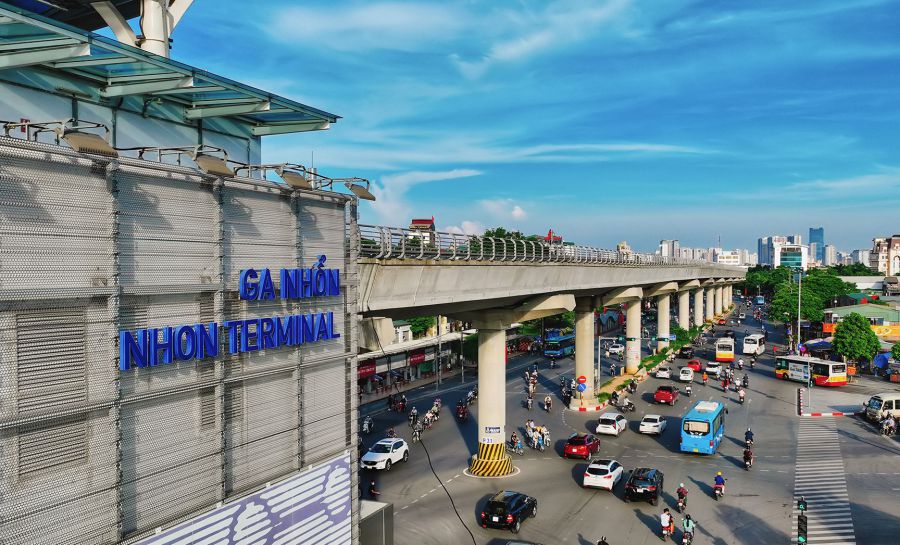
Meanwhile, the Nhon - Hanoi Station line (metro No. 3) applies European standard technology, with trains manufactured by Alstom, using CBTC signal systems and continuous welding technology to reduce noise and vibration. In August 2024, the 8.5km elevated section of the line was put into commercial operation; the remaining underground section is expected to be completed in 2027.
The Hanoi Urban Railway Management Board once pointed out that the reason for the lack of connection for projects stems from the fact that technology is not synchronized and bound by donors.
Currently, Hanoi and Ho Chi Minh City invest in 5 urban railway lines, and there are up to 3 technology sources from ODA-funded regions and countries. The use of many technologies with different bridge gauges, tunnels, carriage sizes, information systems, signals, and electricity causes difficulties in connecting between lines as well as with the national railway through Hanoi. The lesson about the lack of synchronization in the project implementation process is very clear.
Need to proactively calculate output according to common standards
According to the orientation to 2035, Hanoi must complete about 400km of urban railway, forming more than 10 urban railway lines. If investment continues in the old way, the risk of "one standard for each line" will continue to limit the overall development of the entire network.
Talking to Lao Dong Newspaper, Mr. Nguyen Cao Minh - Head of Hanoi Urban Railway Management Board - said that the unit is building a common system of standards and regulations for the entire network. This content has been reported to the People's Committee and Hanoi City Party Committee, along with short-term and long-term solutions to gradually remove bottlenecks in technology and connectivity.
Representatives of the Railway Project Management Board, Ministry of Construction also expressed their views on connection solutions. Accordingly, urban railway lines will have many stations near each other. Right from the planning stage, functional agencies need to study a connection plan between stations to facilitate passenger movement, and at the same time reserve construction ground, avoiding later adjustments.
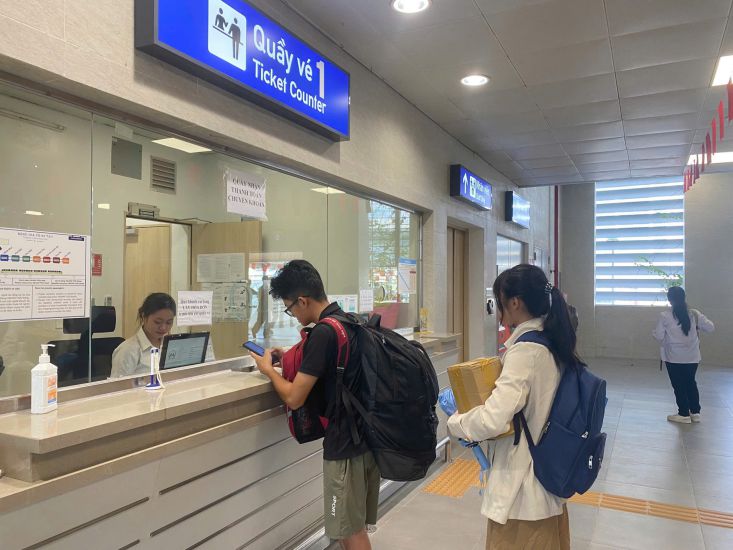
Another content that needs to be researched and promulgated soon is the technical standard for a common type of ticket card for all urban railway lines and can be interconnected with public transport types in the city. This solution helps people use it conveniently and improve the efficiency of operating the entire system.
From a professional perspective, Associate Professor, Dr. Nguyen Hong Thai - Vice Chairman of the Vietnam Railway Transport Association - said that in urban transport, it is necessary to ensure three key connections including infrastructure connection, operating information connection and financial connection, maintenance and repair.
According to Mr. Thai, if routes cannot be connected in terms of vehicles and maintenance, each route must build its own maintenance system, which will cause great waste and make it difficult to create transport value and attractiveness to passengers.
Experts believe that the core issue lies in the planning and investment organization stages when the entire network does not have a unified general engineer leading from design to technology selection. The consequence is the situation of "one project one technology", depending heavily on the requirements of each ODA donor.
To overcome this, it is necessary to adjust new routes in the direction of prioritizing connection, selecting technology based on the overall plan instead of following individual proposals of each investor. Otherwise, the city may have to build more transit routes with high costs but disproportionate exploitation efficiency.
The construction and application of a common set of standards for urban railways is therefore not only a technical requirement, but also a fundamental solution to ensure synchronicity, optimize investment resources, improve operational efficiency and create a foundation for the sustainable development of the urban transport system in the future.


