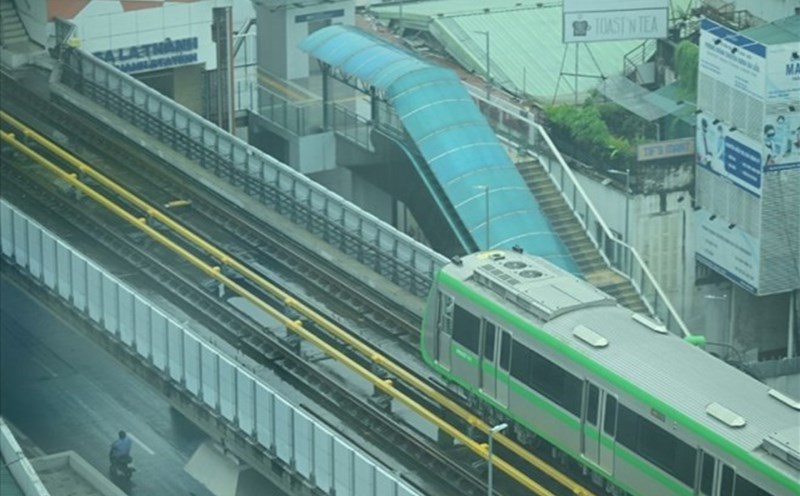
2025 is considered a clear growth milestone for urban railways, thereby creating an important boost for the public passenger transport system in major cities, especially Hanoi and Ho Chi Minh City.
According to statistics from the National Traffic Safety Committee, urban railway lines continue to promote the role of large-capacity transport, gradually changing the thinking and habits of using personal vehicles of urban residents.
The Cat Linh - Ha Dong route from its opening to mid-June 2024 has served more than 25 million passengers. On average, it reaches about 35,000 passengers per day, and about 22,000 passengers/day on weekends.
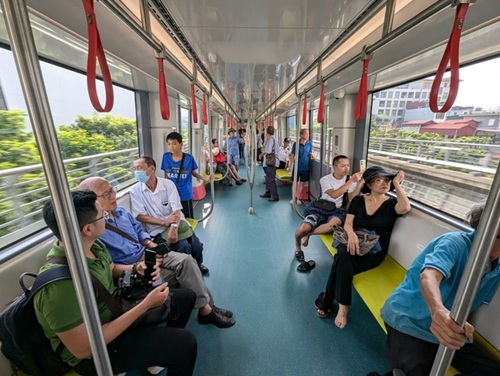
The Nhon - Hanoi Station route after 6 months of operation (from August 2024 to early 2025) reached nearly 3.4 million passengers, equivalent to about 480,000 passengers/month. Currently, this route serves an average of about 18,000 passengers/day per week, of which about 60% of passengers use monthly tickets.
In Ho Chi Minh City, the Ben Thanh - Suoi Tien route after 6 months of commercial operation (from December 22, 2024 to mid-June 2025) reached about 10 million passengers. On average, nearly 58,000 passengers per day; of which about 50,000 passengers on weekdays and more than 76,000 passengers on weekends.
Notably, Hanoi Metro has just deployed a biometric ticketing system, one of the advanced technologies today that has contributed to improving the experience and creating convenience for people when using public transport.
According to the assessment of traffic experts, urban railway lines continue to affirm their pillar role in the public transport system of the two major cities, contributing to reducing congestion, promoting green traffic and improving the market share of public passenger transport.
Representatives of Hanoi Metro said that passenger volume increased sharply in 2025 thanks to the operation of the Nhon - Hanoi Station route and peak times, including days of service reaching record levels.
Talking to Lao Dong Newspaper reporters, Mr. Le Bang An - General Director of Hanoi Metro - said that 2026 is of special significance, the opening year for the socio-economic development plan for the period 2026-2030 with the goal of high growth. In that context, Hanoi Metro focuses on ensuring absolute safety and smooth operation of the two existing urban railway lines; and strives to grow from two digits or more in 2026.
According to the plan, ticket sales and revenue in 2026 are expected to increase by over 11.5% compared to 2025, contributing to the implementation of the general growth target of the Government and Hanoi City.
Along with that, the enterprise will consolidate the organization model, implement the Project to establish a Branch to manage and maintain urban railway infrastructure; establish a Technology - Training - Research and Development Center to prepare human resources for routes No. 2 and No. 5 according to the investment schedule.
Hanoi Metro also identified improving service quality as a key task, promoting communication to change people's awareness; strengthening multimodal interconnection, creating favorable conditions for passengers to access and use the metro, especially groups using personal vehicles.
In parallel with ticket revenue, the unit will effectively exploit the space and urban railway infrastructure associated with urban development, thereby expanding extra-ticket revenue and attracting more passengers.
Talking to Lao Dong Newspaper, Dr. Phan Le Binh (urban transport expert) said that the habit of using personal vehicles is still common in urban areas. To make urban railways truly "attract passengers", it is necessary to continue to change perceptions by improving utilities, especially effective connections between metro and buses.
According to Dr. Binh, the bus network in Hanoi has spread widely, if connectivity is strengthened, tickets and amenities are synchronized, people will gradually switch to using public transport, contributing to reducing congestion and pollution. However, the connection from the station to commercial centers and large urban areas is still limited, and more convenient and synchronous pedestrian infrastructure investment solutions are needed in the near future.