
The Can Gio - An Hung - Dien Thinh - Lam Vien consortium (investor consortium) has just sent a document to the People's Committee of Ho Chi Minh City and the Department of Finance on receiving and adjusting the report dossier proposing investment policy for the sea-crossing road project connecting Can Gio with Vung Tau.
According to the updated proposal, the entire Can Gio - Vung Tau sea-crossing road still retains its length of about 14.06km. The starting point connects to the East Sea road in Can Gio Sea Urban Area, the ending point connects to the planned Sao Mai - Ben Dinh road, belonging to the old Ba Ria - Vung Tau province.
However, compared to the previous plan, the project has many adjustments in the scale of tunnels, bridges and access roads to optimize the technical plan.
The sea tunnel section is extended from 3.1km to nearly 3.9km, of which the submerged tunnel section increases from 2.1km to about 3km.
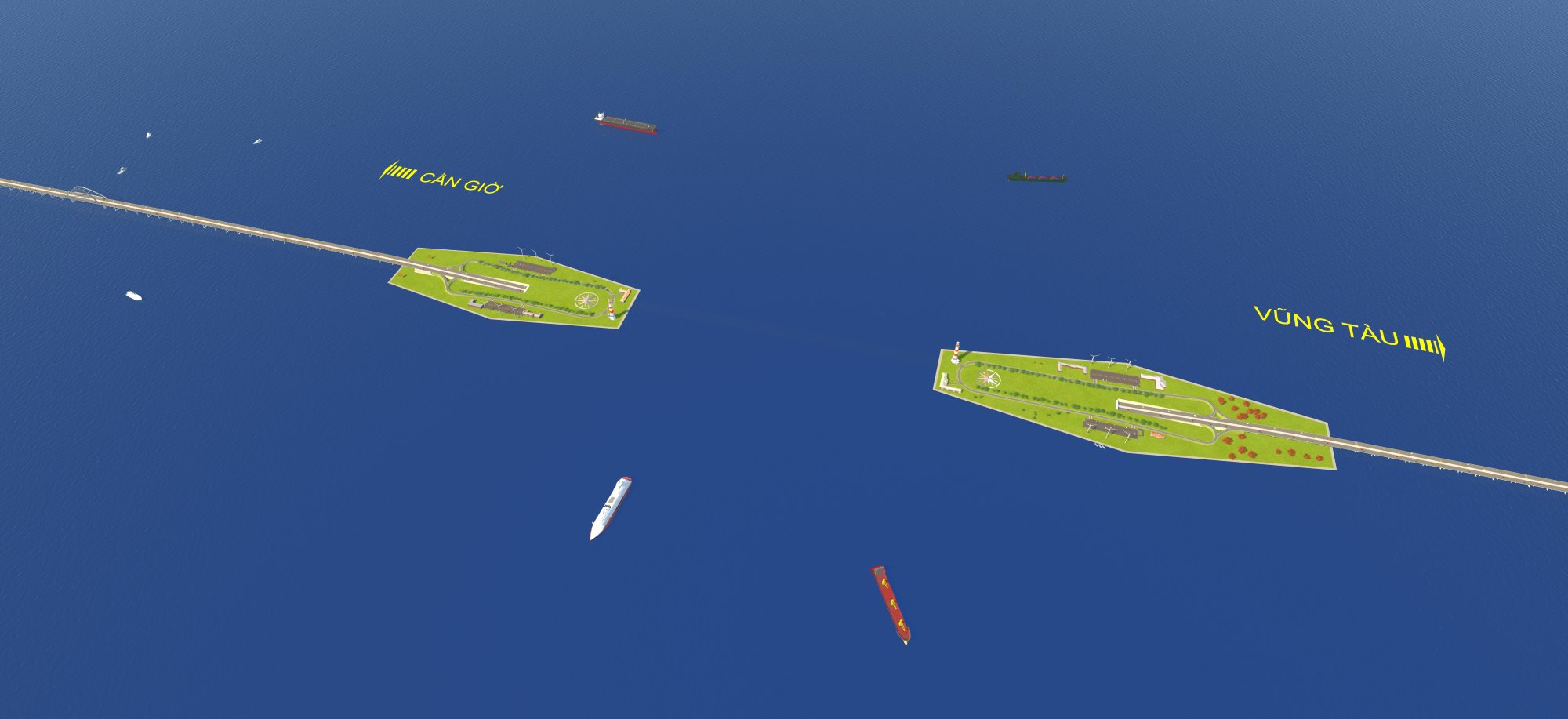
The sea bridge section has also been adjusted to increase by about 200m, raising the total length to more than 8km, including more than 5km in Can Gio and nearly 3km in Vung Tau.
Conversely, the total length of the approach roads at both ends of the route has been shortened from nearly 3km to about 1.9km. In which, the Can Gio side is about 739m long, and the Vung Tau side is more than 1.1km.
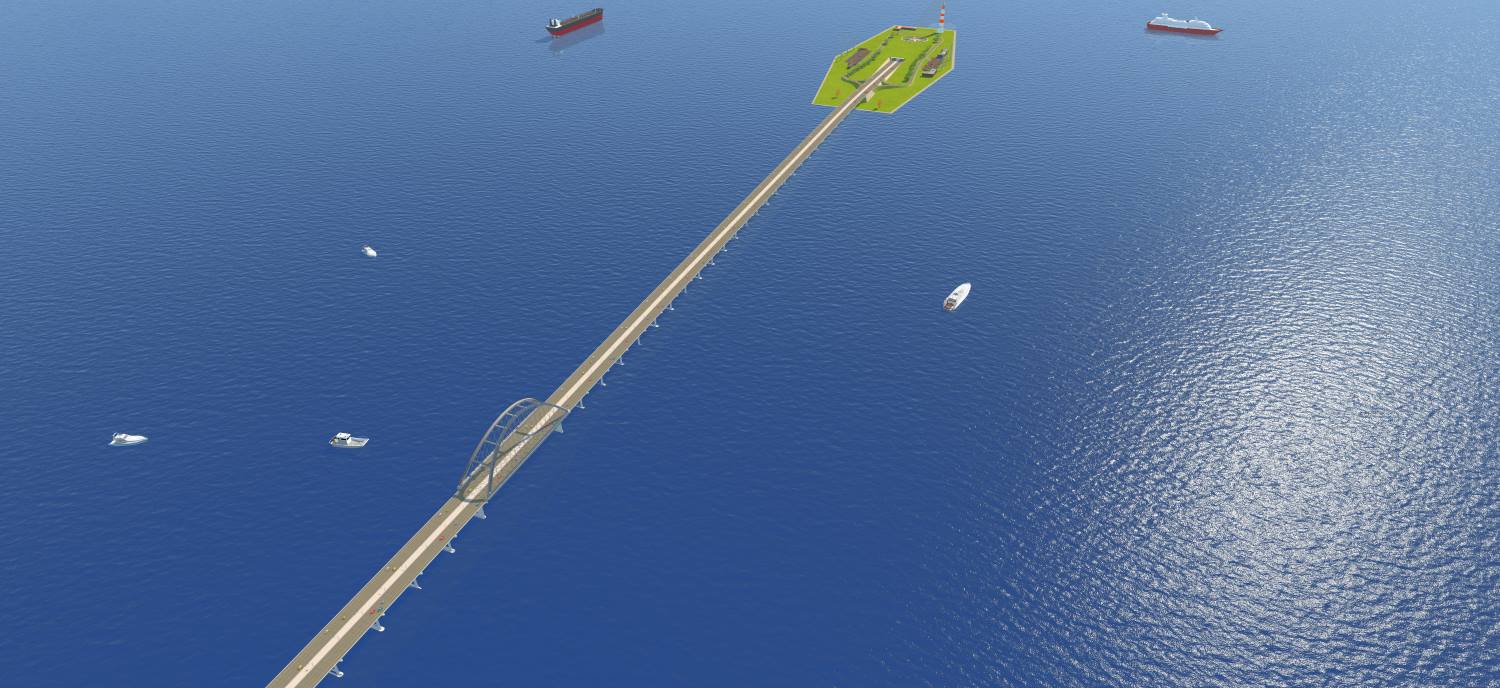
According to the preliminary design, the road is invested with a scale of 6 motorized lanes. The sea-crossing tunnel section is 30.2m wide, including two tunnel pipes, each pipe 15.1m wide. The sea-crossing bridge section is 26.25m wide, and the access road is 34.5m wide.
The total land area occupied by the project is about 169.26ha.
The investor consortium expects a total investment of about 93,016.548 billion VND, of which loan interest expenses during the construction period are about 9,262.754 billion VND. Investor's equity is about 13,952.482 billion VND, and the remaining more than 79,064 billion VND is commercial loan capital.
The investor proposes to implement the project under a BT (build - transfer) contract, self-arrange all capital sources to invest in the project, including compensation and site clearance costs. In return, the State pays with land fund combined with the state budget equivalent to the project value.
According to the expected plan, in the second quarter of 2026, the investment policy proposal report, feasibility study report, investor selection and BT contract signing will be approved.
In the third quarter of 2026, the project will proceed with site clearance and commence construction. The project is expected to be completed and put into operation in the third quarter of 2029.
The investor consortium also proposed that the Ho Chi Minh City People's Committee consider approving the adjusted investment policy proposal report dossier to organize appraisal according to regulations, submit it to the Ho Chi Minh City People's Council for investment policy decision and approve project implementation according to PPP method, BT contract type.
In addition, the investor proposed to apply the form of investor selection in special cases; at the same time, approving the principle of using land funds and the state budget to pay BT contracts.
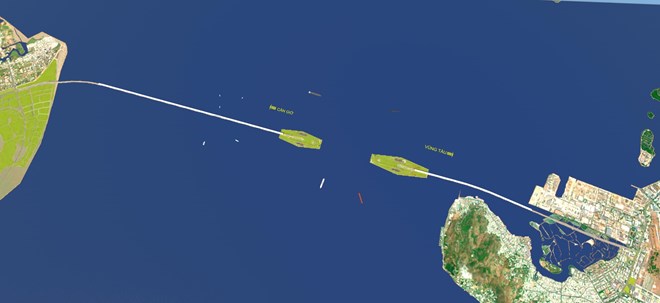
Can Gio and Long Son - Vung Tau area are assessed as two coastal areas with great potential for developing ecotourism, industry, seaports and logistics.
However, currently, traffic connection between these two areas is still limited, people and businesses mainly have to go around National Highway 51 or use ferries, taking about 90 - 120 minutes to travel.
If implemented, the sea-crossing route will create a direct connecting axis between Ho Chi Minh City and Vung Tau along the coast, shortening travel time to about 15 - 20 minutes.
The project is also expected to create a boost for Can Gio sea tourism, promote the development of Long Son industrial park, and improve the exploitation capacity of Cai Mep - Thi Vai port cluster,...


