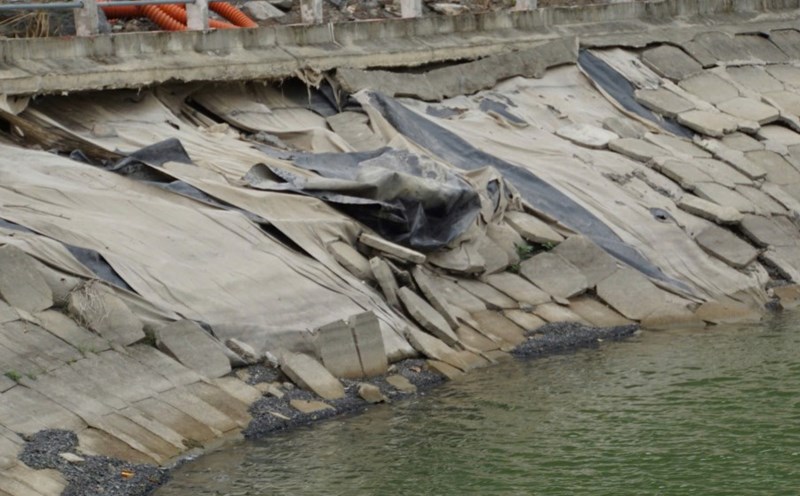
Ancient well in the middle of the park
I set foot on Con Co on a late spring afternoon. A small island, with four waves, where every drop of sweet water is as precious as blood. Con Co Island was formed from volcanic volcanic activity, so the basalt and tuf basalt foundations cover most of the island's surface. Seen from above, the island is shaped like a turtle with a comfy arch, causing rainwater to fall and often overflow straight into the sea.
According to Mr. Dang Xuan Thanh - Chairman of the Vietnam Fatherland Front Committee of the island district, in 2006, the delegation of scientific officials of the University of Mining and Geology survey drilled drilling and making conclusions: The potential of fresh water storage on the island is concentrated at ¼ of the southern area, the rest are salinity due to tide influence.
Regarding climate, rainfall will be distributed from August to January of the following year, accounting for 75% of the year's rainfall. From February to July, the weather is hot and dry, with little rain, and the island is in a state of shortage of fresh water. Vegetables are dried.
The discovery of stone tools (now on display at the Island District Traditional House) is the basis for archaeologists to confirm that tens of thousands of years ago, people lived on the island. Cham Pa residents have set foot here, leaving many traces. There is also an ancient Muoi well of the Cham people on the island. That proves that ancient residents have exploited and used groundwater for daily activities.
There are many ancient Cham wells along the Central Coast, which used to be a stop to exchange fresh water on the silk journey. The same goes for Muoi well on Con Co island, which still provides domestic water for residents.
Finding solutions to the problem of freshwater drought
Mr. Dang Xuan Thanh - Chairman of Vietnam Fatherland Front Committee of the island district - said: "In 2006, the delegation of the University of Mining and Geology help drill 6 underground wells, but currently only half used, half of salinity." Therefore, the main solution is to collect rainwater. However, the rainfall is unevenly distributed in the year, making the fresh water in the island always lack.
Identifying electricity and water as key resources for economic, political, cultural, and life development, the island district has developed a long-term and immediate investment strategy for freshwater exploitation. The freshwater project goes through two phases.
Phase 1: In addition to underground water wells, the district invests in building 4 rainwater tanks, each with a capacity of 1,500m3. From tanks, water supply pipelines are built, supplying water to agencies, units, business households, and households. Accordingly, each business household and household living on the island also builds a rainwater storage tank, helping to proactively source drinking water for daily life.
According to Mr. Nguyen Van Thanh, Chairman of the People's Council of Con Co island district, there are currently many agencies, units, and military-civilian medical centers on the island, schools, telecommunications, banks, finance, military, dozens of households providing food and beverage services and 11 accommodation establishments with 73 (197 beds). Therefore, the inadequacy between the supply and demand of fresh water is inevitable.
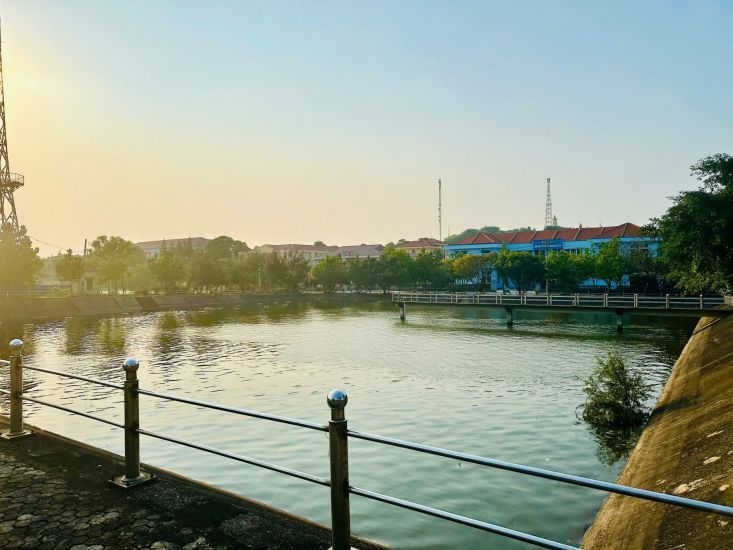
On the island, there are 2 reservoirs with a capacity of tens of thousands of cubic meters to supply water for construction and watering of plants. Cattle and poultry drink water at Cu Lac Lake... However, to achieve the goal of welcoming 25,000 visitors by 2030, including 5,000 international visitors, in addition to infrastructure, fresh water is still a vital problem.
In 2022, the island district invested in reverse osmosis technology, treating saltwater through the filter into fresh water with a budget of 17 billion dong. According to the plan, the second quarter/2023 completed projects put into use. However, nearly two years have passed, the project is not feasible and the district still has breakthrough technology to solve the problem of fresh water.