
The 3.5km long Tam Trinh road expansion project is facing the risk of affecting progress when the underground and above-ground technical infrastructure systems have not been completely relocated, although site clearance on the route has reached about 99%.
According to the plan, the Tam Trinh road expansion project must complete the entire roadbed by mid-October 2026. Road surface paving is expected to be completed in December 2026 and the entire project to be completed on June 30, 2027.
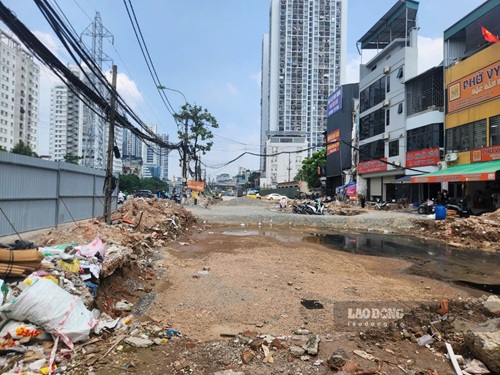
However, the progress is currently facing many difficulties due to technical infrastructure systems, including medium and low voltage electricity, telecommunications cables, water supply pipes and fire prevention and fighting (PCCC) grids.
Records of Lao Dong Newspaper reporters at the construction site show that the contractor has mobilized machinery, equipment and manpower to accelerate the construction of the main road. However, the project is being divided into many sections, causing the construction organization to not achieve the expected efficiency.
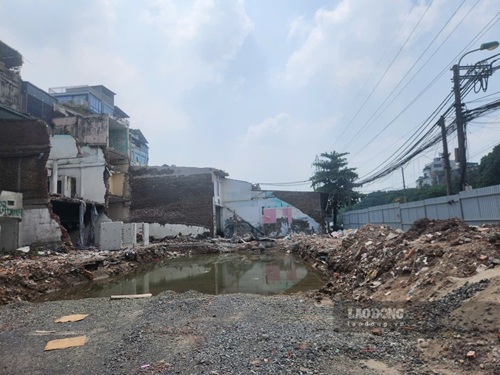
According to the construction unit, along the 3.5km route, there are still 6 households entangled. Notably, there are 26 medium-voltage power lines from station E3 and rows of power poles densely located on the median strip and on both sides of the route.
During the excavation of the road frame close to the foot of the power poles, the contractor discovered that some poles showed signs of cracked bases, posing a potential safety risk. Therefore, some locations had to be temporarily stopped, waiting for infrastructure treatment before continuing construction.
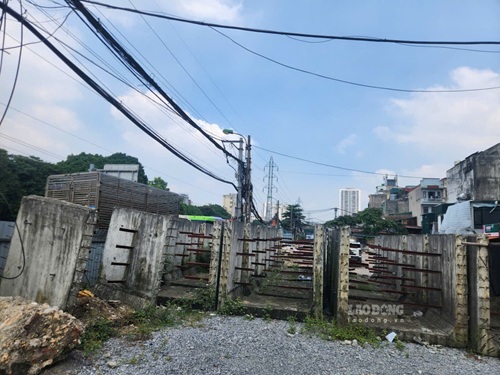
Along with the electrical system, underground and above-ground telecommunication cables, water supply pipes and fire protection grids within the roadbed are also not completely moved.
The construction being divided into many short sections not only affects productivity but also causes difficulties in organizing drainage. When it rains heavily, some locations generate water stagnation, affecting the travel, living and business of people along the route.
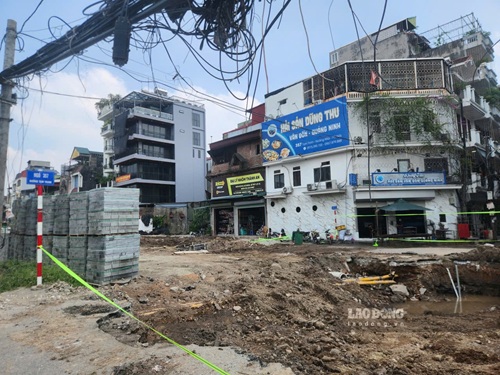
Ms. Do Thi Hai (at No. 313 Tam Trinh), said that prolonged construction has greatly affected people's lives.
The investor and construction units should do everything thoroughly, so that people have roads to travel, have space to live and work. If we keep constructing a little here, a little there and leave it unfinished, we people will be extremely miserable," Ms. Hai said.
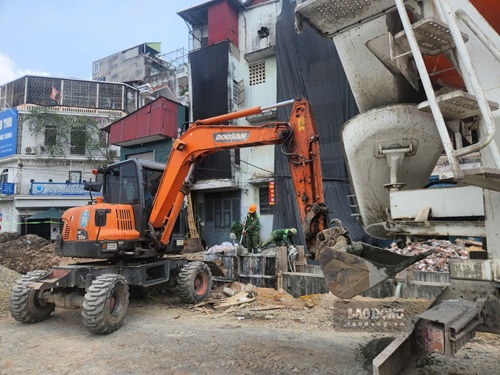
According to Ms. Hai, some households cannot continue to do business and live in prolonged construction sites, so they have to close down or move to rent other locations.
We people just hope to resolve it quickly so that people are less miserable. This unfinished situation has lasted for several years," Ms. Hai said.
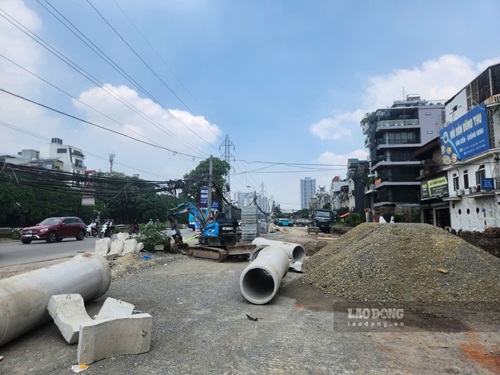
Representatives of the construction unit said that the technical infrastructure on the route is still entangled in many locations, from medium and low voltage electricity to water supply and fire protection grids. The power lines in the median strip must be relocated so that the contractor can deploy the sewer system.
In particular, the section from the East Bridge to the double road is still facing many problems. After lifting telecommunication cables, some power poles appeared cracked at the base. To ensure safety, related power lines need to be relocated before continuing construction.
It is known that the Hoang Mai Ward Project Management Board has repeatedly urged technical infrastructure management units to coordinate in handling. However, so far, the relocation of infrastructure works has not been thoroughly resolved.
While the project site has been basically handed over, technical infrastructure is still overlapping within the construction area, posing a risk of affecting the set progress milestones.
According to the plan, the project must complete the C19 asphalt concrete pavement on the left side of the route on December 31, 2026 and complete the entire project on June 30, 2027.
To ensure progress, the coordination of relocating electricity, telecommunications, water supply and drainage systems and other technical infrastructure works needs to be accelerated, handled thoroughly, and create continuous ground for contractors to organize construction.


