
A series of local flood control projects are being accelerated, contributing to reducing flooding in the inner city area during this rainy season.
The completion of many key flood control items is gradually realizing the goal of reducing prolonged flooding for many years in the Capital. Hanoi City expects the projects to contribute to ensuring traffic safety and improving people's living environment before the rainy and storm season.
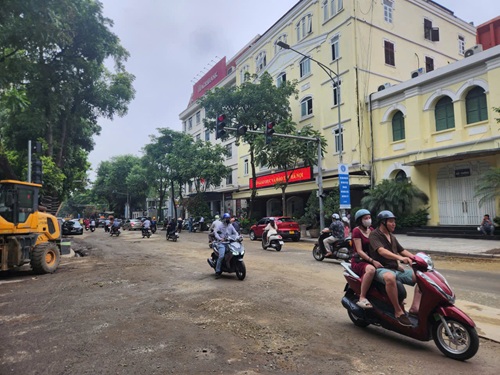
Records of Lao Dong Newspaper reporters show that drainage infrastructure on some central streets has had significant changes. Many people expressed their expectations when flood prevention works were put into use.
Mr. Tran Huu Son (Duong Thanh street, Hanoi) said that the construction of sewer systems and underground tanks in areas that are frequently flooded is necessary, contributing to reducing the worry of flooding every time it rains heavily. According to Mr. Son, these are items that meet the actual needs of inner-city residents.
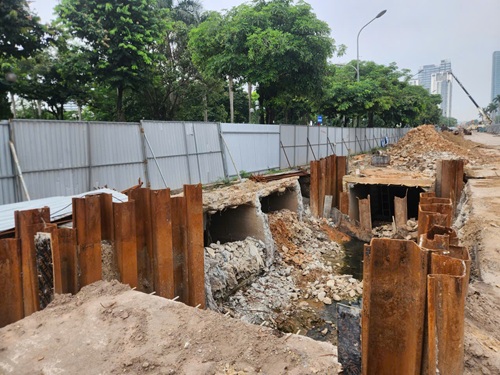
Talking to a reporter of Lao Dong Newspaper, Mr. Nguyen Duc Hung - Director of the Technical Infrastructure Management Center (Hanoi Department of Construction) - said that the project to invest in building against localized flooding at some points in the inner city area is a key task that the City Party Committee, Hanoi City People's Committee and the Department of Construction are concerned about and closely directing.
To prepare for the 2026 rainy season, the Center has coordinated with consulting units and contractors to mobilize maximum manpower and equipment to simultaneously deploy 22 items. Including the renovation of pumping stations at 6 lakes including Thien Quang, Bay Mau, Ba Mau, Linh Quang, Van Chuong and Trung Tu.
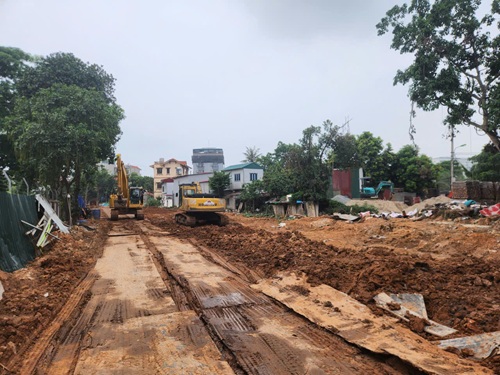
In addition, the project is also being implemented at 16 points that frequently experience flooding on streets such as Ly Thai To, Le Phung Hieu, Phan Chu Trinh, Trang Tien, Nguyen Trai...
On the night of June 15, the last barriers on Quang Trung street were removed, and the road surface was cleaned to restore traffic to people. Up to now, the streets under the basic investment list have completed asphalt concrete paving, ensuring urban aesthetics and traffic safety.
According to representatives of the Hanoi City Technical Infrastructure Management Center, to ensure progress, hundreds of engineers and workers have worked continuously day and night, completing many items earlier than planned.
Despite achieving initial results, experts believe that Hanoi still faces many challenges in urban drainage. Climate change causes extreme weather phenomena to appear more frequently, while drainage infrastructure in many areas has deteriorated and has not met the rapid urbanization rate.
In the coming time, in addition to handling localized flooding points, the city needs to continue to invest in large-scale drainage projects, renovate river and ditch systems and build more regulating lakes to improve drainage capacity.
Experts also believe that the application of digital technology in the management and operation of drainage systems is a necessary requirement to improve forecasting and incident handling capabilities. At the same time, people's awareness of not littering in sewers and canals also plays an important role, contributing to preserving the urban environment and promoting the effectiveness of flood prevention works.


