
After the emergency flood control projects were completed, the inner city of Hanoi was basically stable before rains of less than 400mm. However, in some suburban communes, the flooding situation is still complicated, in which the Nhue River is identified as one of the major bottlenecks of the drainage system.
Inner city flooding reduced, suburbs still under pressure
According to the Hanoi City Technical Infrastructure Management Center (Department of Construction), the completion and commissioning of emergency flood prevention projects has helped the inner city area improve drainage capacity.
However, when heavy rain occurs, suburban and downstream areas still face the risk of flooding. Mr. Nguyen Duc Hung - Director of Hanoi City Technical Infrastructure Management Center, said that this situation depends directly on the water level of the Nhue River.
According to Mr. Hung, the Nhue River is inter-regional in nature, while Hanoi only manages a section. The river route both receives drainage water from the inner city and is affected by the flow from upstream.
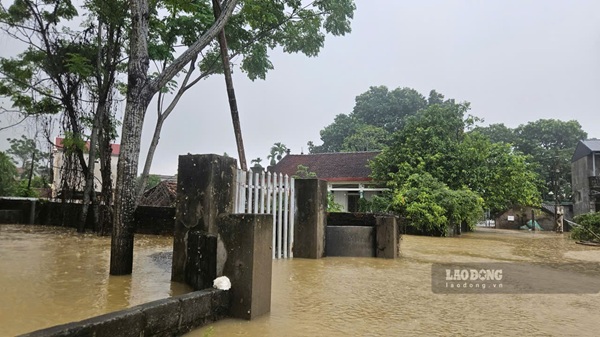
Representatives of Hanoi Drainage One Member Limited Liability Company said that this is a major challenge for drainage work. Hanoi City is located in a location receiving flow from the West and North, including large floods on the Bui and Tich rivers.
Rainwater from the inner city is discharged into the irrigation river system to drain to the Southeast. However, when the water level of the rivers rises, functional agencies must limit the discharge flow downstream to reduce the risk of flooding.
Increasing pumping capacity but output is still a bottleneck
One issue raised is that Hanoi has invested in pumping stations, but the drainage efficiency still depends on the reception capacity of the Nhue River.
The new pumping stations mainly pump water into the Cau Nga and Nhue rivers. When many stations operate together, the amount of water pouring into the Nhue river may cause the water level of this river route to continue to increase.
When the Nhue River rises, the risk of water flowing back into the inner city area may appear, forming bottlenecks in the drainage system. This shows that flood control cannot only focus on increasing pumping capacity but must also solve the output synchronously.
In the immediate future, functional units are proactively operating the drainage system. Mr. Nguyen Duc Hung said that the water level of the Nhue River has decreased, and water has begun to flow into the Red River. Units are opening Thanh Liet dam, combined with operating Yen Xa Pumping Station to support drainage.
In the long term, Hanoi needs to study a plan to form a new drainage canal, crossing the dyke and directly connecting from the city to the Red River. This plan aims to shorten the drainage route, reducing dependence on the drainage capacity of the downstream river system.
In the upstream of the Nhue River, the operation of the Chem culvert, Lien Mac Pumping Station and regulating works is also being considered to proactively bring water to the Red River when conditions permit.
The Nhue River section through Hanoi is about 61.5km long, from Lien Mac culvert to My Duc commune, passing through 19 communes and wards. The river route plays a role in irrigation, waterway traffic, and is associated with the urban space and culture of the city.
However, the urbanization process has caused the riverbed to be silted up, narrowed, and water quality to decline, affecting drainage capacity.
In mid-July 2026, the Hanoi City People's Council approved the investment policy for the overall renovation project of the Nhue River with a preliminary total investment of about 75. 115 billion VND.
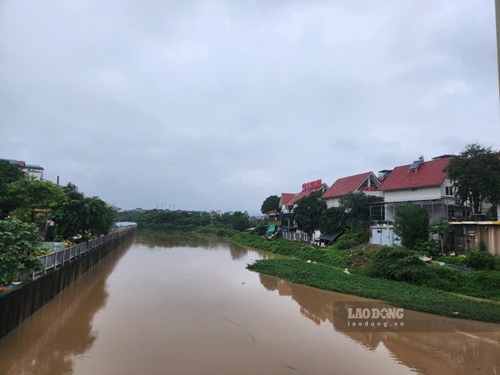
The project has a land use area of about 855ha, expected to be implemented in the 2026-2030 period in the form of PPP, BT contract. The main items include site clearance; renovation, dredging of riverbeds and embankments about 61.5km long; investment in traffic roads, technical infrastructure and wastewater collection system; construction of wastewater treatment plants according to planning.
Hanoi City is also investing in large irrigation projects, including Yen Nghia Pumping Station with a capacity of 120m3/second, completed in 2026; Lien Mac Pumping Station phase 1 with a capacity of 70m3/second.
However, these projects will only maximize their effectiveness when the Nhue River is synchronously renovated, ensuring water reception and drainage capacity.
The combination of regulating flow, opening drainage directions to the Red River, completing key projects and comprehensively renovating the Nhue River is expected to create a foundation for Hanoi to move from handling each flooded point to solving the drainage problem in a synchronous and long-term direction.


