
Hanoi is implementing 12 drainage projects according to the plan, focusing on investing in regulating lakes, pumping stations, canals and key projects to improve urban drainage capacity.
According to the plan, Hanoi's urban drainage system is divided into 3 main areas including Ta Day, Huu Day and North Hanoi, with a total area of about 125,400ha.
The city needs about 5.399ha of regulating lakes and key pumping stations with a total capacity of about 1,315m3/s. However, to date, the area of regulating lakes has only reached about 1,270ha, equivalent to 23.53% of the plan; the capacity of key projects reaches about 346.51m3/s, equivalent to 26.35%.
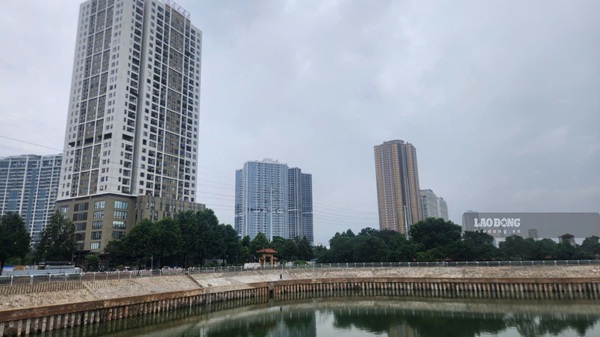
According to the Hanoi Department of Construction, the investment progress has not kept up with the pace of urbanization and increasing drainage demand. Many regulating lakes, pumping stations, key works and transmission lines have not been invested. Some basins have not formed synchronous and closed drainage systems, limiting the ability to respond to heavy rain.
To gradually overcome bottlenecks, Hanoi is implementing 12 public investment projects according to the plan, in addition to 10 emergency flood control projects that have been and are being effective in the 2026 rainy season.
Key projects include Lien Mac Pumping Station; Ta Nhue basin rainwater drainage system phase 1; Ha Dong drainage system; drainage system, regulating lake and Vinh Thanh Pumping Station; upgrading Phuong Trach Pumping Station; improving the drainage system in the western area of the city, including the La Khe canal.
Hanoi City also deploys dredging the main axis of the Nhue River from Lien Mac to Ring Road 4; building Cu Khoi Pumping Station, regulating lake and Viet Hung - Cau Bay ditch; canal system and Gia Thuong Pumping Station; Ngoc Thuy 1 regulating lake, Ngoc Thuy ditch and Chem, Lien Mac regulating lakes.
Investors are required to accelerate the progress of projects that affect drainage capacity such as renovating La Khe canal - Yen Nghia drainage pumping station, culverting Thuy Khue ditch, Ngoc Ha ditch, reinforcing the banks of Lien Phuong ditch and building Co Linh underpass.
In addition to investing in a drainage system, Hanoi is implementing the Project on handling flooding in inner city areas in the 2026-2030 period and building the Capital's ground elevation and drainage planning with a 100-year vision.
The city is also studying the "sponge city" model, in the direction of retaining water in place, increasing the ability to absorb, store, regulate and reuse rainwater.
According to Mr. Nguyen Duc Hung - Director of Hanoi City Technical Infrastructure Management Center (Hanoi Department of Construction), this model does not replace traditional sewer systems and pumping stations but supplements solutions to distribute and reduce the amount of water pouring into the system at the same time.
Reality from the beginning of the 2026 rainy season to now shows that focusing on handling bottlenecks has helped many areas reduce the level, scope and duration of flooding.
However, flood control is still a long-term problem. In the context of rapid urbanization and increasing risk of extreme rain, controlling ground elevation, protecting water storage space and increasing water seepage and retaining capacity needs to be raised right from the planning stage.


