
Infrastructure is the key to expanding development space
On July 2nd, speaking at the Ceremony to celebrate the 50th anniversary of Saigon - Gia Dinh City honorably named after President Ho Chi Minh, General Secretary and President To Lam requested Ho Chi Minh City to focus on effectively implementing 6 key tasks.
In which, Ho Chi Minh City needs to plan development space in the direction of multi-center, modern, green, smart, closely linked to the Southeast region, Mekong Delta, Central Highlands, the whole country and internationally. Infrastructure must go one step ahead, prioritizing public transport, urban railways, beltways, expressways, seaports, logistics...
According to Dr. Architect Ngo Viet Nam Son - urban planning expert, the direction of General Secretary and President To Lam is not only a short-term orientation but also a long-term vision to build Ho Chi Minh City into a super-urban area with competitiveness in the region.
Currently, Ho Chi Minh City is still mainly developing according to a centrifugal model, causing residents, jobs and high-quality services to concentrate in the central area, leading to traffic congestion, flooding, pollution and increasing logistics costs.
According to Mr. Son, after merging with Binh Duong and Ba Ria - Vung Tau, Ho Chi Minh City has conditions to form a multi-polar urban structure. The old Ho Chi Minh City plays the role of a financial, technology and innovation center; Binh Duong is a growth pole of high-tech industry, while Can Gio, Ba Ria - Vung Tau becomes a polar of marine economy, seaports and tourism. At the same time, Ho Chi Minh City strengthens links with Dong Nai, Tay Ninh to form a more close regional development space.
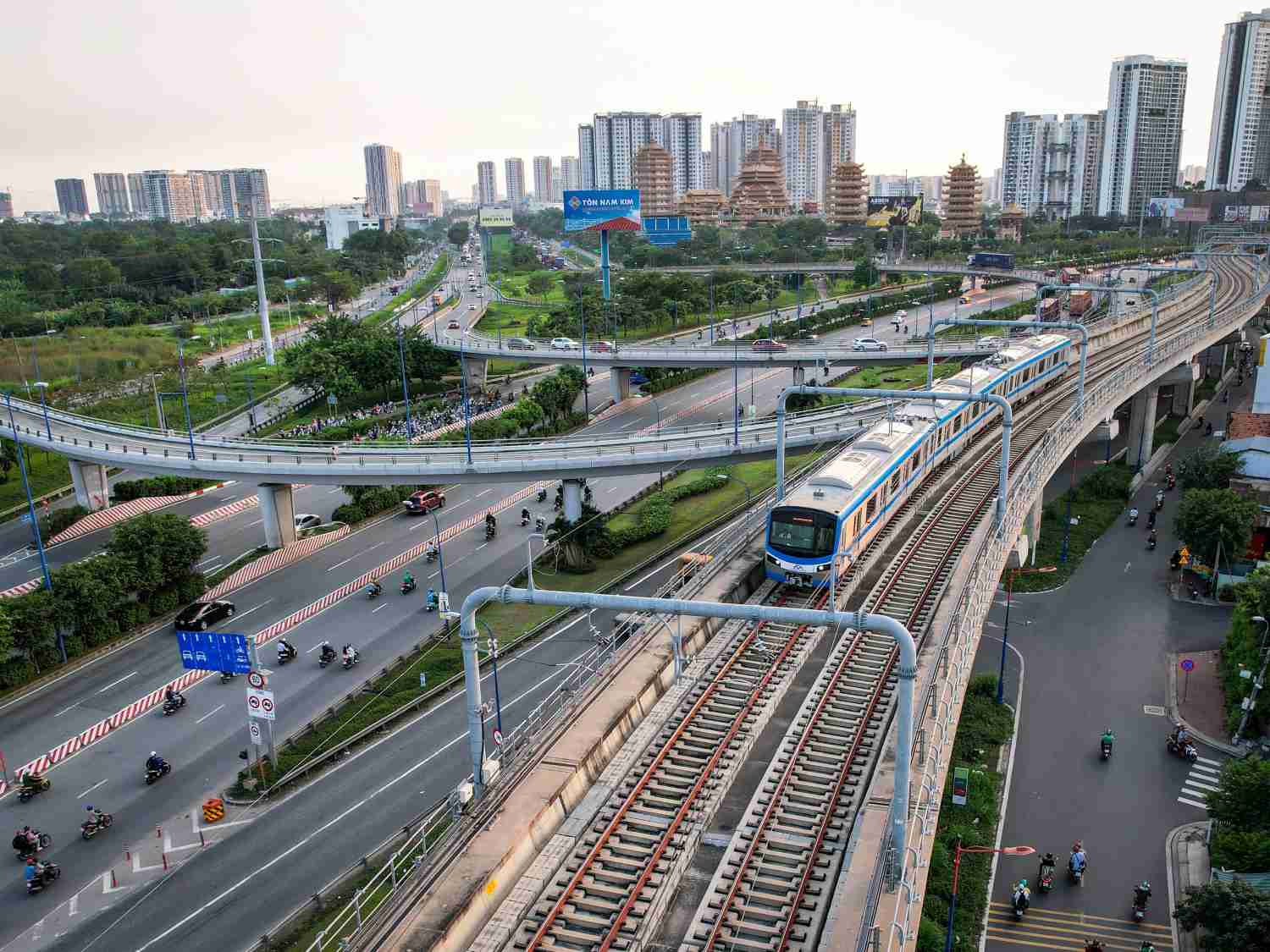
To realize this structure, Mr. Son believes that infrastructure must really go one step ahead, in which the top priority is the development of the urban railway network. Metro not only solves the problem of congestion but is also a tool for restructuring the urban space according to the public transport-oriented urban development model (TOD).
Each metro station needs to become the nucleus of new centers, integrating housing, commerce, offices, education and public services, thereby reducing dependence on personal vehicles and redistributing population.
In particular, when Long Thanh airport goes into operation, along with a synchronous connectivity system, Ho Chi Minh City will expand its development space to Dong Nai, forming a continuous urban area, reducing pressure on the inner city area.
Series of strategic projects to be completed in the next 5 years
According to Mr. Tran Quang Lam - Director of Ho Chi Minh City Department of Construction, in the next 5 years, the city's main trunk traffic system will be basically completed, creating a new face for urban infrastructure.
Many of the largest-scale road projects to date are being focused on implementation. In the period from now to 2030, a series of key projects will be completed and put into operation such as the closed Ring Road 2, Ring Road 3, An Phu intersection, My Thuy intersection, Ho Chi Minh City - Moc Bai expressway, Ho Chi Minh City - Thu Dau Mot - Chon Thanh expressway, Ho Tram - Long Thanh expressway.
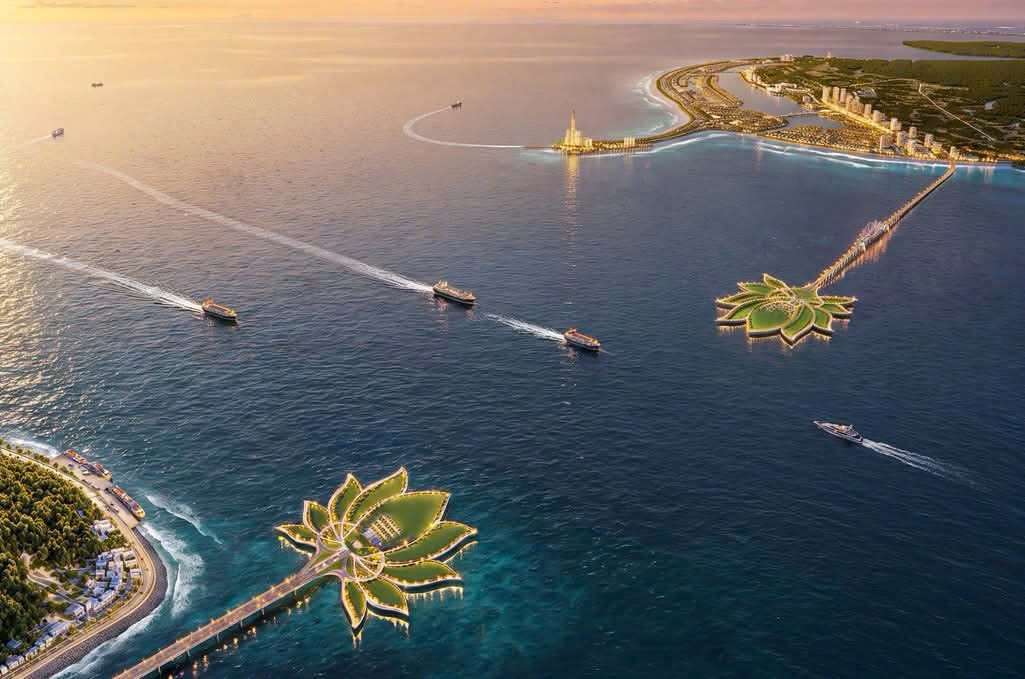
By 2030, large projects such as the Can Gio - Vung Tau sea-crossing road, Thu Thiem 4 bridge, Can Gio bridge, Phu My 2 bridge, and Binh Tien road bridge will also be successively completed, strengthening connectivity between key areas.
Right this year, Ho Chi Minh City is expected to start construction of Ring Road 4, expand National Highway 1, National Highway 13, National Highway 22 and the North-South axis to clear gateways.
However, according to Mr. Lam, just expanding the road will make it difficult to completely solve the congestion situation. The fundamental solution is still to strongly develop the public transport system.
After expanding administrative boundaries, the urban railway network of Ho Chi Minh City is planned with a total length of more than 1,000 km.
According to Resolution 09 of the Politburo, by 2030, the city must put into operation about 200 km of metro and by 2045 basically complete the entire network.
The projects being implemented include Metro Line No. 2 (Ben Thanh - Tham Luong section), Ben Thanh - Can Gio line and Metro Line No. 2 (Ben Thanh - Thu Thiem section).
In addition, this year, Ho Chi Minh City will start construction of Thu Thiem - Long Thanh railway lines, Binh Duong New City - Suoi Tien, Metro No. 6 phase 1 (Tan Son Nhat - Phu Huu airport) and Thu Dau Mot - Tao Dan line to strengthen inter-regional and inter-regional connectivity, especially with Long Thanh airport.
According to Mr. Tran Quang Lam, when the metro network is synchronously invested with the bus and public transport system of Ho Chi Minh City, it can meet 50-60% of people's travel needs. This will be an important foundation to reduce congestion, reduce environmental pollution, and create the appearance of a modern, civilized and sustainable urban area.


