Each DNA sample opens up a hope
In the scorching summer sun, every blow to open the grave, every bone fragment cherished for DNA samples, or every inch of soil flipped up in the old battlefield, all carry a common aspiration: to return the names to the soldiers who sacrificed for the Fatherland.
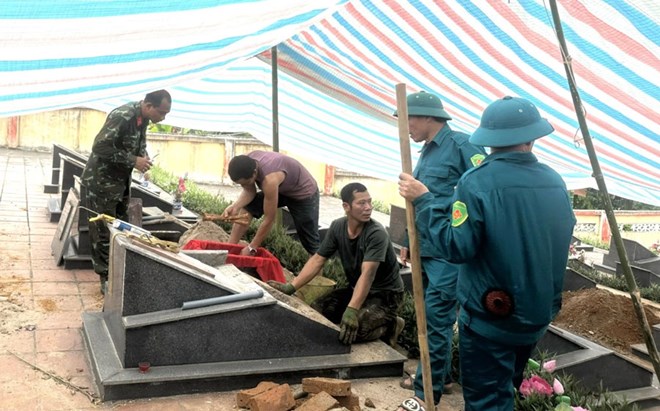
At Minh Bao Martyrs' Cemetery (Nam Cuong ward), officers, soldiers and participating forces patiently perform their duties in harsh weather.
Before each tomb, all operations are carried out slowly and carefully. After many years of solid construction with concrete, opening each tomb is not simple at all.
Only when the last layers of concrete are dismantled will specialized staff begin the biological sampling stage to serve DNA testing.
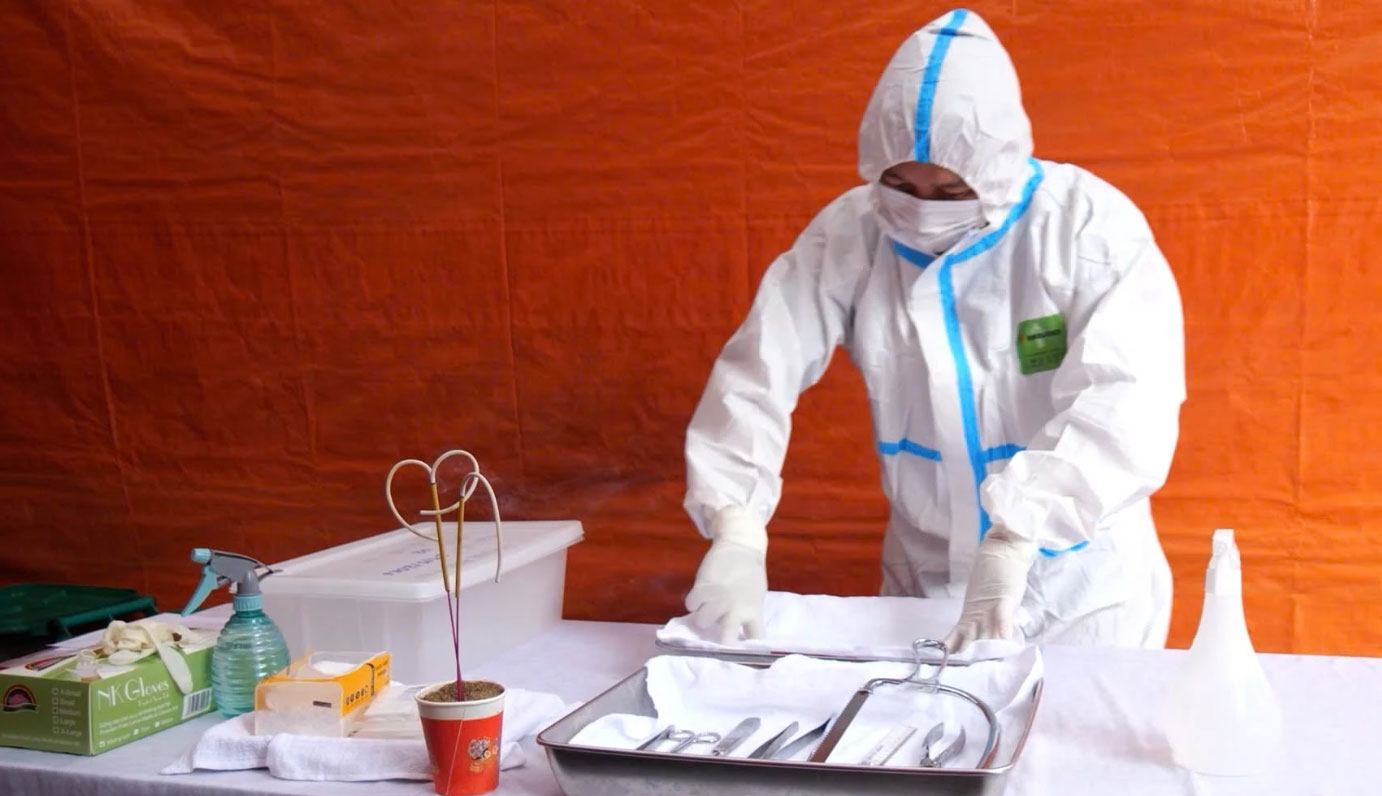
At this cemetery, there are currently 200 martyrs' graves, of which nearly 150 graves have not been identified. Each successfully taken biological sample means adding a ray of hope for families who have been searching for their loved ones for decades.
That atmosphere also takes place at the Yen Binh Commune Martyrs' Cemetery. In the morning, the sun is harsh, in the afternoon it suddenly rains, but under the temporary tarpaulins, the task force still works day and night to keep up with the schedule.
After mobilizing the entire political system to participate, in just 5 days, the locality completed DNA sampling for all 108 unidentified graves out of a total of 157 graves being buried at the cemetery.
Lieutenant Colonel Tran Duc Vu - Commander of the Military Command of Yen Binh commune - shared: "We always perform our duties with a sense of responsibility and deep gratitude to the heroic martyrs. I myself and my comrades are very honored to contribute to returning the names of martyrs who lack information.
Flipping through every inch of battlefield land to find comrades
Not only at cemeteries, the journey to find the identities of the martyrs is also taking place in the old battlefield.
These days, the K30 Fortress area, Lao Cai ward - which was once a fierce battle point in the northern border defense battle in 1979 - continuously welcomes working delegations of the Team for Searching and Repatriating Martyrs' Remains under the Provincial Military Command.
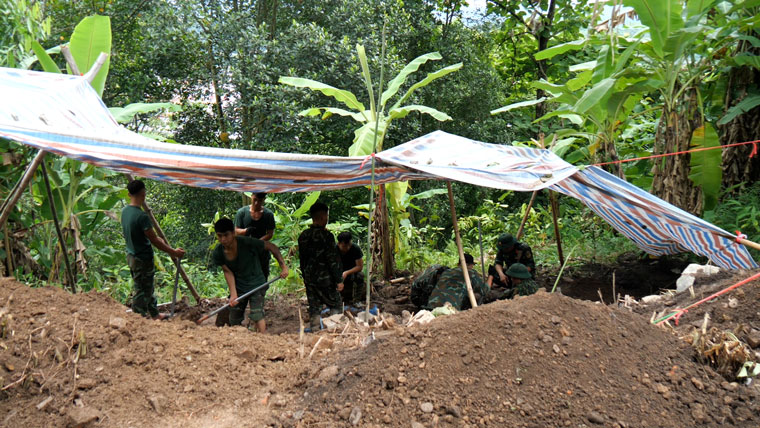
Nearly half a century has passed, the terrain here has changed. Soil and rocks cover the traces of war, but the memory of comrades who have not returned is still intact in the minds of veterans.
Mr. Le Van Ha, former soldier of Station 206, still remembers vividly the time the unit discovered 7 sets of martyrs' remains in this area in 1984 when clearing the trench traffic system.
For many years, every time we meet our comrades again, we mention that matter. Now knowing that you are still lying here, I try to remember each position, each milestone to provide information to the repatriation team," Mr. Ha said emotionally.
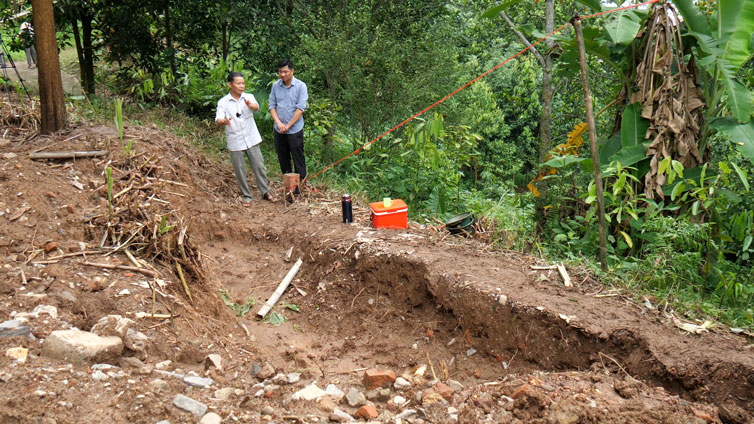
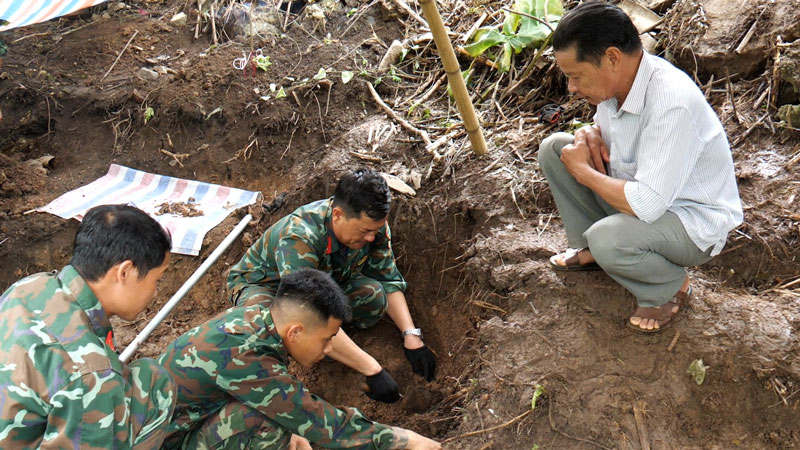
From the memories that seemed to have been covered in the dust of time of the veterans, the gathering force quickly cordoned off the scene. Currently, 16 officers and soldiers are directly stationed in the excavation area.
Lieutenant Colonel Pham Khac Truong - Political Commissar of the Team for Searching and Repatriating Martyrs' Remains - said that the hilly terrain, many rocks and erratic rainy and sunny weather make the work encounter many difficulties.
After two days of searching, on an area of about 3 m2, at a depth of 1-1.5 m, the force initially discovered some bone fragments and many artifacts such as military uniforms, personal medicine bags and some personal belongings of soldiers. We determined that this could be a mass grave," Senior Lieutenant Colonel Pham Khac Truong said.
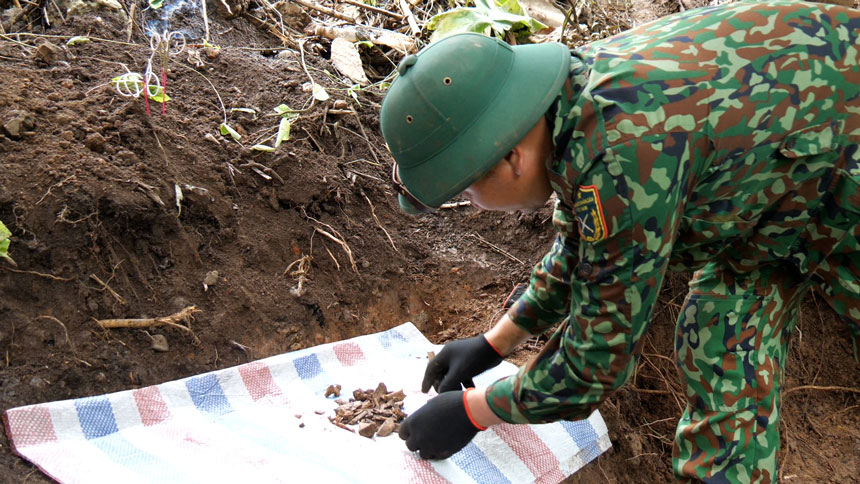
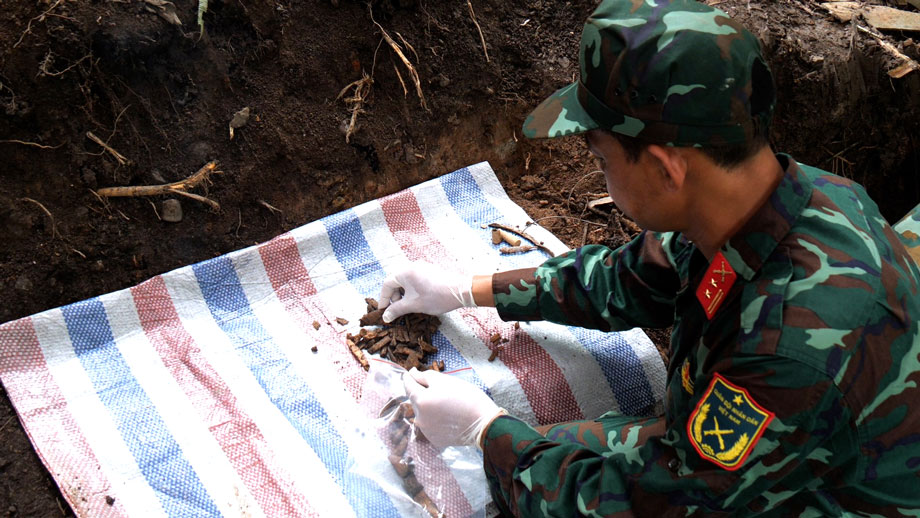
According to the plan, the excavation area will continue to be expanded to about 200 m2 to ensure that no graves or artifacts are missed.
Lao Cai currently has 32 martyrs' cemeteries with 4,787 graves. Through review, there are 15 cemeteries that need to take DNA samples in phase 1 for graves with unidentified information.
Deploying the "Operation 500 days and nights to promote the search, repatriation and identification of martyrs' remains", the Provincial Military Command has mobilized more than 2,200 turns of officers and soldiers to participate.
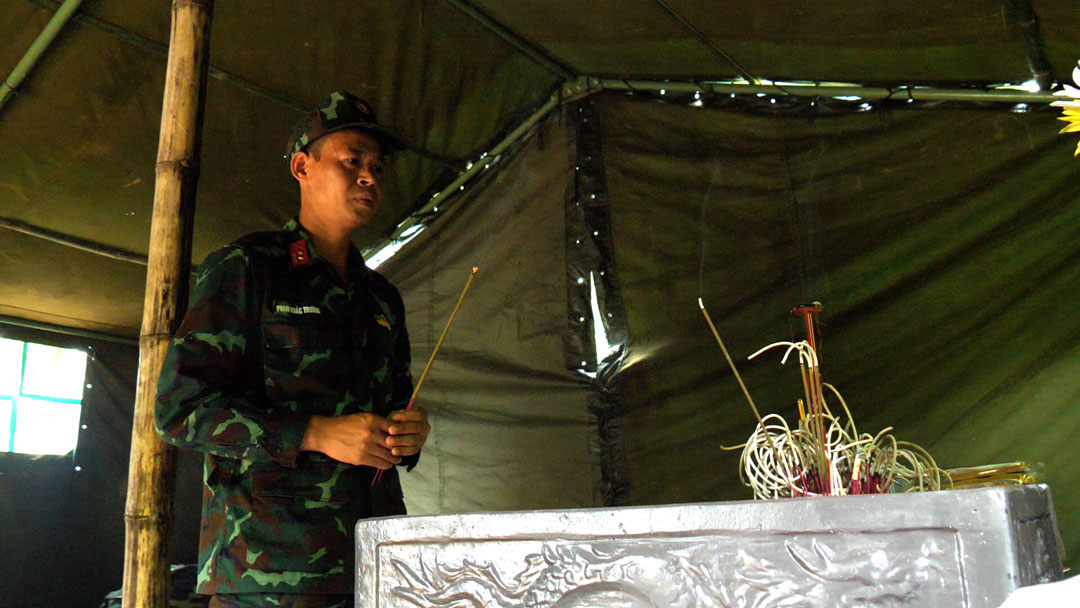
To date, functional forces have searched and collected 13 sets of martyrs' remains; and taken DNA samples for 931 out of a total of 1,262 graves to be performed at 10/15 cemeteries of phase 1.
According to Colonel Hoang Van Toan - Deputy Political Commissar of the Provincial Military Command, working groups are taking advantage of favorable weather every day to complete all tasks before July 20.
Our goal is not to miss any information about martyrs and their relatives. Each DNA sample today is not only for science but also the key to reconnecting reunions that have been divided by war for decades," Colonel Hoang Van Toan emphasized.