
Widespread thunderstorms in the late afternoon of July 9 caused some areas in Hanoi to fall into localized flooding. Although pumping stations are operating at full capacity, a series of central streets are still submerged in water, revealing inadequacies in the operation of urban drainage systems.
According to Hanoi Drainage One Member Limited Company, many areas recorded high rainfall such as Yen So ward reaching 84.4mm, Viet Hung 73.6mm and My Duc 58.4mm. Heavy rain caused the drainage system to be overloaded, causing localized flooding on many streets.
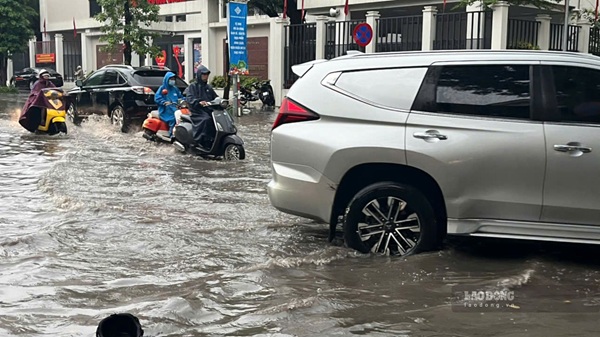
Recorded in central areas such as Cua Nam, Hoan Kiem, Lien Tri, Nguyen Gia Thieu, Phan Boi Chau... due to heavy rain and rapid water surge, many vehicles had to move slowly in flooded roads, causing localized congestion.
Mr. Nguyen Quang Tuan (resident of Quang Trung street) said that although the street has been invested in an emergency anti-flooding underground culvert system, the situation of "flooding when it rains" still recurs after each heavy rain. According to people, the effectiveness of large-scale drainage projects needs to be further assessed when many areas are still frequently affected.
Regarding the flooding situation on Quang Trung street, in an exchange with a reporter from Lao Dong Newspaper, Mr. Nguyen Duc Hung - Director of the Project Management Board of the Hanoi Department of Construction - said that problems occurred during the operation of the drainage system. Specifically, the discharge gate leading water into Thong Nhat Park lake was opened about 30 minutes later than expected, and started operating at 5:32 PM.
Representatives of the management unit said that the opening of the discharge gate must be carefully considered to avoid the risk of polluting the lake environment if the wastewater has not been diluted.
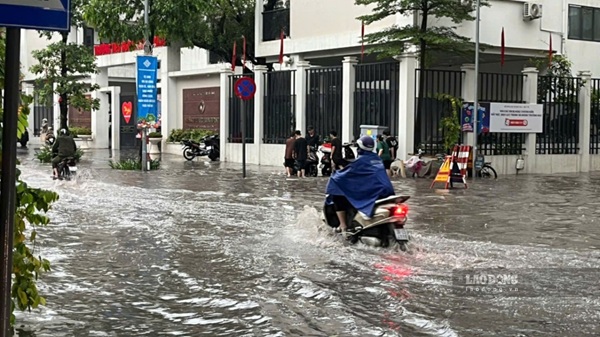
However, the slow operation has contributed to water not draining in time, causing localized flooding in Quang Trung street area. This is considered a lesson in coordinating between drainage requirements and urban environmental protection.
According to experts, heavy rains in a short period of time continue to pose challenges to Hanoi's drainage system.
However, the new infrastructure system has initially been effective in some areas. On Thang Long Avenue and urban areas such as Geleximco and Ciputra, thanks to new pumping stations and temporary connection plans, the water receded quickly during heavy rain.
To respond to the 2026 rainy season, Hanoi City has approved 12 investment projects under an emergency order. Currently, 3 projects have basically completed the main items.
Functional units are focusing on handling frequent flooding points on Vo Chi Cong street, Nguyen Dinh Tu street and Ecohome area, while accelerating the progress of key projects such as Yen Nghia pumping station and La Khe canal to improve drainage capacity for the Capital.
Faced with heavy rain, Hanoi Drainage Company Limited mobilized 100% of its forces to be on duty 24/24 hours to clear the flow. Key pumping stations operate at maximum capacity, of which Yen So pumping station operates 9/20 units, Dong Bong 1 station operates all 3/3 units to lower the water level on the system.
It is known that, according to the plan, in the coming week, Hanoi will deploy a specialized project to comprehensively assess the urban drainage system, thereby proposing solutions to limit the situation of "flooding when it rains", ensuring the lives and activities of people.
Experts recommend that people regularly monitor weather forecasts, choose suitable routes, limit going through deep flooded areas and do not try to control vehicles through places with high water levels to ensure safety during the rainy and storm season.


