
On August 27, Mr. Nguyen Huu Manh - Director of Dau Tieng - Phuoc Hoa Branch said that the water level of Dau Tieng Lake currently reaches 19.70m, with a capacity of about 762.30 million m3. This figure is 0.41m lower than the same period last year and 0.5m lower than the multi-year average. The water level of Dau Tieng Lake is at a low level, putting pressure on ensuring water resources for the downstream area.
According to the water storage plan approved by the Ministry of Agriculture and Environment, by September 1st, the lake water level must reach 21.83m, towards a water storage elevation of 24.4m. The distance between the current water level and the required level shows that the water storage task is under great pressure.
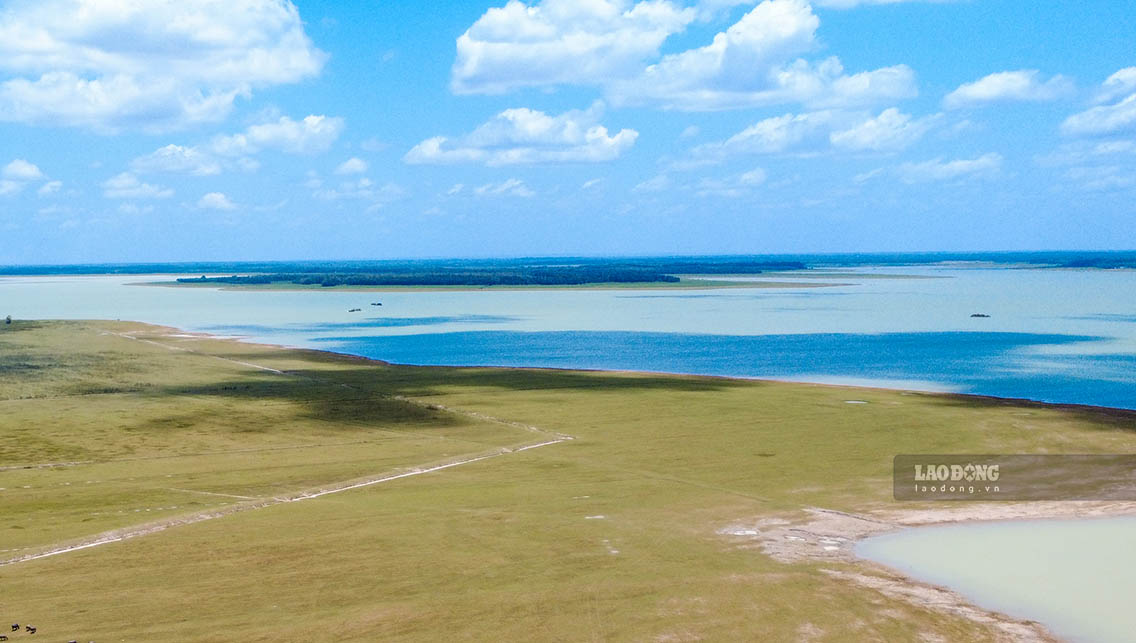
According to Mr. Manh, water sources are decreasing due to dry weather, reduced rainfall in the basin, and prolonged hot weather that increases evaporation. Along with that, the amount of water from rivers and streams flowing into the lake is also decreasing.
Low water levels also directly affect the ability to regulate and discharge water to push salinity. When the frequency and discharge flow decrease, saltwater may encroach deep into the Saigon River and Vam Co Dong River. Downstream water plants, including Hoa Phu pumping station supplying Tan Hiep Water Plant, are forced to stop operating when the salinity level exceeds the threshold, causing disruption to the domestic water source of millions of people.
Not only serving living needs, Dau Tieng Lake also plays an important role in supplying water for agricultural production in Tay Ninh and Ho Chi Minh City. When the water level drops, regulating water for downstream areas, especially when usage demand increases, will face a lot of pressure.
To respond, the management unit is strengthening water transfer from Phuoc Hoa Lake to Dau Tieng Lake, and at the same time inspecting the level 1 canal system to limit losses.
The management unit also recommends that people use water for the right purpose, economically; adjust the crop schedule, choose drought-tolerant crops and apply water-saving irrigation methods for industrial crops and fruit trees.
In the coming time, the operation of the reservoir will be flexibly adjusted according to water source and weather developments, prioritizing essential needs and limiting water waste in the dry season.


