
Anxiously following the rhythm of the rising water
On August 2, Lao Dong Newspaper reporters' records at group 23, Hoa Binh ward showed that when Hoa Binh Hydropower Plant operated to generate electricity with high flow, the water level of the Da River rose, the water turned cloudy and flowed fast.
To ensure safety, people in the fishing village continuously bring boats close to the shore. When the water recedes, they bring the boats back to their old positions to continue making a living.
That pace of life has become familiar to about 50 households who have been making a living floating at the foot of the hydropower dam for many years.
Heavy rain, gusts of wind, continuous thunder and lightning. In just one night, the river surface changed. Adults almost stayed up all night to monitor water levels, tie anchor ropes, check boats and property. All information about reservoir operation is updated by people every hour.
Mr. Ngo Van Thong - Head of the fishing group said: "More than a month ago, the river water dropped low, making fishing very difficult. Fish resources were scarce, income decreased, and life, which was already difficult, became even more deprived. Now that the water is rising, people are less vất vả because there are more shrimp and fish.
But storms and floods also bring no less worry. A few days ago, lightning struck and damaged the electrical and fan systems of some households. When the water rises, boats are pulled in, when the water recedes, boats are taken out. Life is constantly precarious with the tide.
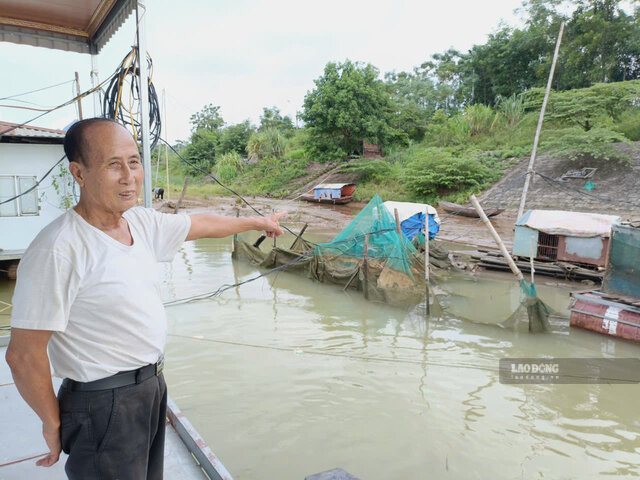
Every time the water level changes, Mr. Thong and households are busy tying boats, reinforcing cages and rearranging livestock areas to limit damage.
In the rainy and flood season, people also travel on the river more cautiously, especially when taking young children by boat.
Not only facing storms and floods, people here are also always ready to respond every time hydropower adjusts discharge flow. Just a little delay, boats, cages or property may be swept away by the water.
Fish season is coming but worries still remain
The high tide season is also the most favorable fishing time of the year. Ms. Ngo Thi Vien said that these days her family can catch a few "yen" of fish and a few kilograms of shrimp. Due to abundant fish supply, selling prices have decreased, the highest income is about 700,000-800,000 VND/day, but the average is only about 200,000-300,000 VND/day for the whole family.
Fish is cheap but having something to sell is already fun. In the dry season, many days I go all day and don't get much," Ms. Vien said.
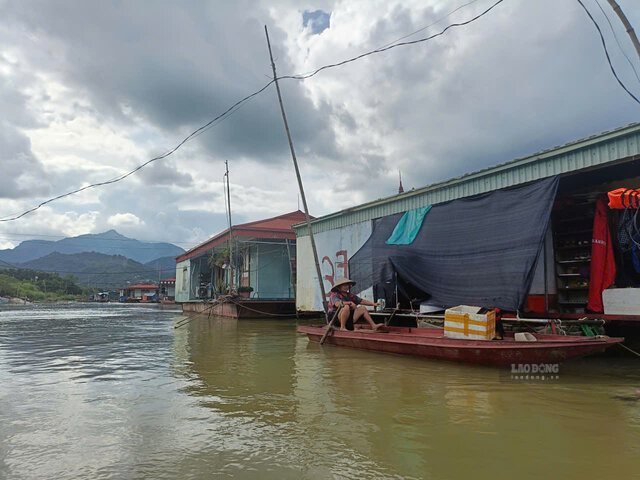
For cage fish farming households, the rainy and storm season always contains many risks because of the large investment capital.
Mr. Nguyen Van Khoat has not forgotten the damage in previous flood seasons, when the water source changed suddenly, causing fish deaths and heavy losses.
Therefore, whenever there is a notice to regulate the reservoir or change the discharge flow, his family proactively moves the cage to a safe location, adjusting the cage direction according to the flow to stabilize the water environment for fish.
If we are subjective, we will suffer great losses. We have been in the profession for many years, so we have to closely monitor every development of the water flow," Mr. Khoat shared.
Many families in the fishing village have had many generations living on boats. Children grow up with the waves, and learning and living conditions are still very lacking. Every rainy and storm season comes, worries about safety, livelihoods and property pile up.
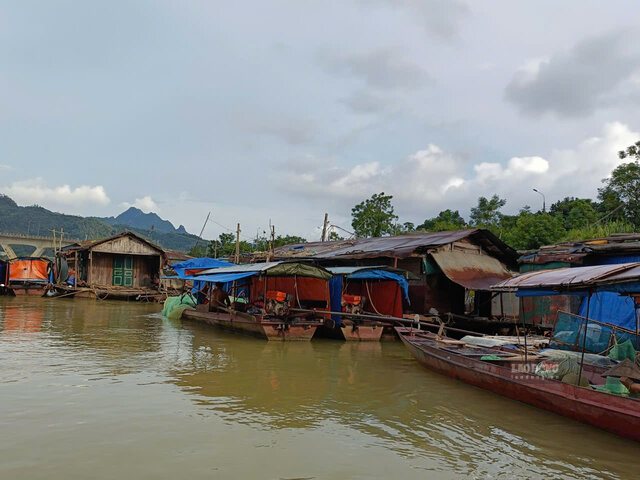
According to updated data from the reservoir operation monitoring system at 11:00 AM on August 2nd, the upstream water level of Hoa Binh Hydropower Reservoir was at an elevation of 100.79 m, 16.21 m lower than the normal water level (117 m).
The water flow to the reservoir reached 3,851 m3/s, the highest in the group of large hydropower reservoirs nationwide. Meanwhile, the total discharge flow is 2,864 m3/s, all of which is carried out through power generating units, the reservoir does not discharge through spillways and does not open bottom discharge gates.
Compared to the reservoirs on the Da River cascade, Son La reservoir recorded water inflow reaching 2,436 m3/s, total discharge volume 3,269 m3/s, while Lai Chau reservoir had a water inflow of 1,412 m3/s, total discharge volume 963 m3/s.


