According to the reporter of Lao Dong Newspaper on July 7, the water level downstream of the Da River through Hoa Binh ward has clearly risen compared to the beginning of the year.
The water flows strongly, the river surface appears with many ripples and localized whirlpools. Sand dunes and rocky beaches that once floated in the middle of the river in the dry season have almost submerged under the water.
Looking down from Huu Nghi bridge, the Da River is covered in water color, completely different from the image many months ago when a series of alluvial grounds and sand dunes were clearly revealed.
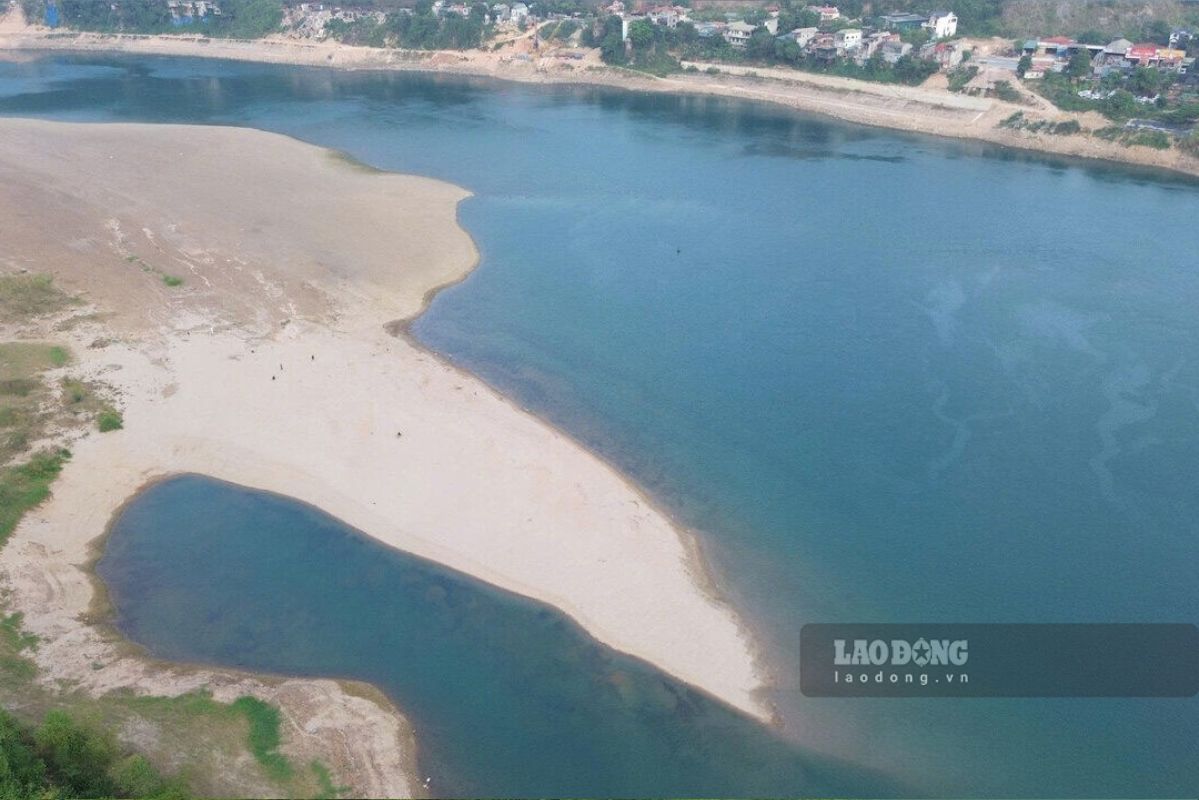
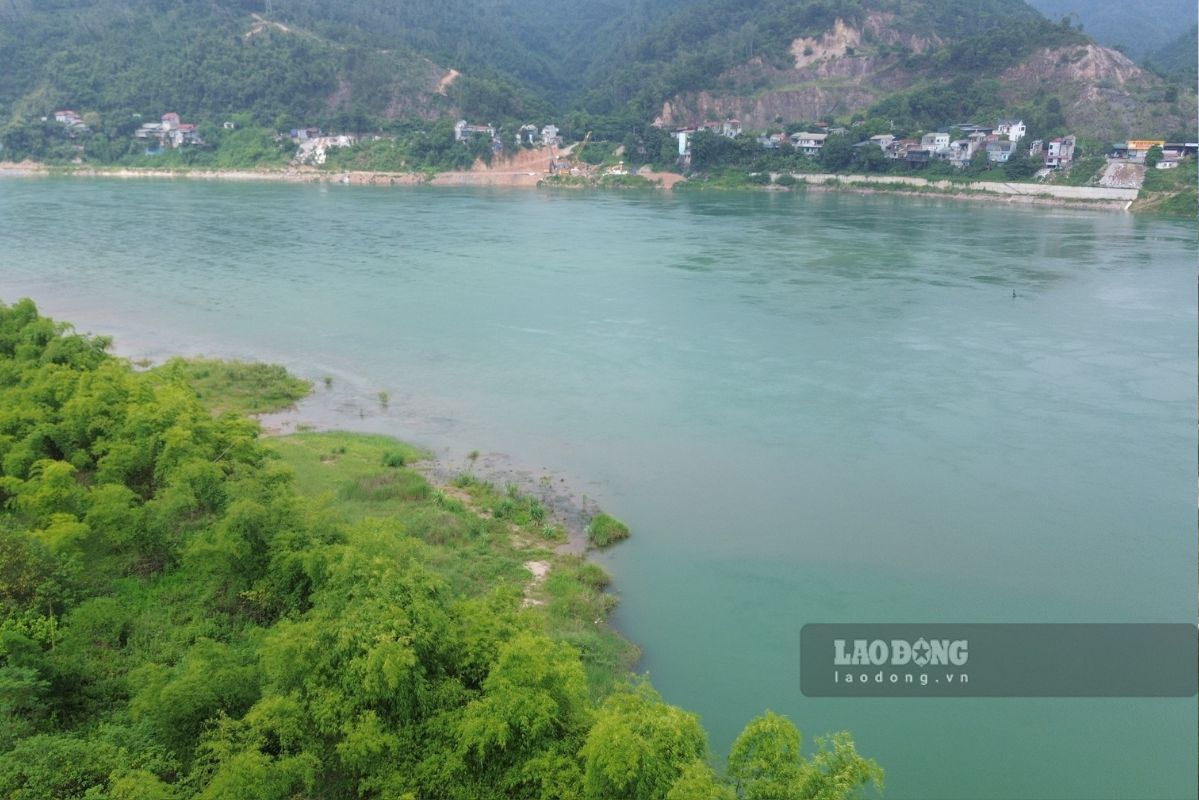
Ms. Van Anh (35 years old, Hoa Binh ward) said that from the beginning of July to now, the water level of the Da River has increased rapidly because Hoa Binh Hydropower Plant maintains a large discharge flow.
“Previously, standing on the bridge, you could clearly see alluvial grounds and many shallow sections of the riverbed. In recent days, the water has risen, the flow is wider, and many sandbanks have flooded again. The landscape on the river has also changed quite a lot compared to a few months ago,” Ms. Van Anh shared.
As a person who has been doing sand stockpiling business at the foot of Huu Nghi bridge for many years, Mr. Pham Xuan Quynh said that the current river water level is significantly higher than at the end of the dry season.
“According to the experience of people living along the river, the current water level is much higher than in March. Many sandbanks in the middle of the river that used to be walkable are now flooded. Boat travel and fishing activities for people are also more convenient,” Mr. Quynh said.
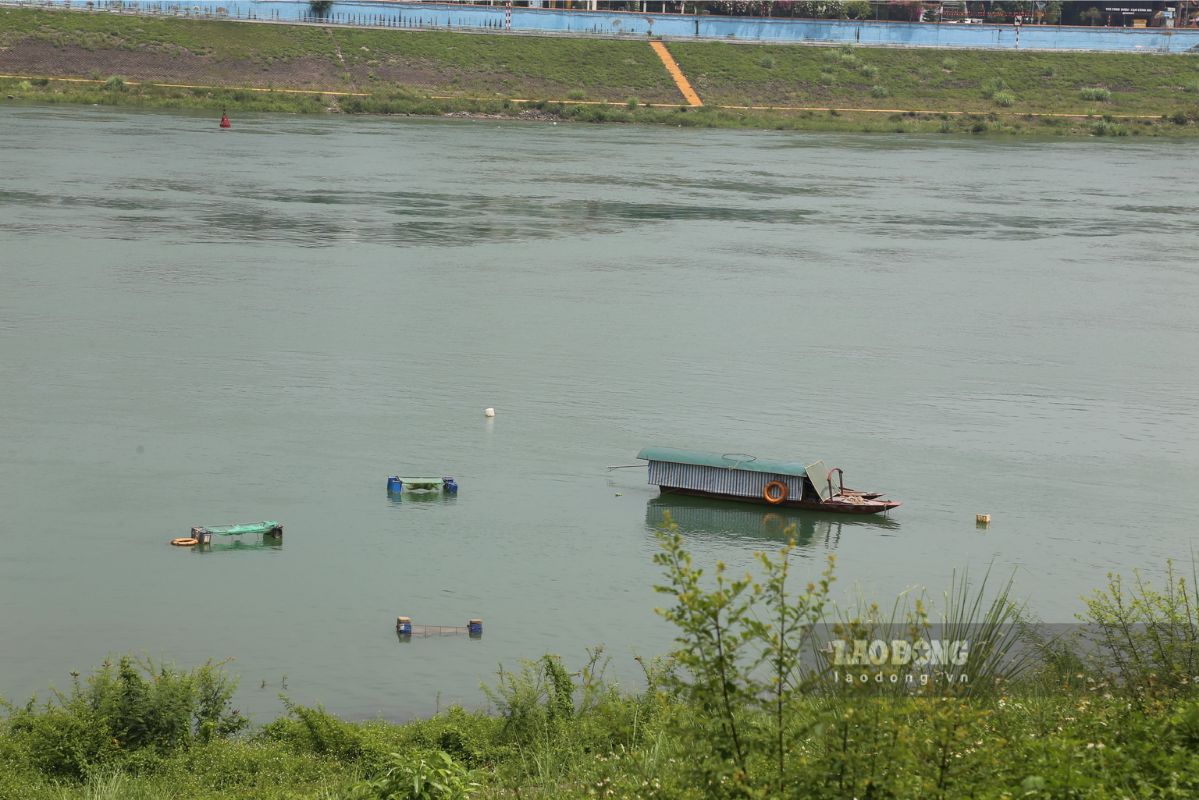
Not only riverside residents, waterway transport vehicle owners also recorded positive changes in water levels.
Mr. Bui Van Minh, owner of a sand transport ship in Phu Tho, said that at the beginning of the year, when the river water dropped low, many ships had to reduce loads or wait for the water to rise before they could travel through some shallow sections.
“Previously, there were sections where ships had to travel very slowly or wait for the water to rise to pass. Now the channel is clearer, and ships can carry enough designed tonnage, so transportation efficiency has increased significantly,” Mr. Minh said.
According to data from Inland Waterway Maintenance Management Joint Stock Company No. 9, the water level at 2:00 PM on July 7, downstream area of Hoa Binh Hydropower Plant is currently maintained above 12m, significantly higher than at the beginning of the year, when many sand and gravel beaches are still clearly visible in the middle of the river.
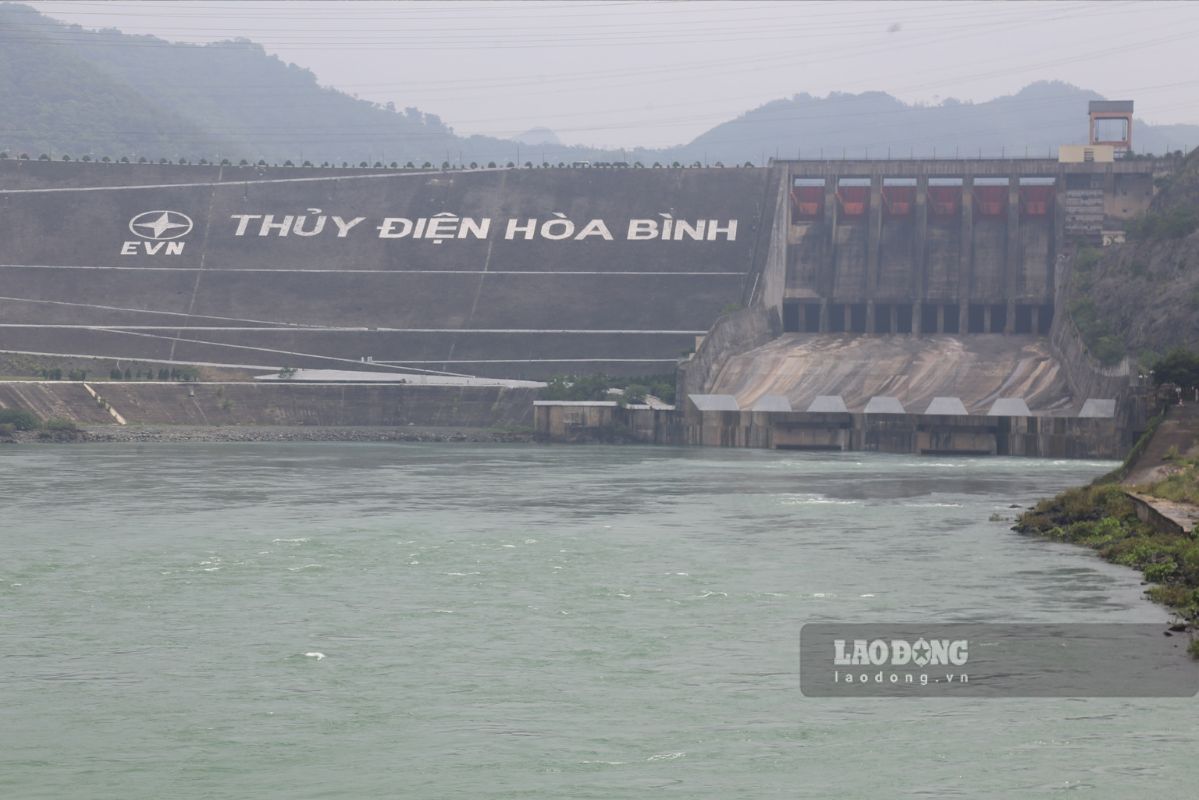
Meanwhile, updated data from the reservoir operation monitoring system at 1:00 PM on July 7 showed that the upstream water level of Hoa Binh Hydropower reservoir reached 102.82 m, 14.18 m lower than the normal water level. The water flow to the reservoir reached 3,466 m3/s, the total discharge flow was 2,959 m3/s, all through power generating units, not discharged through spillways.
This is also the second largest discharge level among major hydropower reservoirs in the country, only after Son La Hydropower with 3, 199 m3/s.
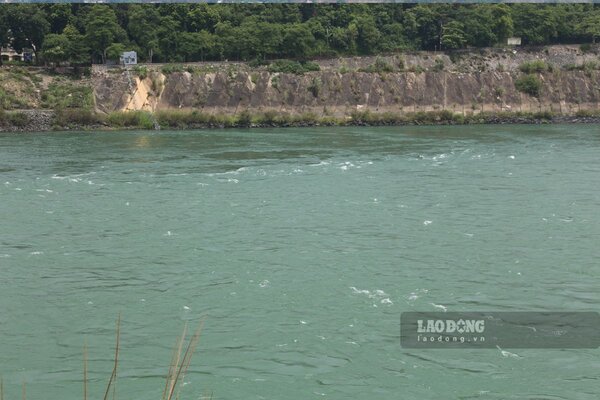
Rising river water levels provide favorable conditions for waterway transport and sand exploitation, but also entail unsafety risks for people.
Mr. Dang Dinh Son - Vice Chairman of Hoa Binh Ward People's Committee - said that the locality has strengthened propaganda and warned people not to swim in the river during the time when the discharge flow of Hoa Binh Hydropower Plant is at a high level.
The Ward People's Committee has assigned the police force to regularly patrol and remind people in riverside areas, and at the same time put up warning signs at points at risk of drowning to limit accidents," Mr. Son informed.