
Restaurants and clinics close, livelihoods shrink according to construction
The National Highway 14E upgrade project is invested by the Vietnam Road Administration (under the Ministry of Construction), Project Management Board 4 organizes project management, with a total investment of nearly 1,850 billion VND, started in March 2023. According to the plan, the project will be constructed in 22 months, completed in early 2025. However, so far, the project has been delayed by more than 1 year, the volume has only reached about 70% and has had to adjust the progress to October 2026.
More than 3 years of unfinished construction, the road is dug up and jagged, dusty in the sun, muddy in the rain, life is turned upside down, business is declining, and accidents are always lurking. At the foot of the railway overpass under the National Highway 14E project, many houses have to be covered with tarpaulins as temporary shacks to prevent dust.
During the day, trucks and dump trucks line up to drive through narrow roads, the road surface is jagged, dust is billowing and covers all the furniture. Meals are carried out hastily in the sound of engines, and at night they lose sleep due to traffic jams and prolonged car horns.
Ms. Ho Thi Hien's family living next to the railway overpass project is one of the households heavily affected. The family has 5 people, including young children, and for many years there has been almost no peaceful day. Previously, she made a living from a water stall along National Highway 14E, enough to cover living expenses. Since the road construction was prolonged, dust was thick, and customers were sparse, she had to stop selling, losing her income.
Not only Ms. Hien's family, hundreds of households along the route also fell into a similar situation. Many restaurants and shops closed due to dust and mud, business was disrupted, and life was severely disrupted. Mr. Tran Van Tien, residing in Viet An commune, said that what makes people most upset is that the project is slow and prolonged year after year, causing people to be affected.
“Every house here is covered with tarpaulin, even Tet does not open it. Dust fills the house, how can we survive. When the road construction started, people were very happy. But the road construction lasted too long, people were very impatient. Just scooping up and lowering it was not finished yet” - Mr. Tien complained.
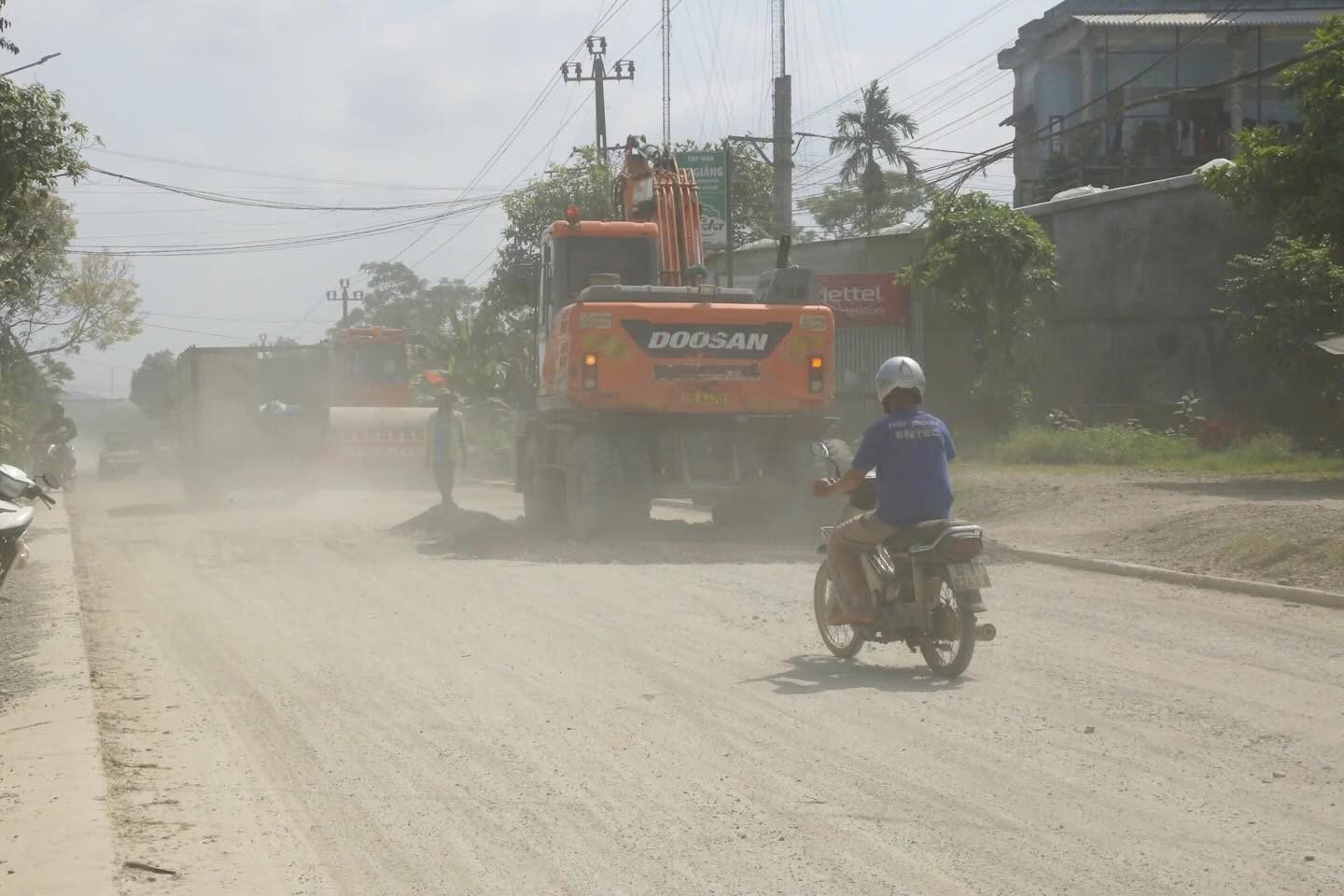
It is impossible to blame everything on the weather.
Currently, the entire route of nearly 71km of National Highway 14E is still in a messy state. Some sections have been handed over land but are still deserted of workers and machinery. Looking from above, the entire route looks like it is torn into small pieces, patchwork construction, some places are built and some are abandoned. Not only is people's lives disrupted, but the transportation of goods from the plains to the mountains and vice versa is also affected.
Leaders of the old Quang Nam and new Da Nang localities assessed that the project progress was too slow, and the construction speed had not kept up with the site clearance progress. This responsibility belongs to the investor and the capacity of the project construction contractors. Notably, Thuan An Group Joint Stock Company - a member of the project construction consortium - had a leader prosecuted and temporarily detained at the beginning of 2024 related to bidding and bribery violations. This is considered one of the factors affecting the progress.
Mr. Luu Hoang An - Chairman of Hiep Duc Commune People's Committee - said that local people continuously expressed frustration because the construction progress is too slow, even though the site clearance work is basically completed. Some sections have not yet seen the contractor clearly implement it.
According to Project Management Board 4, the project delay is mainly due to objective reasons, the biggest of which is heavy rain, no construction solutions when it rains, plus price fluctuations.
Although the site handover rate is high (nearly 99%), the project is "stuck" in some local locations due to technical infrastructure that has not been relocated, such as the railway overpass area (belonging to Thang Binh commune) and the Viet An bypass.
Faced with pressure from reality and prolonged public outrage, Da Nang City leaders have repeatedly directly inspected the site, requesting to remove bottlenecks and accelerate the project progress. Vice Chairman of Da Nang City People's Committee Tran Nam Hung affirmed that for compensation and site clearance work, the city has applied maximum legal regulations to ensure the best rights for people. According to Mr. Hung, the resettlement land fund has been prepared, and the third phase of compensation related to resettlement will be resolved soon, arranging resettlement for people.
Not only stopping at requesting site clearance, city leaders also requested construction units to focus manpower and resources to compensate for the slow progress; at the same time, construction must ensure safety, not affecting the housing, life, and activities of households along the route.


