
Lack of fresh water, saltwater intrusion deep
According to the Southern Institute of Water Resources Science, the hot weather situation may last until May 2026. The salinity boundary of 4g/l is forecast to penetrate deeply from 44 - 55km, approximately the multi-year average; the Vam Co river system alone penetrates deeply about 55 - 60km. The level of saltwater intrusion depends on the flow from the upper Mekong River and the operating regime of reservoirs.
In Ca Mau, prolonged hot weather increases the risk of fresh water shortage for living and agricultural production, especially for rice and crops in coastal areas and freshwater areas.
Mr. Nguyen Thanh Tung - Head of the Irrigation Sub-Department of Ca Mau province - informed that the unit strengthens monitoring and updates hydrometeorological forecast bulletins, promptly warns for people to proactively respond, and at the same time guides fresh water storage, economical use and proposes the construction of centralized water tanks in emergencies.
According to the Department of Agriculture and Environment of Ca Mau province, this time is not the main rice crop season, so the damage to rice plants is not much. However, in the coastal area, farmed shrimp have shown signs of death due to saltwater intrusion.
In Phuoc Long, Thoi Binh, saltwater intrusion has exceeded alarm level 3; salinity exceeded 10‰. Meanwhile, in Ganh Hao, Dong Hai, the measured salinity has reached nearly 30‰. The Ca Mau Provincial Hydrometeorological Agency issued a warning that from now until April 16, saltwater will continue to intrude deep into the mainland, in some places up to 80km.
Farmed shrimp die due to exceeding salt levels
Prolonged hot weather and increased salinity in rivers and canals have caused many places in Ca Mau to reactively respond. From mid-March to early April, the temperature in Ca Mau sometimes reached 37-38 degrees Celsius, causing the farming pond environment to fluctuate strongly, and many areas of shrimp were damaged.
In Gia Rai ward, many extensive shrimp farming households recorded shrimp deaths. The main cause is heat shock, high salinity exceeding the adaptive threshold, leading to diseases such as body redness, white spots and acute liver and pancreatic necrosis.
Mr. Le Van Danh (Group 23) said that his family's shrimp pond of more than 1ha, which was just raised for about 2 months, encountered prolonged heat. When water was supplied to the pond, the shrimp were shocked, floated and died, forcing them to harvest early when the shrimp only reached 80-90 shrimp/kg, the selling price was low, and only a part of the capital was recovered.
Many other farming households in the area are also in a similar situation, having to harvest early to recover. Mr. Nguyen Van Nam, who has more than 20 years of experience in shrimp farming, said that the appropriate temperature for shrimp development is from 26 - 30 degrees Celsius. When the heat lasts, the water temperature rises, evaporates strongly, causing salinity to increase rapidly, exceeding the permissible limit, causing shrimp to be shocked, reduce eating and easily die en masse.
Faced with this situation, the Gia Rai Ward Public Utility Center continuously announced to people to limit shrimp farming, especially white leg shrimp.
Farmers need to apply biosafety measures, maintain the pond water level from 1.3 - 1.5m, treat water through settling ponds before supplying to farming ponds, increase water fans to stabilize temperature and oxygen. In particular, do not use well water supplied directly to ponds due to high alkalinity, which easily affects the growth process of shrimp, and at the same time, supplement reasonable nutrition to increase resistance, help shrimp adapt to saline conditions, and minimize risks for farmers.
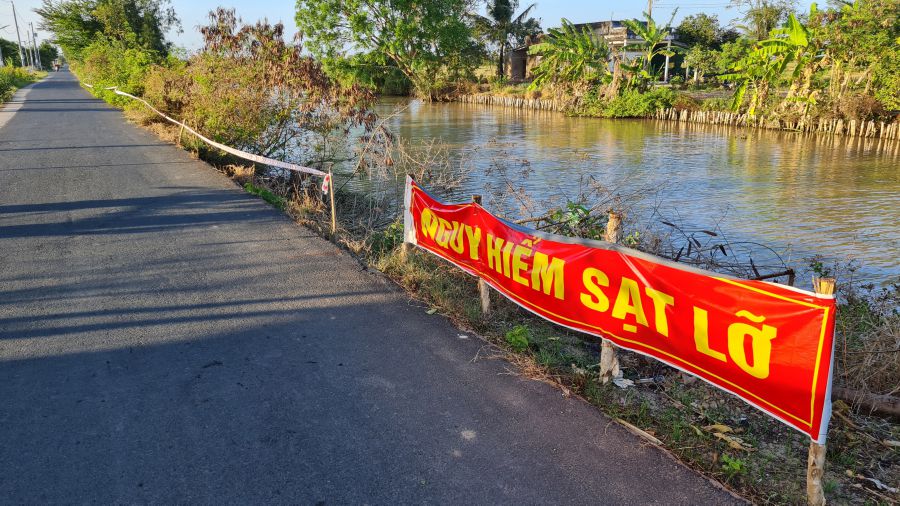
Meanwhile, in many localities in Ca Mau, due to prolonged hot weather causing water evaporation plus dam construction to prevent saltwater intrusion, many canals and ditches are depleted. This situation has caused landslides to occur in many places.
The Department of Agriculture and Environment of Ca Mau province warns that hot weather and saltwater intrusion lead to water shortage and landslides, so people need to pay attention to take preventive measures.


