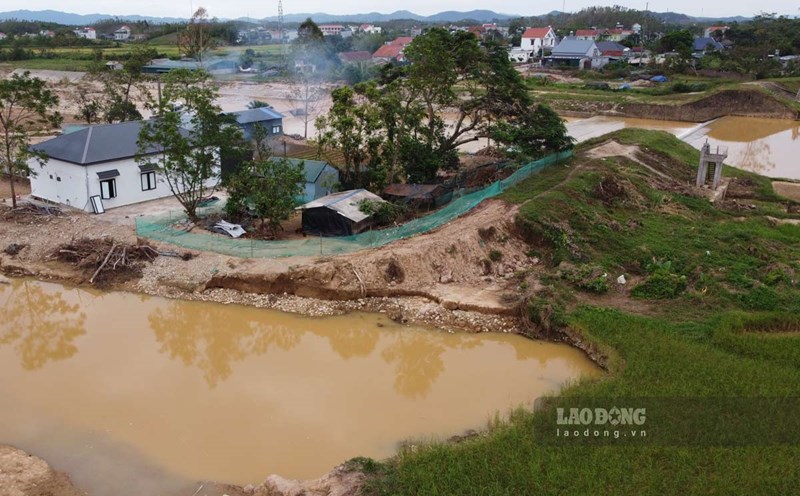
On February 13, the Department of Agriculture and Environment of Lam Dong province said that it has requested communes, wards and Phu Quy special zone to review the work of preventing and combating drought, water shortage, and saltwater intrusion in the dry season of 2026.
This is to develop appropriate plans and solutions to serve agricultural production and people's lives. In which, it is required to ensure water supply for daily life and production, and at the same time clearly identify the risks of impact according to each region and each area to proactively respond.
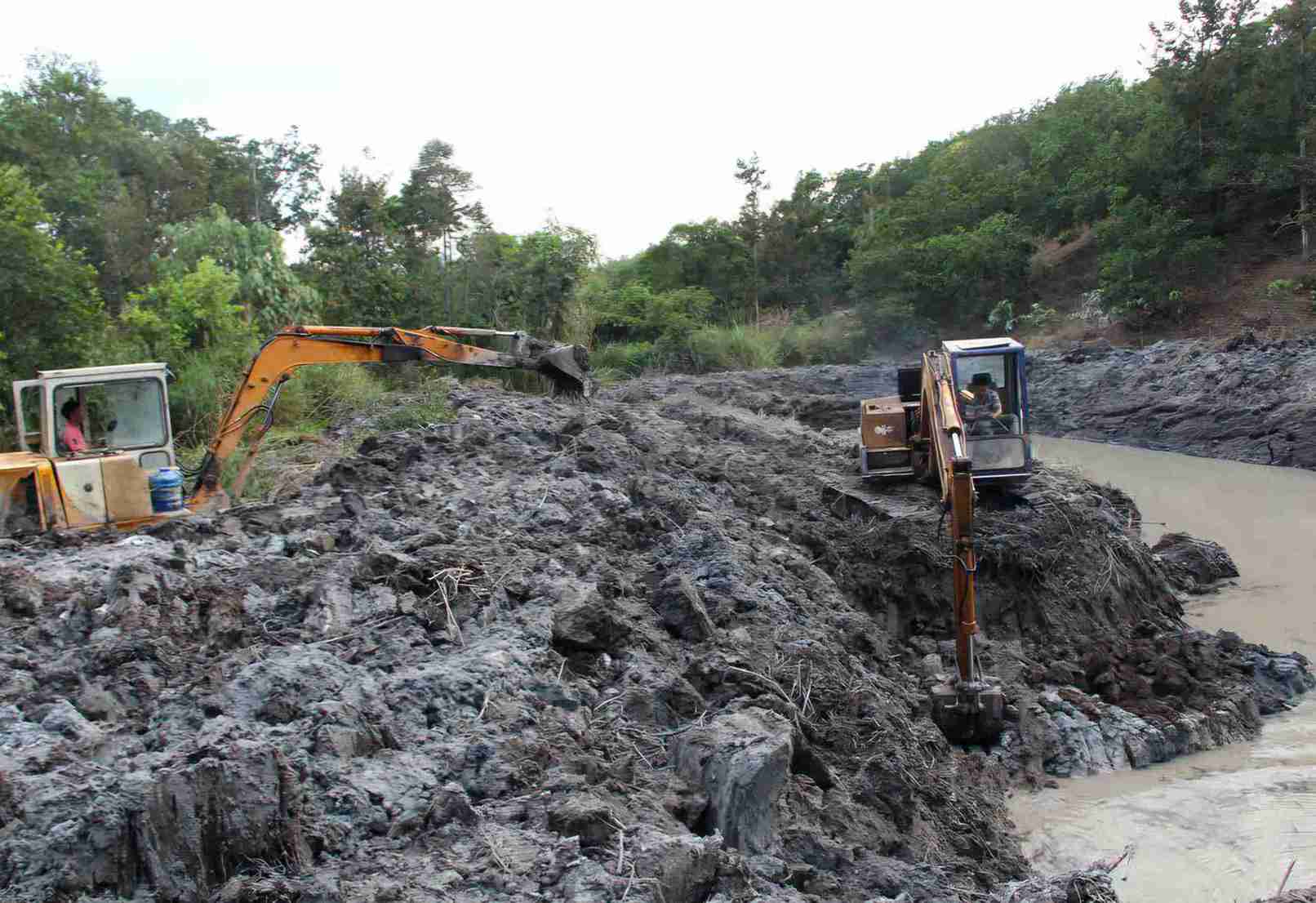
Previously, the People's Committee of Lam Dong province requested localities to use water resources reasonably and economically; prioritize water for domestic use, animal husbandry and irrigation of high-value crops.
People are advised not to produce in areas at risk of drought and water shortage, and to proactively choose crops suitable for water source conditions.
According to statistics, Lam Dong province currently has 624 centralized rural water supply projects in operation, supplying domestic water to more than 186,000 households.
However, in many localities such as Dak Mil, Krong No, Nam Nung, Quang Phu, Quang Tan, Quang Hoa, Tuy Phong, Bac Binh, Hong Thai, Hoa Thang, Tan Lap, Suoi Kiet, Ham Tan, Son My, Ham Kiem, Tan Hoi, Da Huoai... the river water level is low, the flow is depleted, posing a potential risk of affecting domestic water sources.
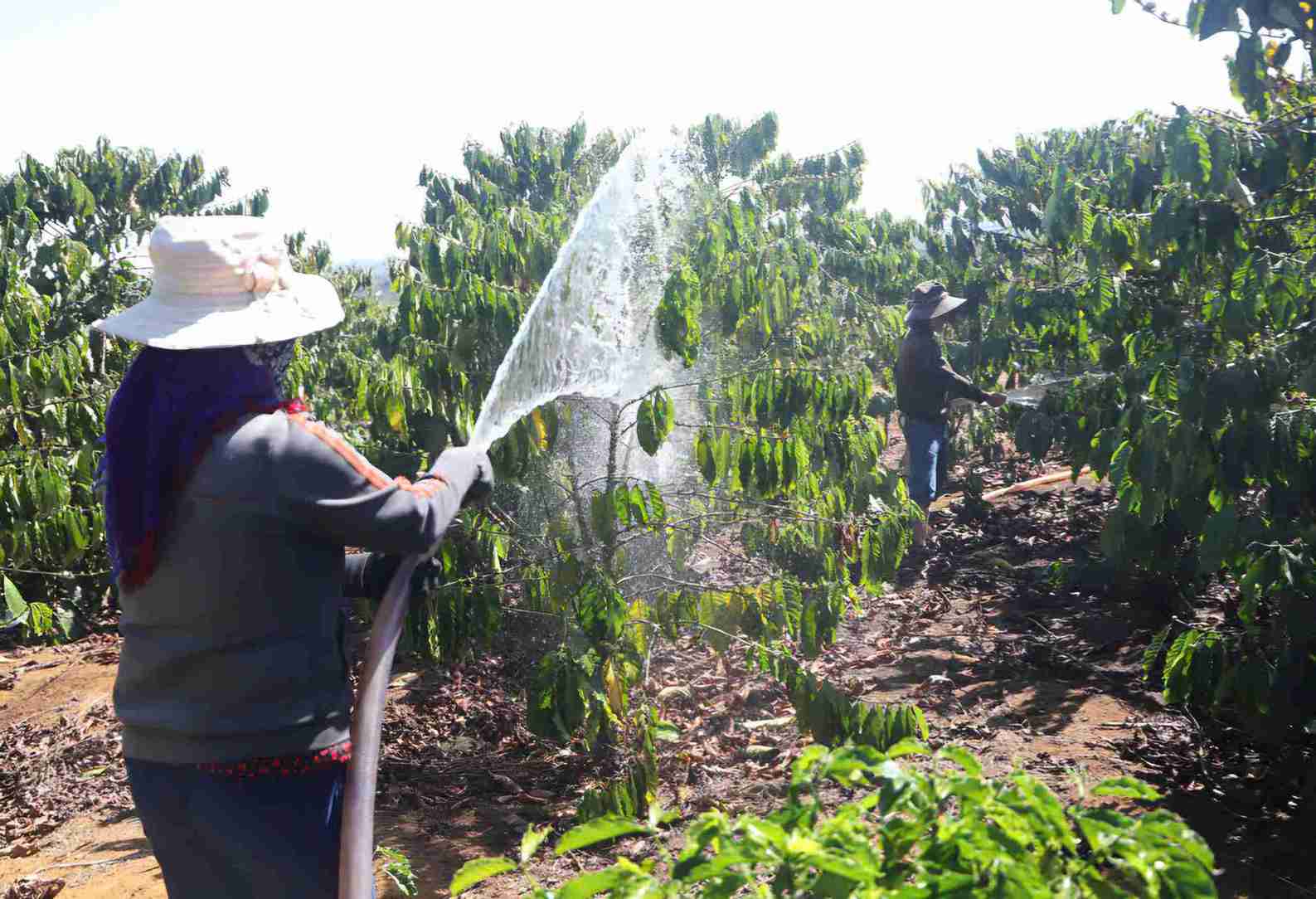
Every year, in the dry season from November to April of the following year, domestic water shortages often occur, especially in mountainous areas, particularly difficult areas that have not been invested in and upgraded with clean water works; many works have deteriorated, been damaged or stopped operating.
For agricultural production, the whole province currently has 966 irrigation works. It is expected that by the end of 2025, the irrigated area will reach over 73.45% of the irrigated area.
Of which, more than 150,000 hectares are irrigated from centralized irrigation works and about 97,000 hectares apply advanced and water-saving irrigation methods.
However, due to uneven water distribution, increased demand and the amount of water stored at lakes and dams not meeting the design, if prolonged hot weather, the area at risk of water shortage, drought, and saltwater intrusion is estimated at 15,000–20,000ha.
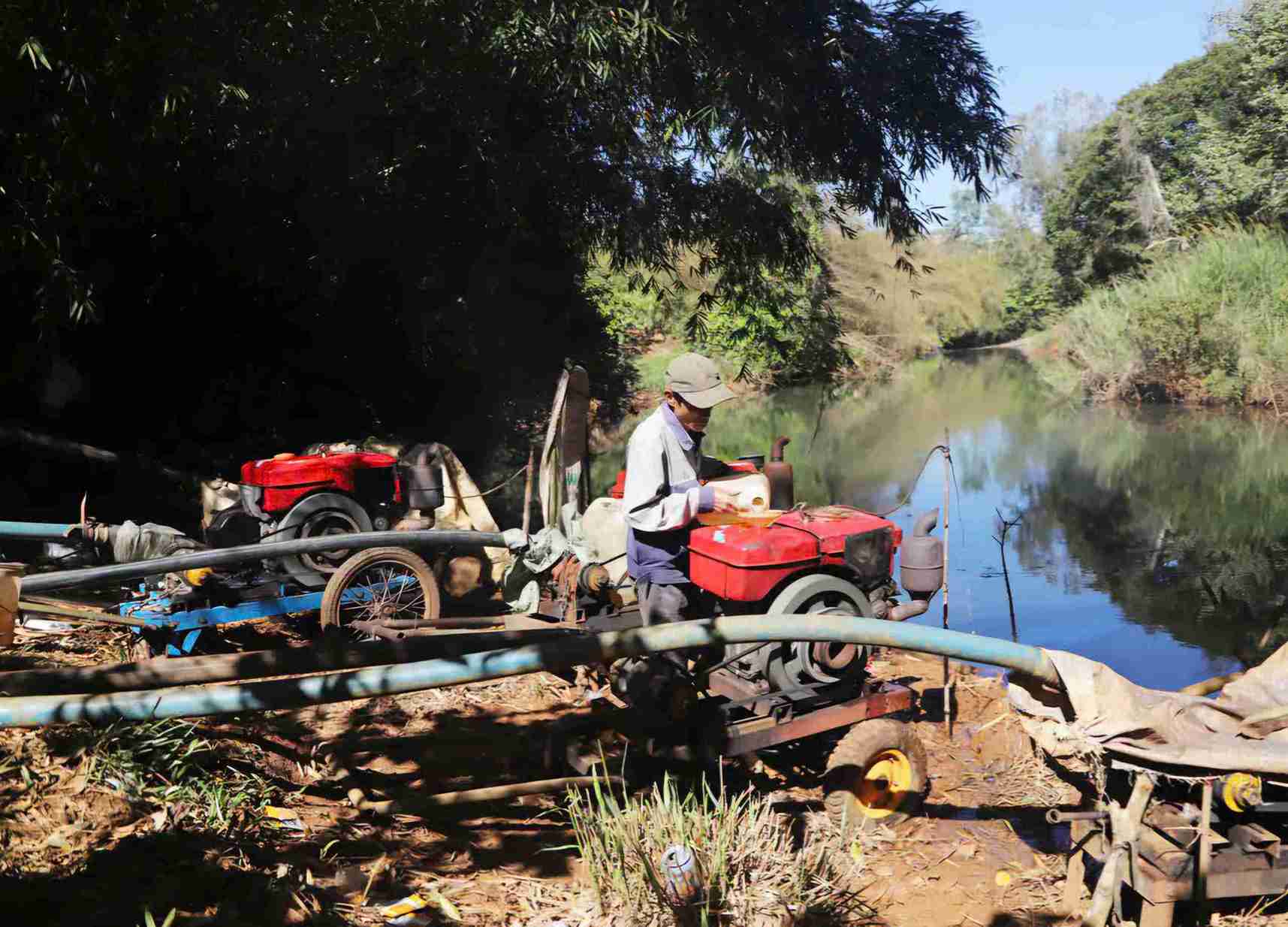
Faced with the above situation, the province requests localities and units managing irrigation works to develop specific drought prevention plans; strengthen inspection and assessment of water sources on rivers, streams, lakes, and dams; and zone areas at risk of drought to proactively convert to suitable crops.
At the same time, encourage the application of advanced irrigation technologies that save water such as sprinkler irrigation, drip irrigation; resolutely prevent people from producing in areas at risk of irrigation water shortage.