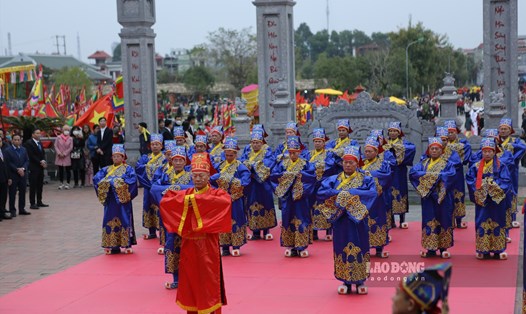
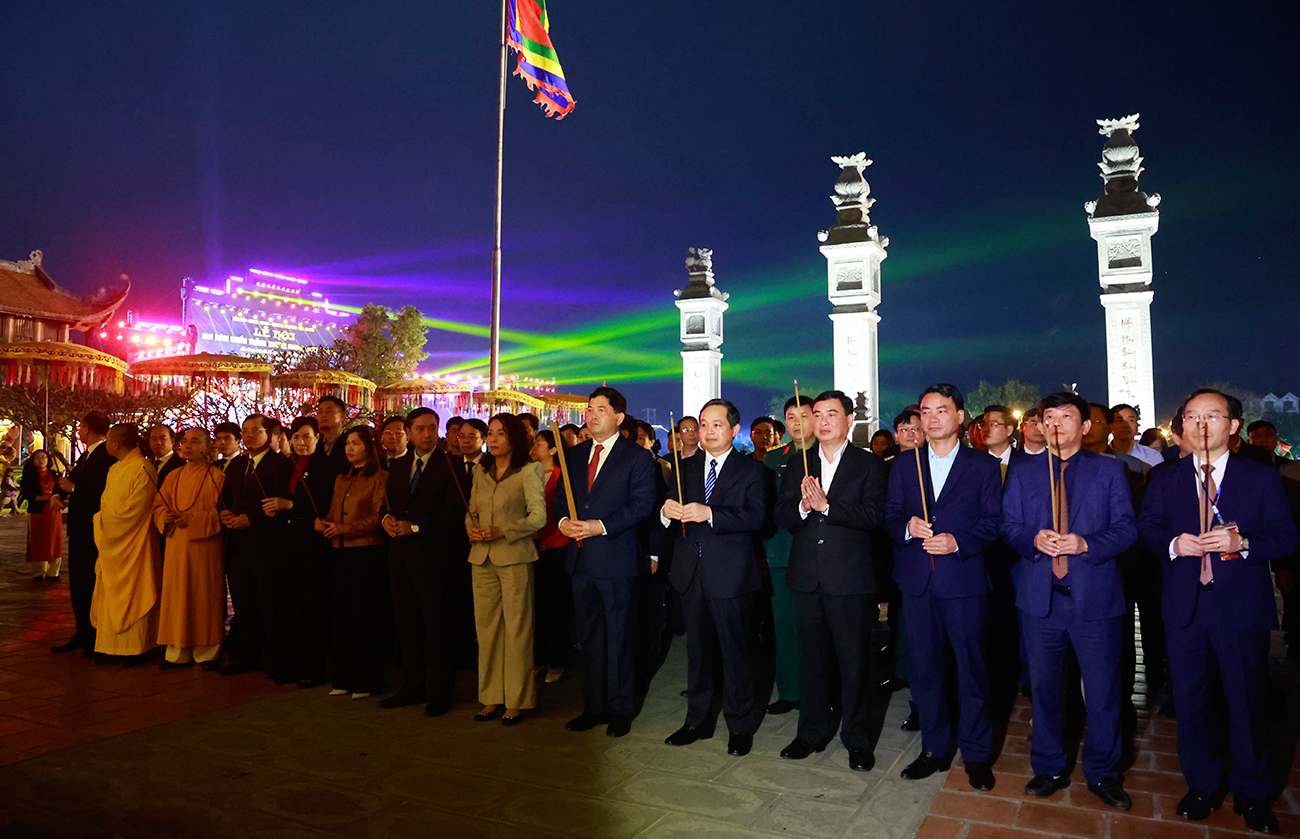
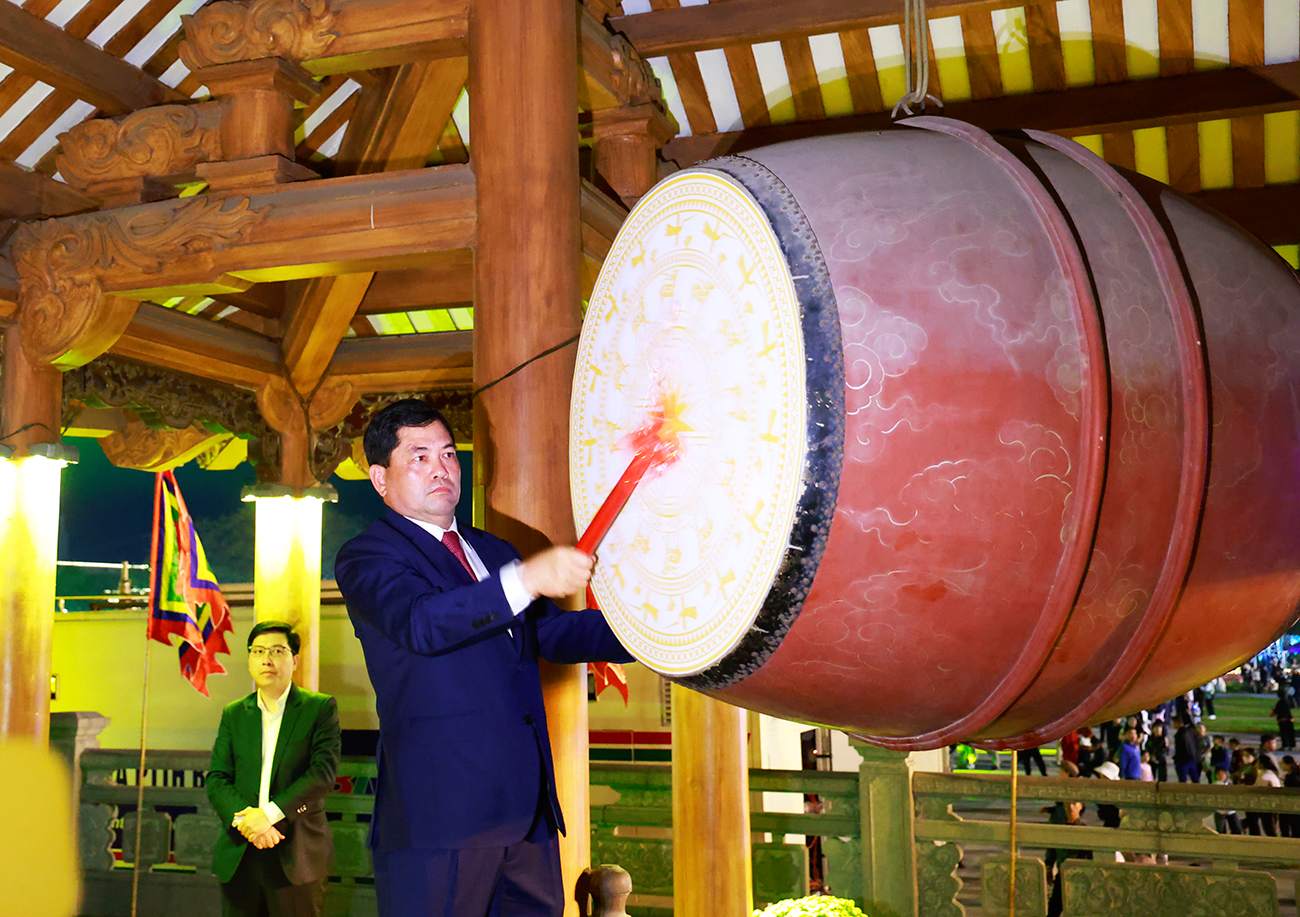
On the evening of February 21 (ie, the 5th day of the first lunar month of Binh Ngo year 2026), at the Special National Relic Site of Xuong Giang Victory, the Party Committee, People's Council, People's Committee, and Fatherland Front Committee of Bac Giang ward, Bac Ninh province solemnly organized the opening of the 599th Anniversary of Xuong Giang Victory (1427-2026) Festival.
Speaking at the opening ceremony, Mr. Tran Van Thanh, Chairman of Bac Giang Ward People's Committee, recalled the heroic tradition of the nation: Spring of Mau Tuat year 1418, the Lam Son uprising initiated by Lord Le Loi from the upland Thanh Hoa region.
By mid-1426, the rebel army advanced to the North, besieging Dong Quan citadel. Faced with that situation, enemy general Vuong Thong on the one hand asked for peace, on the other hand secretly appealed to the Minh court, and sent two reinforcements to rescue.
Grasping the enemy's scheme, Le Loi and Nguyen Trai advocated the strategy of "surrounding the citadel, destroying reinforcements", sending generals to the border to block and attack reinforcements, and at the same time promoting the offensive and liberating strongholds. After more than 6 months of persistent siege, with more than 30 large and small battles, the Lam Son insurgents and local people defeated Xuong Giang citadel 10 days before Minh reinforcements arrived.
On October 8, 1427, Lieu Thang's army advanced to Pha Luy gate. With the ingenious tactics of the generals and the ingenuity of Nguyen Trai, our army lured the enemy into the ambush at Chi Lang. On October 10, 1427, Lieu Thang was slashed at the foot of Ma Yen mountain.
Admiral Thôi Tụ came to replace him, and together with Minister Hoàng Phúc commanded the remaining more than 70,000 troops to recklessly advance towards Xương Giang. However, when they arrived, they realized that the citadel had been controlled by our army, becoming a solid fortress blocking the advance.
After a heavy defeat at Chi Lang - Xuong Giang, Vuong Thong's army in Dong Quan fell into a state of being besieged and isolated, forced to ask for peace and agree to withdraw troops back to the country at the end of December 1427, ending 20 years of Minh Dynasty's domination, opening up a period of independence and peace for the nation.
Chi Lang - Xuong Giang victory is the pinnacle of Vietnamese military art, typical of the ideology of "taking few to defeat many", expressing the indomitable will, spirit of solidarity and aspiration for national independence.
In 1428, after ascending the throne, King Le Loi held a feast for the army, proclaiming "Binh Ngo Dai Cao", affirming the independence of the country.
Since then, the people of Xuong Giang region have organized festivals at the beginning of Spring to commemorate their glorious feats. The festival takes place from the 5th to the 7th day of the first lunar month, becoming a typical traditional cultural activity of the Kinh Bac region.
With special historical and cultural values, in 2009, the Xuong Giang Victory site was ranked as a National Historical Relic; in 2019 it was recognized as a Special National Relic; in 2023, the Xuong Giang Traditional Festival was included in the List of National Intangible Cultural Heritage.
This year's festival takes place until the end of February 23 (ie, the 7th day of the first lunar month), the festival is solemnly organized with traditional rituals such as: Sacrificial ceremony, procession ceremony, launching fish, launching birds to pray for national peace and prosperity; along with many unique cultural, artistic, and sports activities such as intangible heritage performances (cheo, quan ho, ca tru), animated film screenings about the history of the Xuong Giang Victory, documentary photo displays, rural market space and folk games.