
Buying bottled water, asking for well water to survive
Mrs. Pham Thi Phung's house, at the headwaters of hamlet 1, Bung Triet hamlet, seemed to be more convenient in using tap water. However, for the past 2 years, the family has still had to live in weak, intermittent water, sometimes not a drop all day, especially during the peak period of Tet and the dry season.
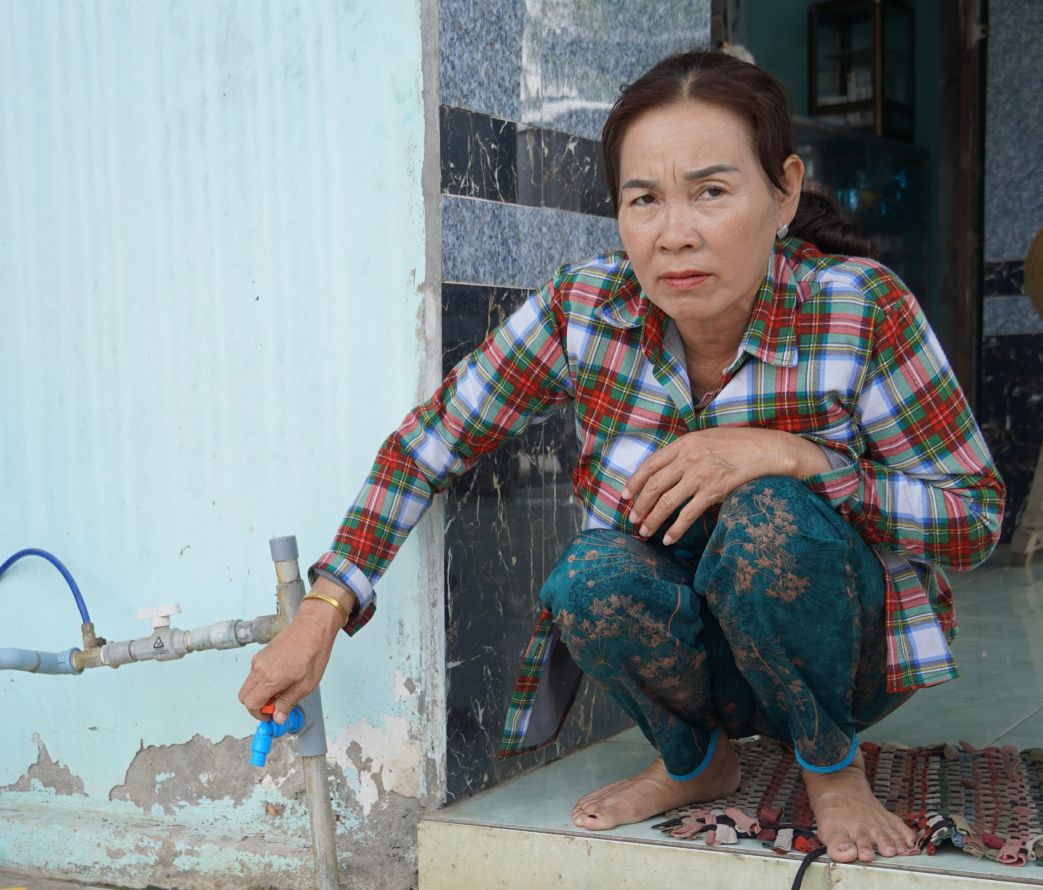
At about 2 pm on February 24, when reporters were present to record, Ms. Phung directly opened the water hose to verify. Even after turning the water up to full capacity, it still did not flow out even a drop.
Unable to hide her frustration, she said: "During the day, there is almost no water. It takes 1–2 am to have a little, if you want to have water, you have to stay up late to catch it. It's the same every year, not just recently.
She said that every night the whole family takes turns waking up to open the faucet, waiting for each weak stream of water to flow into the tank. "Every night I watch the water, I'm getting sick all the time," she sighed.
Having drilled wells for animal husbandry, now tap water is intermittent, Ms. Phung has to pump well water to temporarily distribute to a few surrounding households for bathing and washing; and drinking water has to buy bottled water.
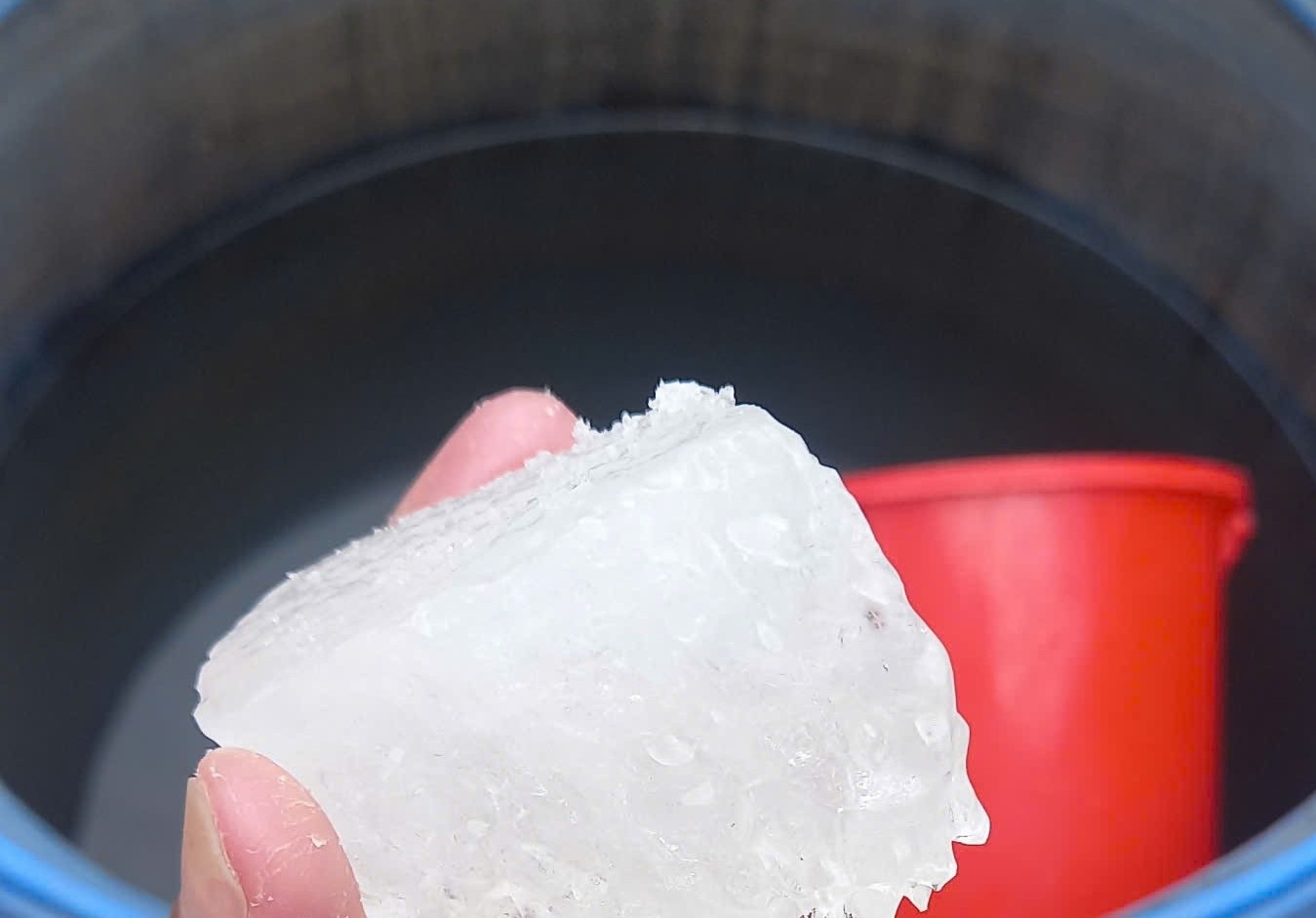
Not far away, Ms. Tran Thi Xuan Hien's family is also in a similar situation. For more than half a month now, her house has almost no tap water. To have water for bathing and washing, she has to ask for water from neighbors' wells, pump it into a settling tank, treat it with alum and then dare to use it.
Black water also has to be used, what can I do without it," she shared.
Ms. Hien said that small business at home is also affected because there is no food wash water, cleaning tools. Drinking water must be bought in bottles continuously, 2-3 barrels each time. For more than half a month, she has not remembered how many bottles she has used because she buys and then returns the bottles continuously.
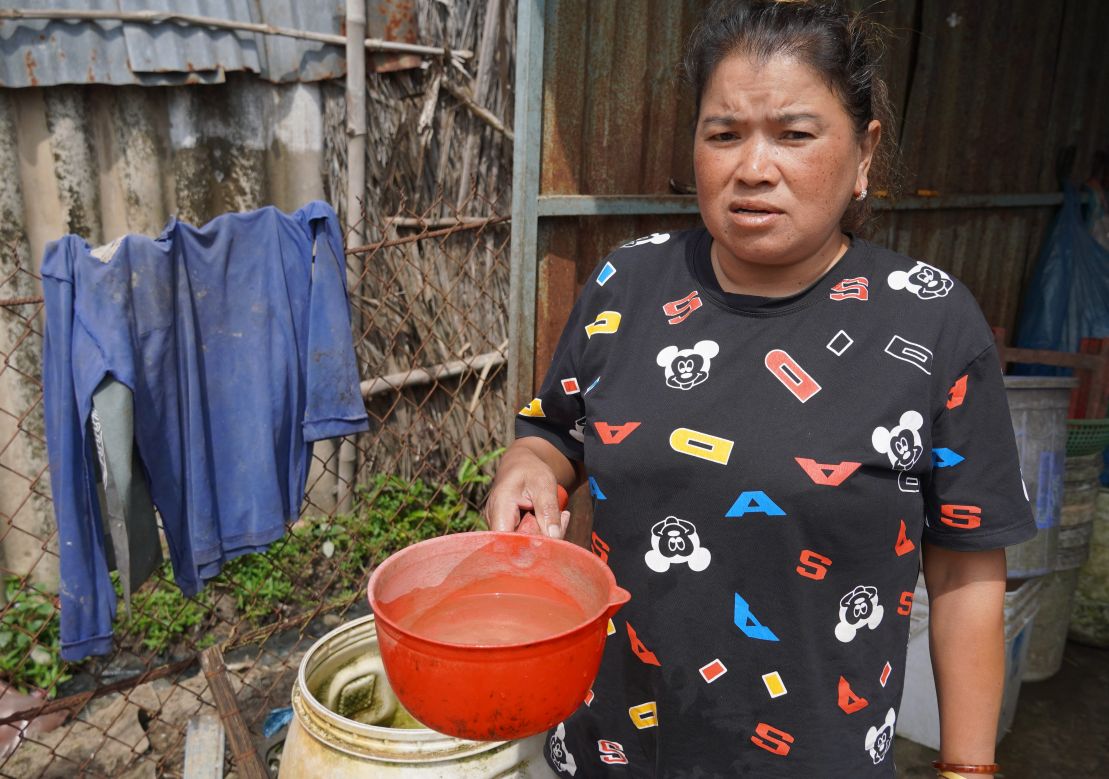
In particular, about 20 households at the end of the source, households located behind rural bridges are most heavily affected. Due to weak pressure, the water flow is not strong enough to flow through the bridge and to households inside. From December 25th of the lunar calendar to now, these households have almost no water to use.
Ms. Lam Sen in Hamlet 1 (Bung Triet hamlet) said that during Tet, children and grandchildren come from afar to reunite, sometimes more than 10 people, but the tap water source is completely interrupted. The family has to buy tap water mainly for eating and drinking, and cooking also has to be frugal.
Many times I have to buy lunch boxes to eat because there is no water, so I can't make any meat or fish," she said.
Ms. Sen said that bathing and washing clothes are even more difficult. Clothes have to be taken to relatives' houses to wash, sometimes they have to be taken to the market to hire to wash.
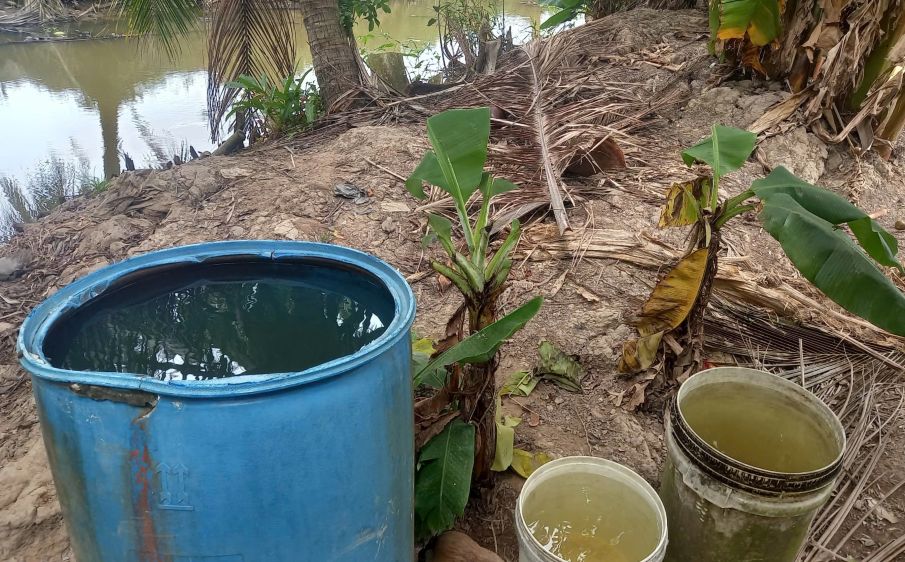
Many days I take river water, settle it with alum and then dare to use it. But my child still gets itchy and has rashes all over his body after bathing," she complained.
According to Ms. Sen, even when there is water at night, the quality is not guaranteed. "The water is yellow and cloudy," she reflected and hoped that functional agencies would soon have solutions so that people can use stable water sources, ensuring hygiene.
Similarly, Ms. Lam Thi So Nan said that the family must take advantage of each bucket of clean water: "Drink rice and pour it into the sink to wash dishes. Toilet water is river water.
According to Ms. So Nan, in the dry season, the river water level also begins to dry out, plus the risk of pollution due to fields discharging water into the river, making the exploitation of this water source even more potentially risky.
Waiting for a solution
Talking to reporters, Mr. Tang Ro Qui Sa - Head of the People's Committee of Bung Triet hamlet (Lieu Tu commune, Can Tho city) said that the clean water shortage situation in the locality is not new but has lasted for about 1-2 years now, especially during Tet when people return from working far away in large numbers, and the demand for water use is increasing.
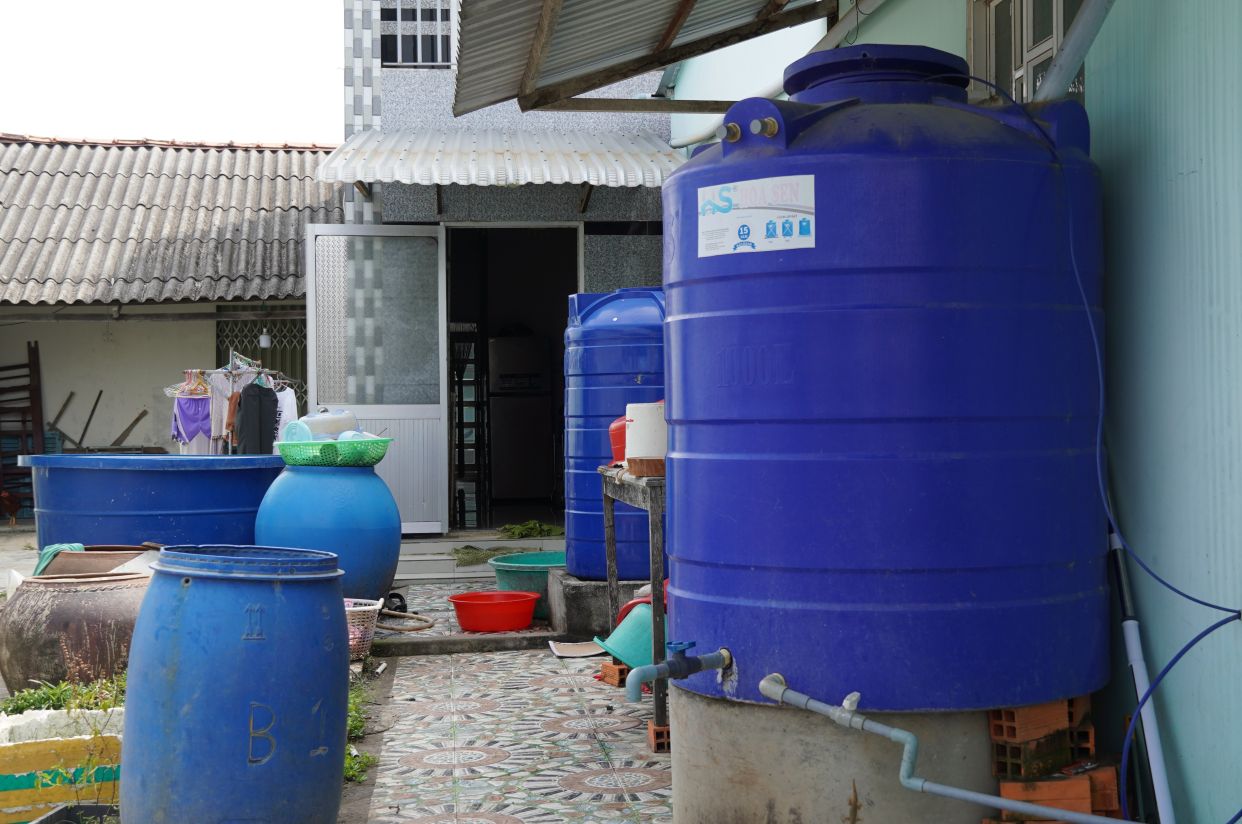
According to him, currently most households in the hamlet have to equip themselves with 1,000–2,000 liter tanks to store water. However, if the water outage lasts for 1–2 days, they can still manage, but regular shortages are very difficult. Not only is there shortage, but the water quality is sometimes not guaranteed.
There were a few days when the water was cloudy and dirty. When asked, the water supply side replied that they were discharging the tank and rinsing the tank. But discharging it still costs money. People can't bear it, what else can they do," he reflected.
According to Mr. Qui Sa, currently about 80–90% of households in the hamlet use water from hygienic water supply systems. However, due to the long pipeline and small diameter, the supply source must be shared with many areas, so households at the end of the source, especially in Hamlet 1 area with about 200 households, are falling into a situation of regular domestic water shortage.
Faced with this situation, the locality has repeatedly reflected to higher levels and water supply units. According to him, people want to soon invest in upgrading the pipeline, supplementing the supply source to ensure stable domestic water, ending the scene of having to stay up late to watch the water for many years.
Representatives of the leadership of the Economic Department of Lieu Tu commune (Can Tho City) said that they have received feedback from people. According to this person, not only Bung Triet hamlet but also many other areas in the commune are facing a similar situation. The water shortage problem mainly occurs in the dry season, when demand increases and pipeline pressure decreases sharply.
The locality has repeatedly reported to the Center for Clean Water and Rural Environmental Sanitation of Can Tho City, but the remediation is still slow due to depending on the supply source and existing pipeline systems," this person said.


