
Test results
On April 22, exactly one week after the treatment, a group of experts led by Dr. Tran Triet (University of Social Sciences and Humanities - Vietnam National University Ho Chi Minh City) and Dr. Nguyen Thi Ngoc Truc (Southern Fruit Tree Institute) returned to the buffer zone of Tram Chim National Park (Dong Thap province) where the trial method of treating straw with microbial combined enzymes was implemented. Also participating was the field owner - Mr. Bui Quang Sang - to inspect the current situation.
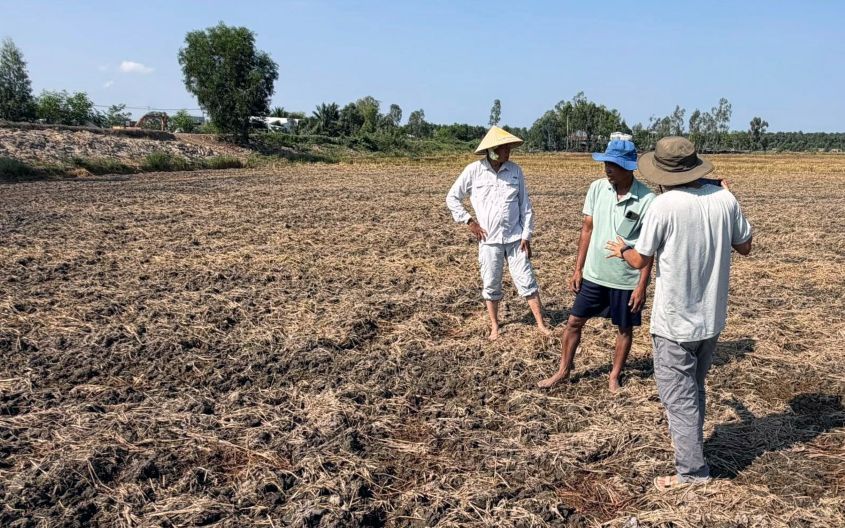
Real-world observation shows that the amount of straw on the field has decomposed to about 70%, in some places reaching 90%.
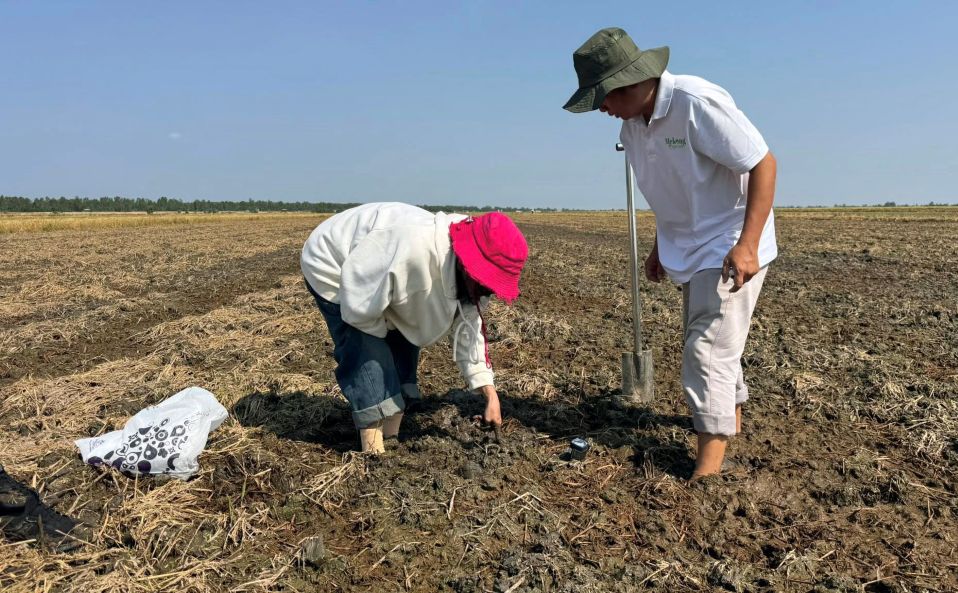
Even the stubble root - which is more difficult to decompose - has also begun to decompose clearly," Dr. Tran Triet emphasized. Notably, in the topsoil layer (about 20cm deep), no odor of semi-decomposed organic matter is recorded - a common phenomenon when plowing and burying straw using traditional methods. Quick measurement results show an average pH of about 5.5, meaning the soil is slightly acidic but still ensures conditions for the microbiome to develop stably.
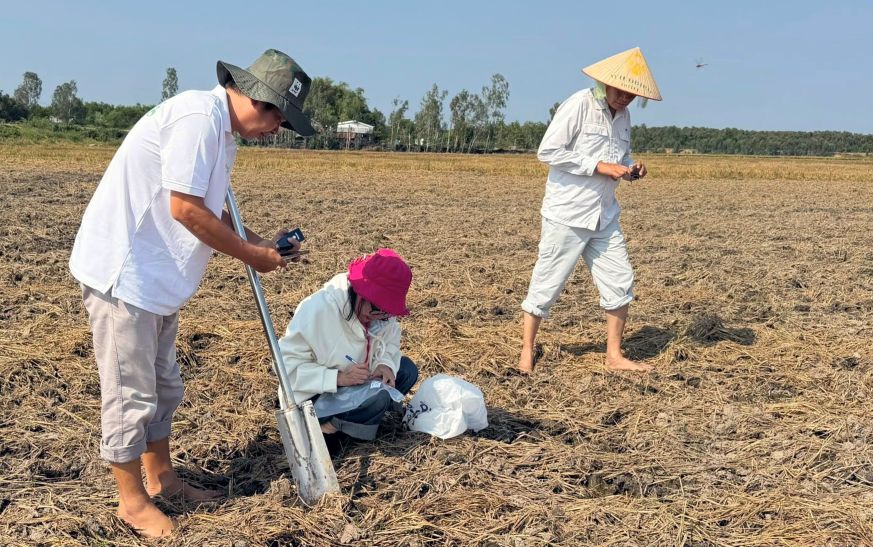
According to the research group, this is a very positive signal because the initial goal is to decompose straw in about 3 weeks. At the current rate, this time can be shortened to about 2 weeks.
Ready for the new crop, effectiveness is clear in the fields
Directly witnessing the results on his field, Mr. Bui Quang Sang could not hide his excitement: "Just 2-3 more days and we can sow rice for the new crop.
It is noteworthy that in this model, all straw is kept on the field, without collecting or reducing load, so the initial material volume is very large. Fast decomposition further shows the effectiveness of the solution.
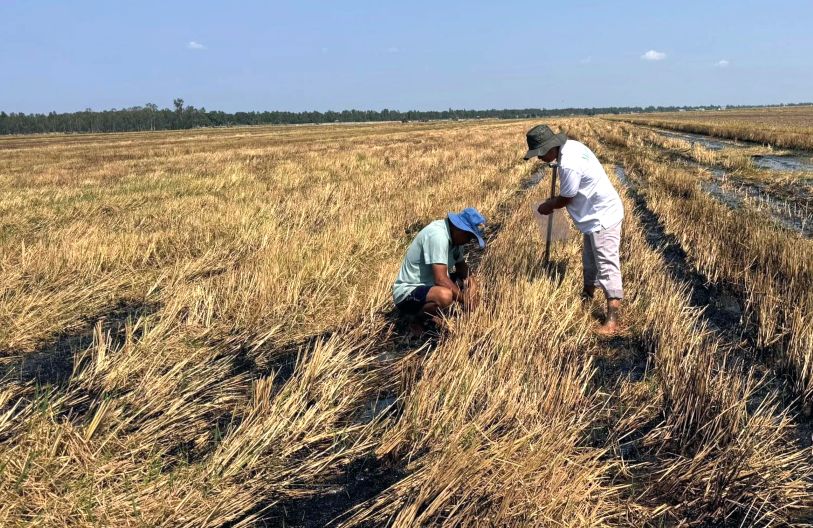
Compared to adjacent fields treated with the field burning method, the difference is even more pronounced. On burned fields, the remaining rice stubble is still large and needs to be further treated. Meanwhile, microbial treated fields show a more uniform level of decomposition, limiting unresolved organic residues.
Not only that, the copper burning method also entails additional treatment costs and higher fertilizer demand for the next crop, not to mention the negative impacts on the environment and soil fertility in the long term.
Soil samples from the two models have now been collected for laboratory analysis to get more specific data. However, right in the fields, the research team received a "quick assessment" from the person directly cultivating.
I like this way," Mr. Sang said briefly but excitedly. According to scientists, farmers' consensus is the important factor determining the ability to replicate the model.
From "recklessness" to sustainable direction
In scientific research, caution is always the top principle. Experiments must often be designed tightly, repeated many times under control conditions before being put into application.
However, with the model at Tram Chim, the expert group chose a different approach: direct testing in the fields - where environmental factors are difficult to control.
On an area of about 4.5ha of Mr. Bui Quang Sang's land, the method of treating straw with microorganisms combined with enzymes has been implemented. This approach is jokingly called "doing it at risk" by those involved, because it both tests and faces crop risks. "In science, caution is the principle. But production practice also sets the requirement to quickly find alternative solutions to burning fields," Dr. Tran Triet shared. According to experts, direct testing in the fields, although potentially risky, brings a great advantage: reflecting the actual production conditions, thereby helping the solution to be quickly adjusted to suit farmers.
The initial positive results show that, if it continues to be effective, this method will not only contribute to changing the habit of burning fields after each crop season, reducing emissions, but also open up a sustainable farming direction, where agricultural by-products are regenerated into resources.


