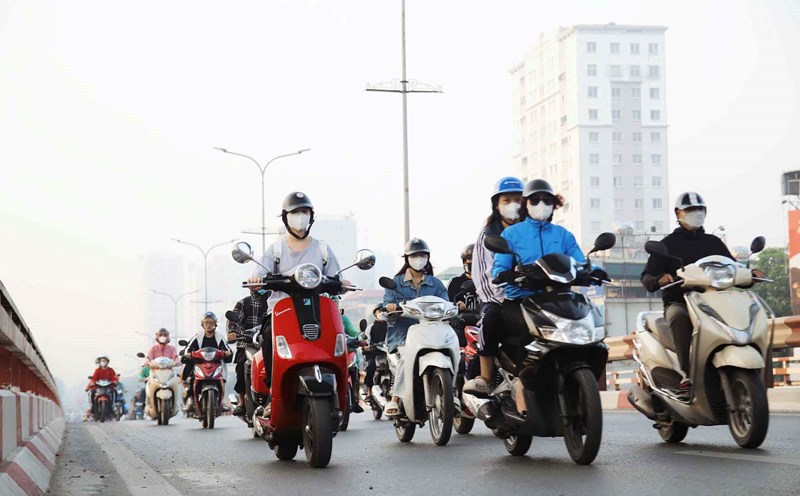
Personal vehicles - a major source of emissions
According to environmental management agencies, emissions from vehicles, especially motorbikes using fossil fuels, are one of the main sources of fine PM2.5 dust and toxic gases such as CO, NOx - substances that directly affect people's health.
Deputy Minister of Agriculture and Environment Phung Duc Tien said that the objective cause of air pollution is due to weather patterns tending to be more inactive than the multi-year average, accompanied by prolonged fog and heat reversal. Subjectively, emissions from traffic activities increase due to increased vehicle density at the end of the year; many construction and road opening projects are being urgently implemented but not fully covered. The situation of burning waste, by-products, waste in craft villages and industrial waste also tends to increase.
The Deputy Minister emphasized that the immediate solution is to require localities to strengthen inspection and supervision of the implementation of regulations on dust and emission control. Localities need to establish a mechanism for monitoring, supervising and reporting the results of the implementation of the Prime Minister's directions; promote the expansion of the monitoring network to have sufficient databases to serve the handling work.
In the long term, he believes that it is necessary to strengthen road cleaning, strictly control 100% of construction works, and resolutely strictly prohibit the act of burning open spaces.
In the period 2026-2030, the Ministry of Agriculture and Environment will synchronously implement many groups of solutions. First of all, it is necessary to develop and organize the implementation of the national action plan on environmental pollution remediation and air quality management for the period 2026-2030, with a vision to 2045, with 9 specific groups of solutions, ensuring the spirit of "6 clear".
In parallel with that, the Ministry will deploy tasks under the National Steering Committee for Air Pollution Remediation after being approved by the Prime Minister; study amending and supplementing regulations related to the air environment in the Law on Environmental Protection.
One of the key contents is to complete the draft to submit to competent authorities to issue a roadmap and national technical regulations on emissions for motorcycles and motorbikes participating in traffic.
The Ministry of Agriculture and Environment will also implement a group of tasks on infrastructure investment, application of science and technology to solve environmental pollution associated with sustainable development; strengthen control of waste sources, focusing on automobiles and motorbikes; and at the same time promote communication and international cooperation in this field.
Limiting gasoline cars in the inner city - an inevitable trend
Functional agencies also emphasized that the emission standard is not aimed at "banning cars" or causing difficulties for people, but at creating a roadmap to gradually eliminate high-emission vehicles, while promoting the use of fuel-efficient and more environmentally friendly car lines. However, for the standard to be effective, experts believe that it is necessary to soon specify the application time, inspection mechanism, as well as policies to support people to change cars, avoiding creating social shocks.
According to experts, limiting vehicles using fossil fuels from circulating in the inner city is an inevitable trend, in line with the experience of many major cities around the world. When the density of personal vehicles increases, especially gasoline motorbikes, the pressure on the air environment is even greater.
Dr. Hoang Duong Tung, Chairman of the Vietnam Clean Air Network - said that the emission control roadmap proposed by the Ministry of Agriculture and Environment is suitable for the actual situation when motorbikes account for a large proportion, increasing rapidly.
Mr. Tung proposed to apply synchronously with other measures such as promoting public transport, reducing personal vehicles, and converting to green transport.
In which, Ho Chi Minh City and Hanoi have a full network of urban railways, electric buses, electric taxis, public bicycles and have developed a roadmap to convert bus systems using internal combustion engines to using clean fuels, setting up low emission zones...
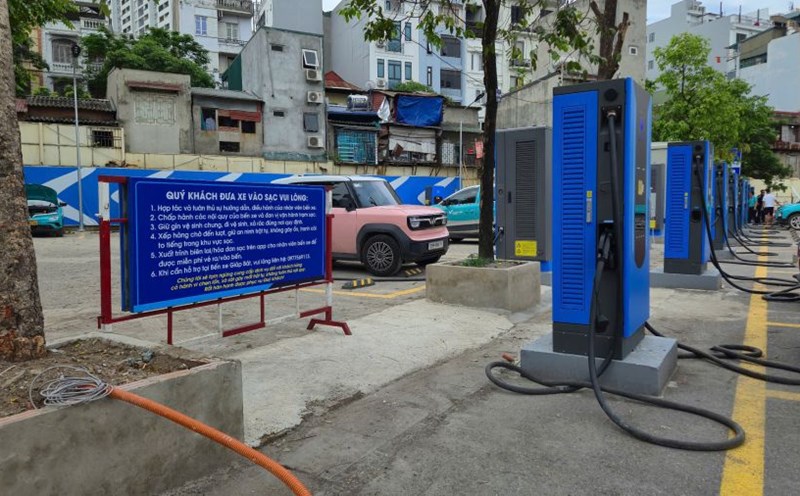
With that context, the involvement of businesses from "strong" incentive programs is considered an important boost. Typically, VinFast has proactively implemented the "Buy 0 VND car" program, with incentives of up to 10% for some electric vehicle lines, contributing to reducing initial cost barriers and promoting people to access non-emission vehicles. Experts assess that if these efforts are combined with support policies from the State such as tax exemption and reduction, registration fee, and infrastructure development for charging stations, the conversion efficiency will be clearer.