On July 5, the Department of Home Affairs of Quang Ngai province informed that it had just sent a report to the Ministry of Home Affairs on the results of implementing the arrangement of villages and residential groups and arranging, using, regimes, and policies for non-specialized personnel at the commune, village, and residential group levels.
Accordingly, by June 30, 2026, all 88 communes and wards subject to arrangement have completed the submission to the People's Council of the same level to issue a resolution on arranging and reorganizing villages and residential groups in accordance with regulations. After arrangement, the number of villages and residential groups in the province decreased from 1,710 to 1,098.
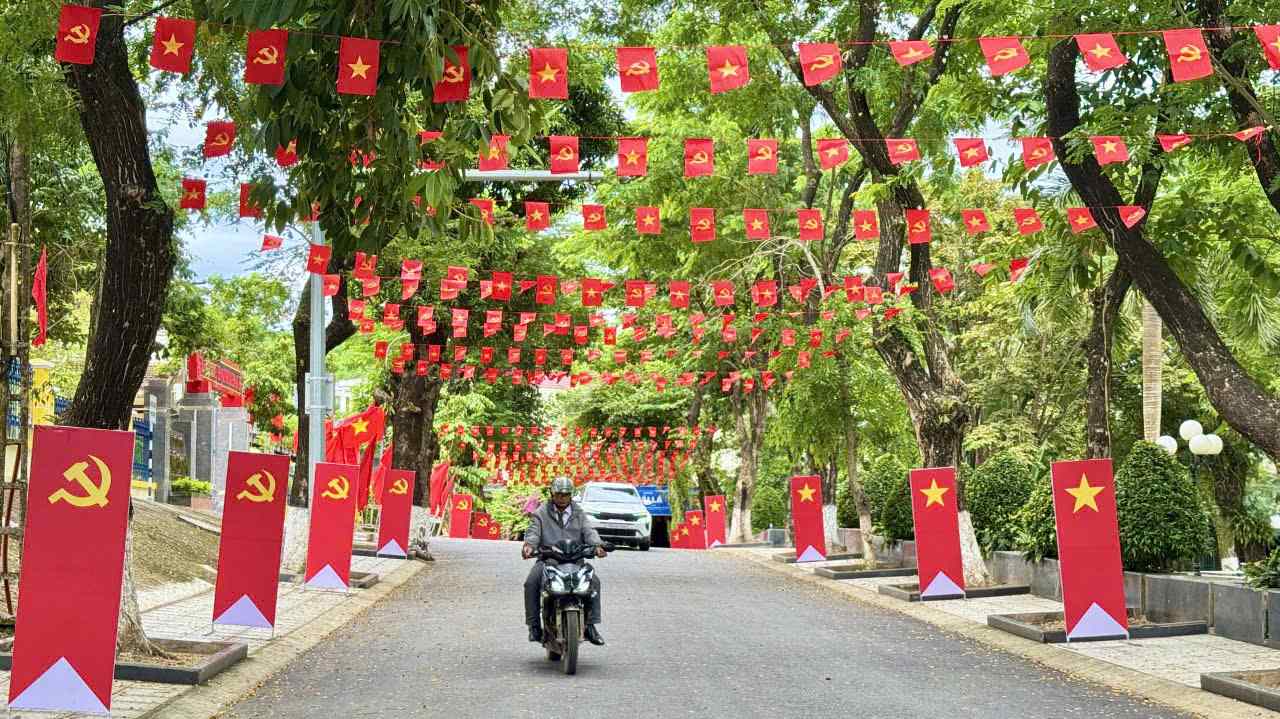
To ensure progress, Quang Ngai Provincial People's Committee directs localities to develop plans in accordance with Government regulations and actual conditions. Communes and wards organize to collect voters' opinions representing households, promote propaganda through grassroots broadcasting systems, meetings in residential areas and publicize draft projects to create consensus among the people.
Along with arranging villages and residential groups, Quang Ngai province also implements the settlement of regimes and policies for non-specialized personnel. The whole province has 846 non-specialized commune-level personnel.
To date, 627 cases have been resolved for regimes and policies; 55 people have been admitted to civil servants and public employees; 130 people are expected to continue working in villages and residential groups. The remaining cases are being arranged or resolved according to regulations.
According to the Department of Home Affairs of Quang Ngai province, the arrangement of villages and residential groups has completed 100% of the set goals, contributing to streamlining the apparatus at the grassroots level, reducing the number of people receiving allowances from the budget and improving management efficiency in residential areas.
However, some villages after the merger have a large area and dispersed population; some cultural houses have not met the needs of community activities and need to be further invested and completed.
Proposing the Government to study and consider issuing more specific mechanisms and policies to support non-specialized workers in villages and residential groups who are not subject to arrangement but have to quit their jobs due to the requirement to consolidate personnel, standardize qualifications and age, in order to avoid thoughts and comparisons at the grassroots level.
At the same time, it is proposed that the Government pay attention to building mechanisms and policies to further support non-specialized workers in villages and residential groups after rearrangement and reorganization with household size exceeding 300% or more compared to the standards specified in Article 10 of Decree 185/2026/ND-CP of the Government.