
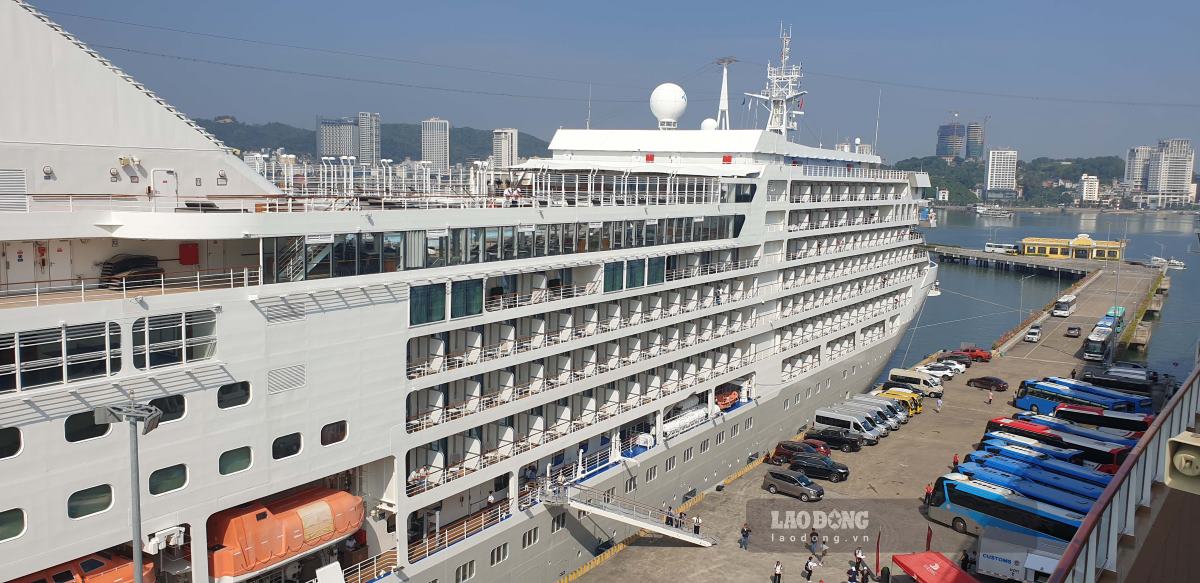
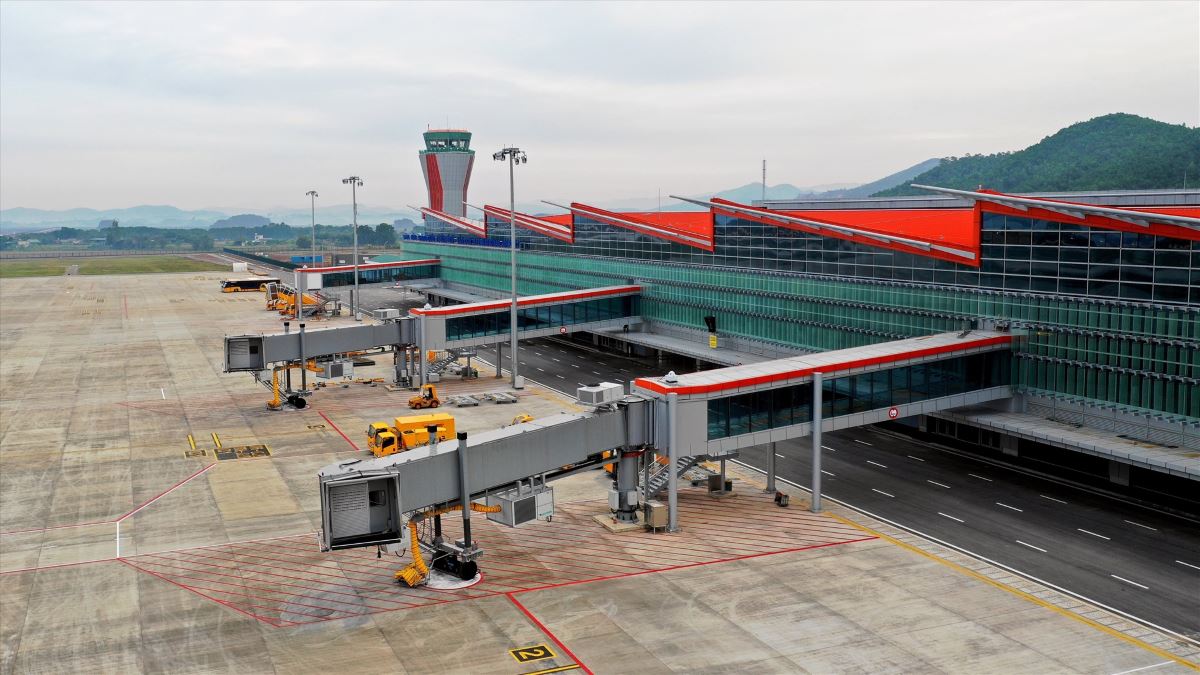
In recent years, Quang Ninh has gradually built a synchronous and modern infrastructure system with the Hai Phong - Ha Long - Van Don - Mong Cai expressway network, Van Don International Airport, Ha Long International Passenger Port and many other dynamic projects.
However, if previous phase projects mainly focused on solving the problem of inter-provincial connectivity, breaking the terrain divide and expanding trade, then the projects supplemented in this plan aim for a larger goal of expanding development space, strengthening regional linkages and enhancing Quang Ninh's position in the national transport network.
The most prominent is the expressway connecting Ha Long - Hai Phong - Gia Binh Airport. The road is about 50km long, of which more than 46km passes through Quang Ninh, directly connecting from Ha Long Xanh intersection along the riverside road being invested to Trieu bridge and the regional expressway network.
When completed, the route will significantly shorten travel time between Quang Ninh and Gia Binh Airport. From Dong Trieu to the airport is only about 45km, and from Ha Long is about 95km, entirely by expressway.
Along with Van Don International Airport, Quang Ninh will possess a rare advantage of being directly connected to two international airports, while effectively linking with logistics systems, seaports and international border gates.
In parallel with that, the connecting route from the province's riverside road to Hanoi Ring Road 5 is identified as one of the new strategic traffic routes. The route will connect with the traffic network passing through 7 provinces and cities including Hai Phong, Hanoi, Hung Yen, Bac Ninh, Thai Nguyen, Phu Tho and Ninh Binh.
When completed, not only will the transportation time of goods be shortened, but Quang Ninh will also have the conditions to become an important transshipment point between the Red River Delta region and the Northeast region and international border gates.
In the Eastern region, the coastal road Van Don - Dam Ha - Hai Ha - Mong Cai, more than 70km long, will continue to complete the coastal transport axis of the province. This is considered a driving force connecting the two key economic zones of Van Don and Mong Cai, expanding the space for marine economic development, logistics, industry, urban areas, tourism and aquaculture. At the same time, the road also contributes to improving the capacity to ensure national defense and security in the sea and island and border areas.
Meanwhile, the road connecting from Ha Long Xanh to Luong Minh center is expected to expand the development space north of Ha Long urban area. This project creates conditions to effectively exploit mountain land funds, promote the development of green urban areas, ecotourism, resorts, golf courses, renewable energy and high-quality services.
A noteworthy point is that the new traffic routes are not planned separately but are integrated synchronously with the national transport system. Along with the existing high-speed network, deep-water seaport system, international airports, international border gates and especially the Hanoi - Quang Ninh high-speed railway line which was started on April 12, 2026, Quang Ninh is gradually completing the leading modern multimodal transport network in the country.
In addition to road projects, the province also continues to research and promote the development of strategic railway lines connecting to the national railway system and major economic centers. Including the Lao Cai - Hanoi - Hai Phong - Quang Ninh high-speed railway line and coastal railway lines. These projects are expected to create a breakthrough in freight transport, reduce logistics costs and improve business competitiveness.
Currently, many other important transport projects are also being focused on by the province such as upgrading National Highway 4B, the coastal road to the north of Cua Luc Bay extended, inter-island connecting routes in Van Don... Thereby gradually completing a modern and synchronous transport infrastructure network.
With the orientation of continuing to invest in strategic transport projects, Quang Ninh not only expands the development space for the locality but also gradually affirms its role as a connecting center between the Capital region, the Red River Delta region and the Northeast region, and is also an important gateway connecting Vietnam with China and the Northeast Asian market.


