
Field airport in the majestic Truong Son valley
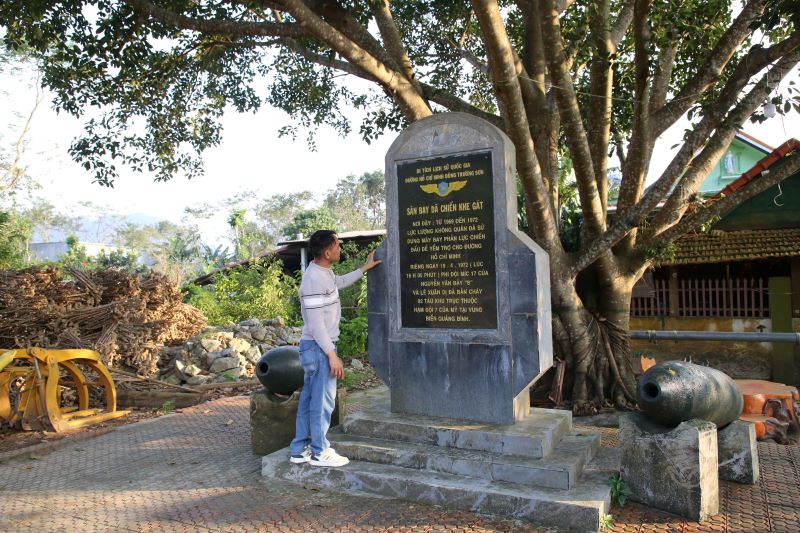
On the long journey of North - South, following the Ho Chi Minh Road section through the winding and dangerous Da Deo pass, a straight, flat road running through the valley appears before your eyes. Few people know that this used to be Khe Gat field airport, a unique special military structure on the Truong Son range, associated with one of the most bold feats of arms of the Vietnam People's Air Force.
Khe Gat airport was built at the end of 1968, in the context of the anti-American resistance war for national salvation entering a fierce phase. In order to create surprise elements in air defense operations and protect the strategic Truong Son transport route, functional forces decided to build a makeshift airport codenamed B7 in the Khe Gat area.

According to Mr. Le Quang Phu, Phong Nha commune - who used to participate in the construction of Khe Gat airport, in conditions of hundreds of deprivations, the engineering force and soldiers worked diligently. After only about a year of urgent construction, the runway nearly 2km long and 50m wide was completed. The entire airport was carefully camouflaged under the Truong Son forest, ensuring absolute secrecy against the fierce attacks of the US air force.
The lightning battle within 17 minutes
Mentioning Khe Gat field airport is mentioning the lightning battle of only 17 minutes of the Vietnam People's Air Force. On April 19, 1972, according to intelligence, US warships approached the shore, including four ships only 16 km from Nhat Le port (Quang Tri province).
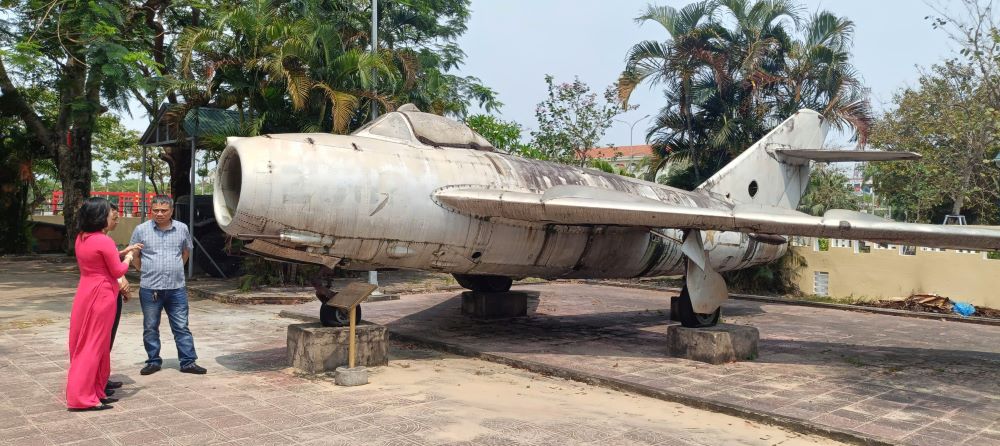
The MiG-17 squadron from Khe Gat sortied to sea at 16:05. Two pilots Le Xuan Di and Nguyen Van Bay approached the target and attacked. In 17 minutes, the two aircraft caused heavy damage to the destroyer USS Higbee and the cruiser USS Oklahoma City.
After the attack, the two aircraft returned to Khe Gat and were hidden in a mountain crevice. This was the first time the Vietnamese Air Force used fighter jets to attack a US destroyer in the East Sea.
The successful battle forced the US Navy to change tactics, limiting approach to the coast of Zone 4 to attack strategic traffic routes. This feat not only affirmed the bravery, intelligence and courage of the air force but also contributed to protecting the safety of the important support route from North to South.
Today, Khe Gat airport is no longer in its original state due to the impact of time and war, but the historical value of the relic is still intact.
This place is considered one of the typical "red addresses" on the Ho Chi Minh Trail, contributing to educating revolutionary traditions, patriotism and resilience for generations.
Currently, one of the two MiG-17 aircraft that participated in the historic battle is being preserved and displayed at the Quang Tri Museum.
According to Ms. Le Thi Hoai Huong, Director of Quang Tri Museum, this artifact attracts a large number of tourists, especially the younger generation, to visit and learn about a heroic historical period of the nation.
Not only has historical value, Khe Gat is also gradually becoming an attractive destination on the tourist route to explore Phong Nha - Ke Bang National Park. Located in the majestic Truong Son mountains, this place is both pristine and contains profound historical stories.


