
Mr. Phan said that the newspaper selling profession is going through the most difficult period since he became attached to this job. "Around 2020, the number of newspaper buyers has decreased significantly. Customers are mainly elderly people or people who still maintain the habit of reading paper newspapers every day. Many newspaper stalls around this area have also closed because they cannot maintain operations," Mr. Phan shared.
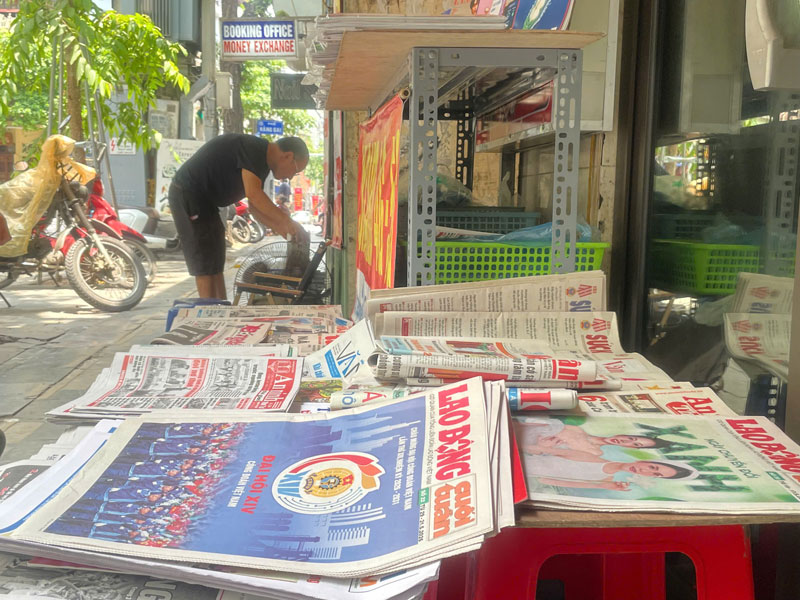
When print newspapers are no longer the main source of income, many newspaper sellers are forced to find other ways to make a living to maintain their jobs. However, for those who have spent decades with stacks of newspapers every morning, giving up their profession is not easy.
Keeping the profession with love for the smell of paper ink
Despite facing many difficulties, there are still people who silently stick to the newspaper selling profession as a way to preserve the reading culture that has existed through many generations.
Attached to the profession for nearly 30 years, Mr. Dang Huu Phan is one of the few people who still persistently keeps newspaper stands in the heart of the Old Quarter. Previously, he did business in the area of No. 71 Hang Trong, where many newspaper stands used to operate next to each other. After the premises were recovered, he moved to his current address at No. 1 Hang Trong. He recalled the time when the newspaper selling profession was still in its most vibrant stage. Every morning from about 5:30 am, the newspaper stands began to open to welcome customers. People bought newspapers and then drank coffee, had breakfast and read news. Many people also brought newspapers to Hoan Kiem Lake to read, creating a very unique lifestyle of Hanoi.
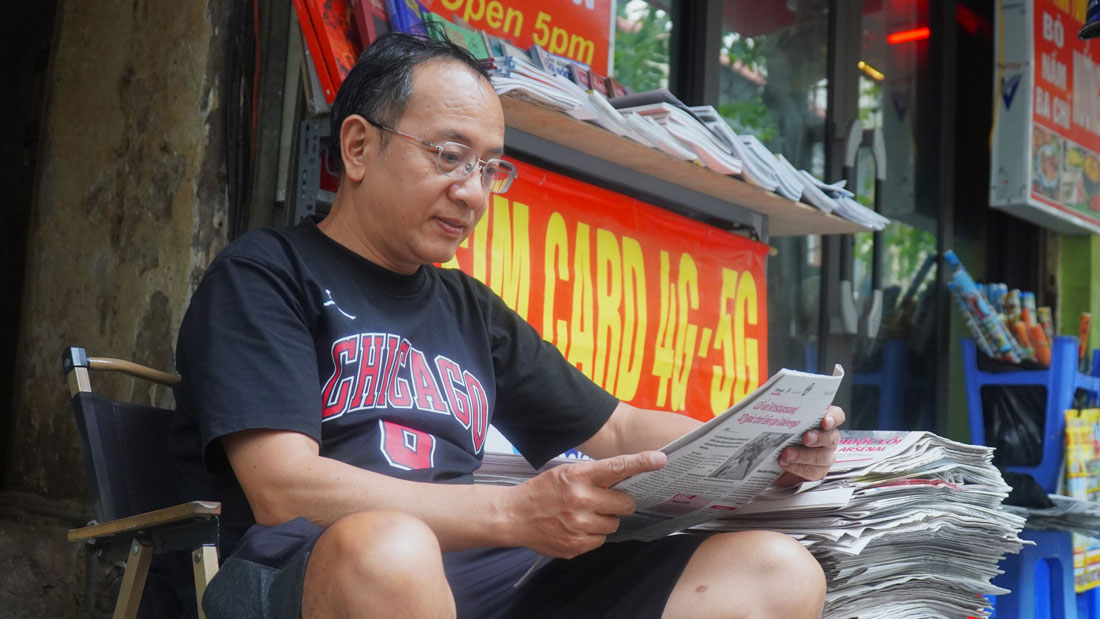
In those days, newspapers sold very well. The price of each piece was not high, but the quantity was large, so sellers still had stable incomes. Now it's very different now," Mr. Phan recounted.
Previously, the amount of newspapers sold each day was about 100 copies, mainly serving regular customers and older readers.But now, the amount of newspapers consumed is significantly lower.To maintain operations, he has to sell more phone SIMs, scratch cards and some other small items.
However, what keeps him attached to the newspaper stall is not simply income."I have been used to this job for many years.Reading newspapers every day becomes my joy.Sometimes I think about changing careers but still decide to stay," Mr. Phan shared.Despite facing many difficulties and the number of customers decreasing day by day, he still silently sticks to this job, preserving the reading culture that has been associated with the life of the Capital for many decades.For him, the newspaper stall is not simply a place to trade but also a part of memory, a cultural value attached for many years.
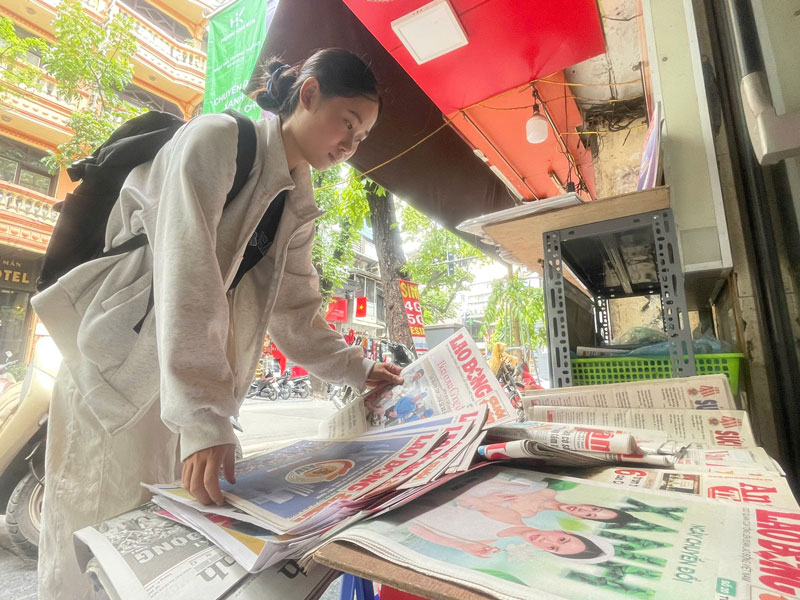
In addition to familiar paper newspapers every day, Mr. Phan also proactively imports special publications, specialized magazines, books and stories to diversify sources of goods, and at the same time attract more young readers to come to traditional reading culture.
Nostalgia
Not only a place to buy and sell newspapers, the small newspaper stall on Hang Trong street in recent years has also become a favorite stop for many international tourists. The stacks of newspapers are neatly arranged, along with the nostalgic beauty in the heart of Hanoi's Old Quarter, making many people excited to stop to take photos and save memories on their journey to explore the Capital.
According to Mr. Phan, many foreign tourists after visiting bought a few paper newspapers and brought them back as special souvenirs.
Many foreign tourists cannot read Vietnamese but still want to buy newspapers to bring back. They say this is a way to preserve images and memories of Vietnam after the trip. Some people even ask to take photos with the newspaper stand because they think this is a very unique cultural feature that not every city can still preserve," he said.
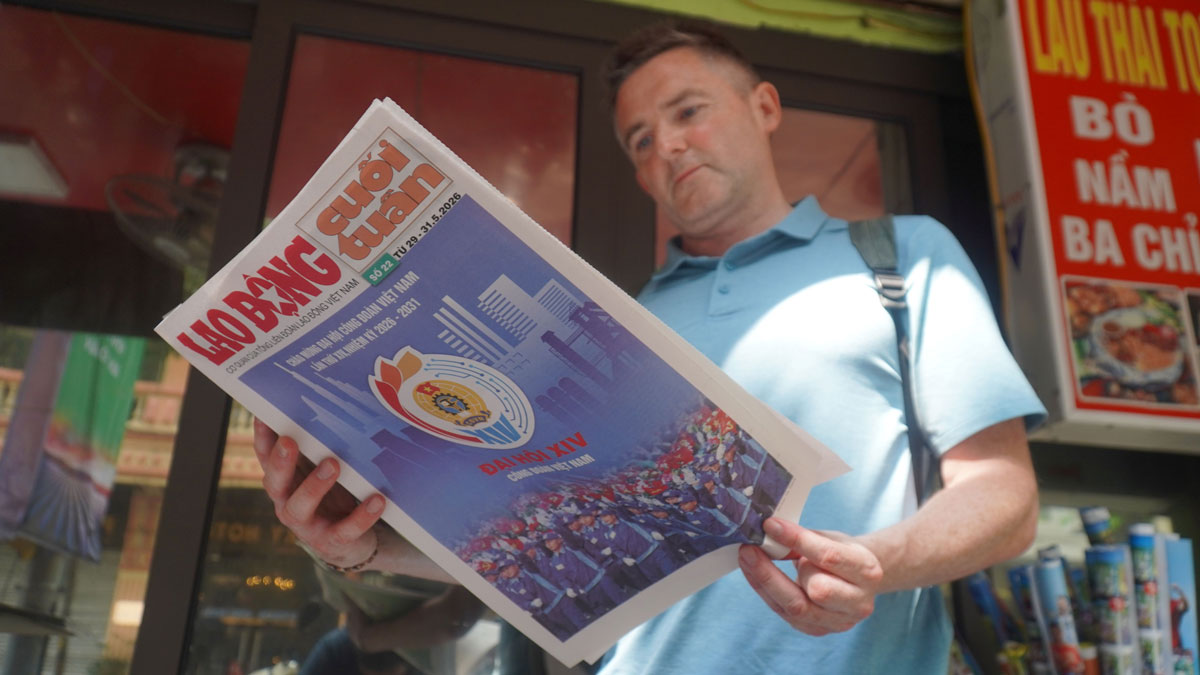
Mr. Duncan, a tourist from England, said that he bought a printed newspaper during a visit to Vietnam to bring back to the country. According to him, this is not only a souvenir gift associated with experiences in Vietnam but also a useful source of materials for teaching work. Currently working at an international school, Mr. Duncan shared: "I think the newspaper will help my students have the opportunity to learn more about Vietnamese culture, language as well as social life through stories and information reflected on newspaper pages." Despite the strong development of technology and digital platforms, the remaining paper newspaper stalls may no longer be as crowded as before. Amidst the modern pace of life, that small newspaper stall not only sells paper newspapers, but also preserves a part of urban memories, becoming a crossroads between the traditional reading culture of Hanoians and the curiosity and excitement of tourists from all over the world.


