
The red sign on a rainy day
Every year in late July and early August, I remember house number 15 Hang Non.
The time I went to this address, Hanoi was in a cloudy day. There were light rains, enough to make the old street surface watery and the porches low in the gray sky.
I stopped my car in front of house number 15 Hang Non, pulled back the hem of my raincoat and looked up. This is not a difficult address to find. But if I just rush past, amidst the rows of store signs on the street, perhaps not many people will pay attention to the red sign attached to the wall of the house.
The Bac Ky General Confederation of Labour was the first Trade Union organization of the Party established on July 28, 1929 at house number 15 Hang Non".
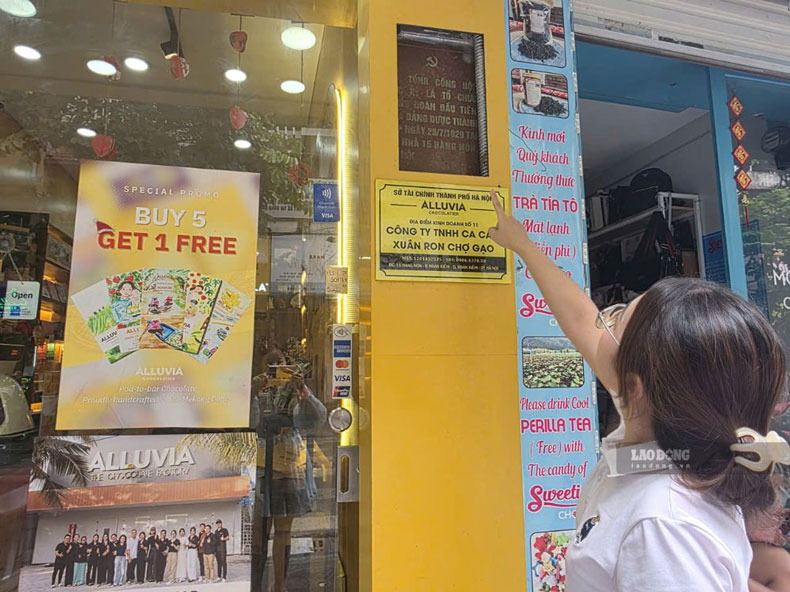
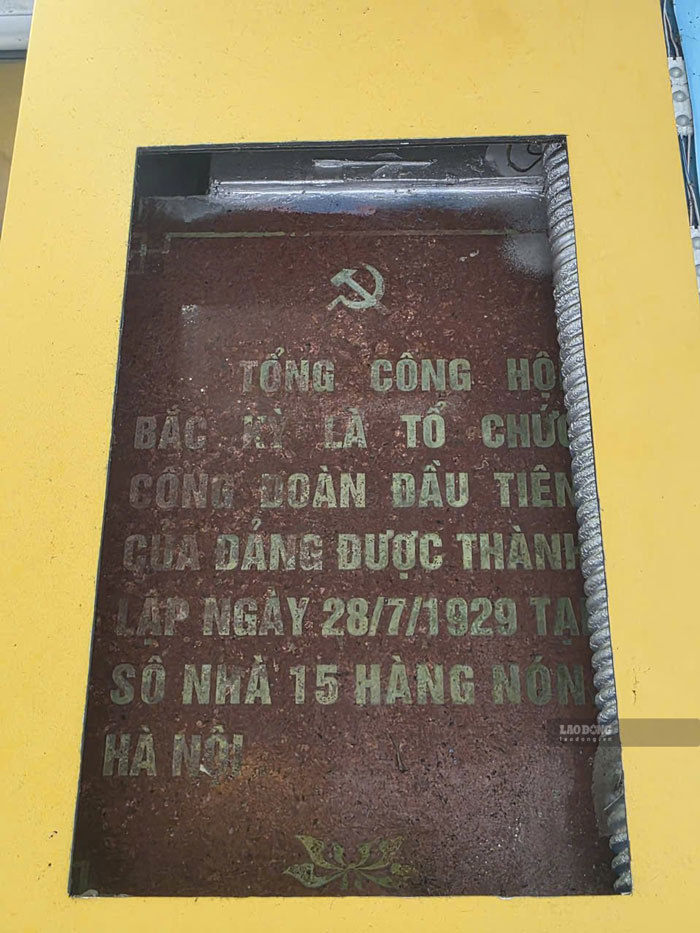
I approached, slowly reading each line of text
Rainwater follows the porch, along the small billboards down to the road surface. Pedestrians huddle close to shops, vehicles line up to crawl through the narrow street. The house in front of my eyes blends into the daily trading rhythm of the Old Quarter, but still carries a story that lasts for nearly a century.
Also at this address, in 1929, a conference of special significance for the Vietnam Trade Union organization and Lao Dong Newspaper took place.
On July 28, 1929, house number 15 Hang Non, then Thuan My Tao Medicine Store. Here, 7 delegates attended the Conference to establish the Bac Ky Red General Confederation of Labor chaired by Comrade Nguyen Duc Canh.
The conference elected comrade Nguyen Duc Canh as interim Chairman and decided to publish a newspaper named Lao Dong.
Standing in front of the house on a rainy day, I tried to imagine the scene of 97 years ago. It is impossible to know whether it was sunny or rainy that day, whether the room where the conference took place was morning or evening, how long the participants sat together. I only know that, from the small house in the middle of Hang Non street, the name of a newspaper for workers and laborers was chosen.
Perhaps in the context of secret operations, when all conditions are difficult and dangerous, what they think of first of all is how to raise the voices of workers.
Pages printed from clay
From the decision at Hang Non until the first issue of Lao Dong Newspaper was born, it was only more than half a month. According to recorded documents, journalism work was carried out at a small house in Thong Phong alley, at the beginning of Hang Bot street, Hanoi.
Calling it journalism, but at that time there was no newsroom with rooms full of tables and chairs, no printer running evenly at night, and no large team of reporters and editors.
The first workers of Lao Dong Newspaper had to take care of everything themselves. They wrote articles, prepared paper, found ink, made molds, printed newspapers and then transferred the newspapers to Trade Union organizations and workers. All took place in secret conditions, when even a mistake could cause the establishment to be discovered.
The printing mold at that time was made of clay. The letters were written with thick purple ink, pressed onto the mold surface. After the ink soaked into the soil, each piece of paper was placed on top, gently squeezed to get the letters.
I once stopped quite a long time before that detail in the documents.
Clay is originally a normal material, which can be found on a rice field or a damp soil. But in a small house in Thong Phong alley in 1929, clay became a printing mold for a newspaper.
Each page of paper is lifted, carrying purple ink and the voices of workers living under mines, in dark factories, by hot coal furnaces or on dusty wharves.
On August 14, 1929, the first issue of Lao Dong Newspaper was published.
The newspaper has only 2 pages, small size. Each newspaper is the result of handwritten strokes, a clay mold and the perseverance of journalists in extremely deprived circumstances.
In 1929, Lao Dong Newspaper published 4 issues. The first three issues were printed in clay molds, and the fourth issue was printed by a staging machine.
In the book 95 years of Lao Dong Newspaper, it is written that issue 4 dated November 1, 1929, printed by a stagger, had improved spelling. On the banner page 1, there are two inscriptions. On the left: Laborers who want to be liberated must do it themselves. On the right: O craftsmen, if you want to reclaim your rights, you must join the trade union.
Those newspapers not only carry news.
It helps workers at one factory know that at another factory there are also people fighting. It connects voices divided by factory walls, roads and distances between localities.
A thin newspaper, printed with purple ink, carrying the desire to gather a growing force.
A name that goes through 97 years
From house number 15 Hang Non to Thong Phong alley is not a long distance. But that is the journey from a decision to the first newspaper pages. At Hang Non, the name Lao Dong Newspaper was chosen. In Thong Phong alley, that name first appeared on paper printed from clay molds.
Clay molds and staging machines have receded into history. Today's news can be written, edited and delivered to millions of readers in a short period of time. Lao Dong Newspaper not only has print newspapers but also online newspapers, images, videos, audio and many other forms of transmission.
But amidst many changes, the name Lao Dong remains the same. That name refers to the place where the newspaper started. Not from a large headquarters, but from a house on Hang Non street and a secret newspaper place in a small alley.
People and vehicles still pass by. Rain still falls on the old roofs. Life in the Old Quarter continues to flow, and traces of history are quietly present on the walls of the house.
On August 14, 2026, Lao Dong Newspaper celebrated 97 years of publishing its first issue. The pages of purple ink newspapers of the past have receded into history. But the question raised from the day the newspaper was born is still there: How are workers living, what difficulties are they facing and how should their voices be conveyed?
That is also the question that every person working for Lao Dong Newspaper today must continue to answer with their trips and each page of their writing.


