Fact in Dak Lak: There is money but it is difficult to disburse
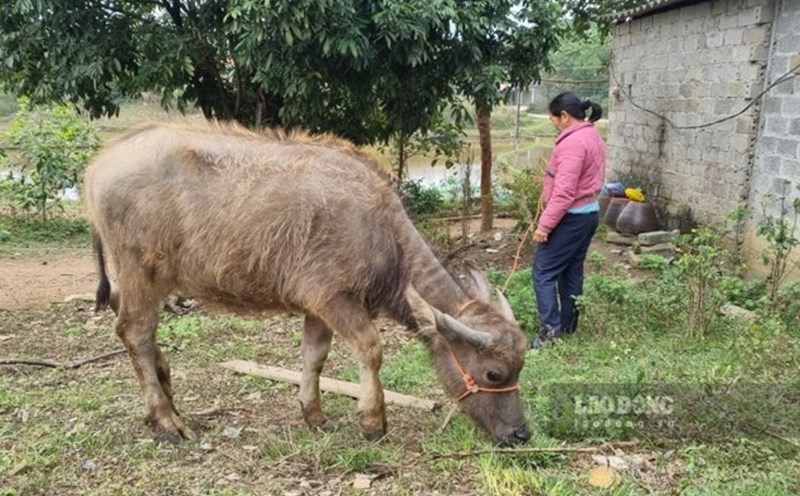
In 5 years of implementing 3 National Target Programs (NTPs) - new rural construction, sustainable poverty reduction and socio-economic development in ethnic minority and mountainous areas - Dak Lak has received a large amount of resources, with nearly 100% of the capital plan allocated. However, the process of bringing policies to the people is still slow, even stuck at many stages. Many localities have to propose capital transfers, many items cannot be implemented on schedule, and many people have not been able to fully access the support they should have enjoyed.
According to the Dak Lak Provincial Department of Finance, the total career capital of the 3 National Target Programs for the period 2021-2025 (including the transfer to 2025) is more than 837 billion VND. This is an important resource for vocational training, production development, infrastructure construction and livelihood support. However, worryingly, the disbursement rate of many items is still below 50%, lasting from 2023 to 2024 and continuing to 2025.
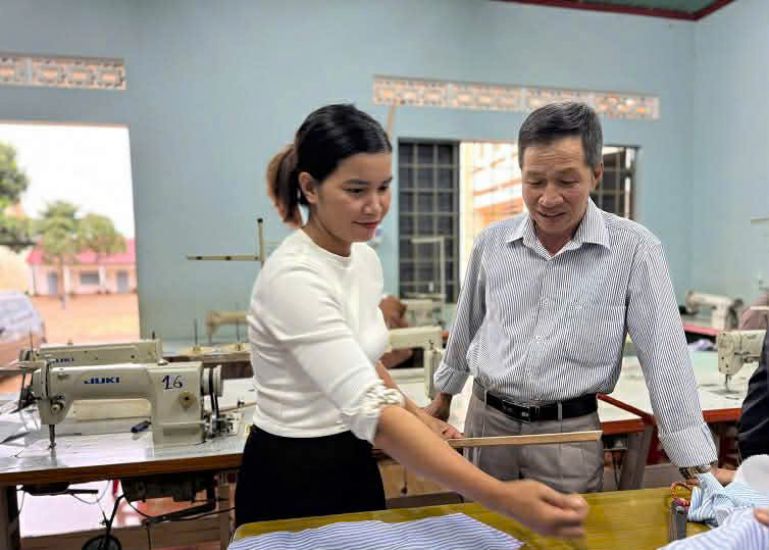
At the M'Drak Vocational Education and Training Center, many vocational training classes for people cannot be opened due to... lack of students for the right subjects. "People who want to study are not poor or near-poor households, so they are not supported", said Mr. Vo Thanh Huong, an officer of the Center for Vocational Education - Continuing Education of M'Drak. Teachers are mainly contract workers, without stable benefits; vocational training equipment is lacking, having to be hired, causing the quality of training to not be guaranteed.
Similarly, the Krong Nang Vocational Education and Training Center, despite being allocated billions of VND, has not been fully utilized. The reason is that the beneficiaries are overlapping and limited, with the regulation that "each person can only study one profession", and the funds are only allowed to be used for training activities - equipment cannot be purchased or facilities can be repaired. By 2024, the unit had to request a transfer of more than 7 billion VND because it could not disburse.
As a result, people - especially ethnic minorities and vulnerable groups - are slow to access policies. Vocational training institutions lack equipment; grassroots cadres "carry" too many jobs, while the instructions of the programs are constantly changing.
Integrating 3 National Target Programs into a single program
Typical examples of Dak Lak show that maintaining 3 programs with 3 processes, 3 sets of records and 3 separate management systems is clearly showing inadequacies.
At the National Conference to summarize the results of the implementation of the National Target Program for Socio-Economic Development of Ethnic Minorities and Mountainous Areas for the period 2021-2030 held in mid-August 2025, Politburo member and Prime Minister Pham Minh Chinh stated that the implementation of the National Target Program is still cumbersome, with many levels, without specific decentralization and delegation of authority, so the money cannot be disbursed.
When resources are divided into smaller and dispersed, creating strong changes in livelihoods, infrastructure or the quality of human resources becomes difficult. It is the people - the group that should have been given the most priority - who suffer the most.
In the October 2025 meeting, Politburo member and Permanent Deputy Prime Minister Nguyen Hoa Binh proposed the policy of integrating 3 National Target Programs (New Rural Development Program, Sustainable Poverty Reduction, Socio-Economic Development in Ethnic Minorities and Mountainous Areas) into a unified program, on the important principle: not abandoning any goals, objects or policies approved by the National Assembly.
According to the policy proposed by the Government, the total capital to implement the program, phase 1 (2026 - 2030) is expected to be about 1.23 million billion VND. Currently, the central budget directly supports about VND100,000 billion, accounting for 8%. During the implementation process, the Government continues to balance the central budget to prioritize additional support for the program in accordance with actual conditions. Local budget capital is VND 400,000 billion, accounting for 40% and capital is integrated from national target programs, other programs and projects, policy credit capital, corporate capital and mobilized contributions from the community and people.
In phase 2 (2031-2035), based on the implementation results of the program, the Government will submit to the National Assembly to decide on implementation resources. The general goal of the program is to build modern, substantial new rural areas, associated with urbanization and climate change adaptation; ensure national defense, security and social order and safety, especially in strategic, border and island areas.
Deputy Minister of Agriculture and Environment Nguyen Hoang Hiep stated that the merger of 3 programs into one does not reduce policies, but helps to focus more on ethnic minority mountainous areas in the coming time, focusing on increasing investment in disadvantaged areas, ethnic minority and mountainous areas by 2035.
According to the National Assembly deputies, the integration of the 3 National Target Programs is very clear. First of all, the policy will reach the people faster. When there is no need to separate the three programs, those who need to learn a trade and change their livelihood are no longer bound by rigid administrative criteria.
Vocational training is "unlocked" when centers can flexibly use funding to purchase equipment, repair facilities or open classes to meet market demand. Currently, many expenses are "cked" according to each program, causing units that want to teach vocational training to... not have enough material conditions to teach.
In particular, the resources are concentrated large enough to create real changes. A unified program allows localities to reduce dispersation and prioritize capital for urgent issues: clean water, roads, vocational training, digital transformation, and production development. When resources are not divided into small amounts, investment efficiency is immediately increased.
The Government has clearly stated that all goals, subjects and rights of the people will remain the same until 2035. Only overlapping content is removed to streamline procedures and increase efficiency. Support for livelihoods, production, vocational training, and essential infrastructure will continue to be fully maintained.
The biggest difference lies in the policy road to the people. From three small, disjointed crossings with many bottlenecks, it will become a unified, smooth main route, helping people access support faster and more substantially.
Speaking at the discussion session at the National Assembly on November 25 on the investment policy for National Target Programs related to education and training, health care, population and development for the period 2026 - 2035, General Secretary To Lam affirmed that culture, health and education are important pillars of society. This is not only a goal but also a driving force for human resource development - one of the three breakthrough focuses. Human resources must be healthy, have courage, thinking, knowledge and enlightenment.
The General Secretary noted that the name "national target" reflects the responsibility of the whole society, not limited to one sector. However, he noted that there are currently many overlapping National Target Programs, dispersed resources, many projects, many management boards, taking time but the results are not as expected. Therefore, it is necessary to review the scope, avoid duplication, and clearly identify the host agency.
Opinions of National Assembly deputies
National Assembly delegate Trinh Xuan An (National Assembly Delegation of Dong Nai Province): The problem of duplication and policy integration is a bottleneck. He suggested considering transferring content related to education and health to the National Target Program for Specialized Sectors to avoid difficulties in integrating and determining responsibilities.
National Assembly Deputy Nguyen Thi Suu (Hue City National Assembly Delegation): It is necessary to assess the impact of the merger plan on the following versions and the management of provincial and commune-level programs. Regarding the figure of 400,000 billion VND in local budget capital, it is not feasible. The Government is requested to explain the basis for calculating this detailed figure of VND400,000 billion, attaching an allocation table for specific provincial groups (such as mountainous and plain groups) to have a more realistic view.
National Assembly Deputy Tran Thi Kim Nhung (National Assembly delegation of Quang Ninh province): The Government has unified the target set at three levels to create a more reasonable roadmap. Accordingly, the mandatory target is to meet the minimum basic service for the poor, the target is to strive to achieve the same compared to the pilot plan and target to apply to new contents". Cao Nguyen - Pham Dong scores