Hoping the canal will be renovated, worrying about housing after clearance
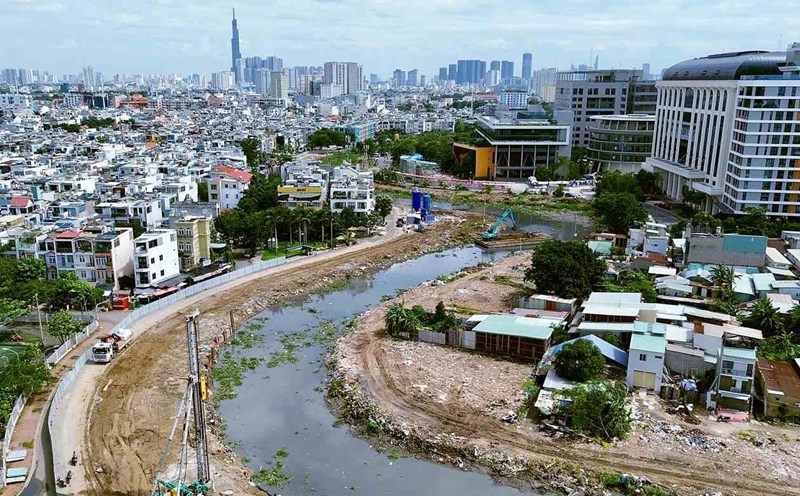
Van Thanh canal is about 1.5 km long, connecting from Dien Bien Phu bridge to the Nhieu Loc - Thi Nghe canal junction. Recorded on December 29, the black water surface of the canal was densely packed with domestic waste, with a strong stench rising. Many waste floats in the middle of the polluted water.
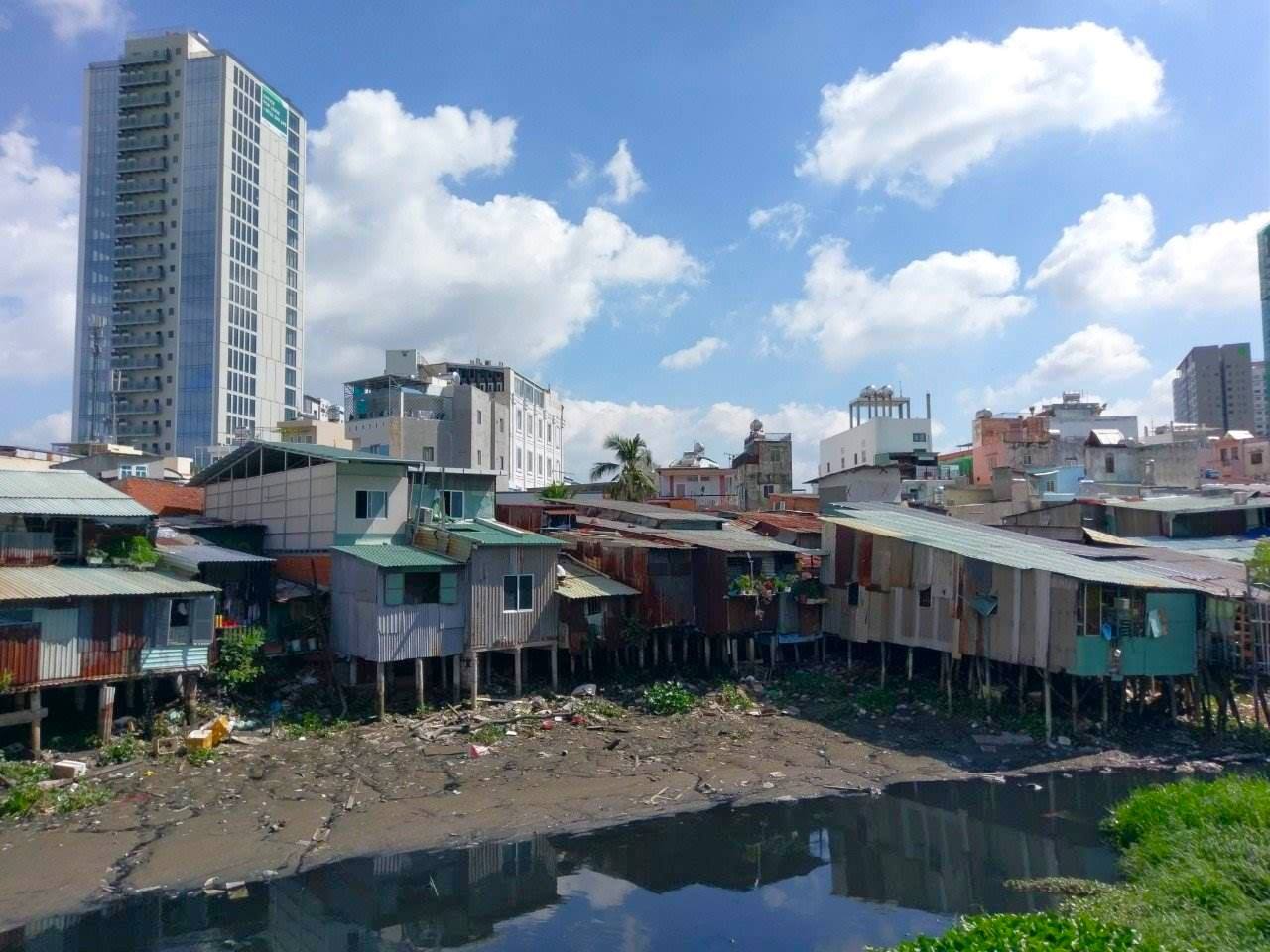
Along both sides of the canal are dilapidated houses with corrugated iron roofs, wooden walls, temporarily erected on skewed wooden piles.
Just a few dozen meters away are luxury apartment complexes on Ngo Tat To street and Metro Line No. 1 (Ben Thanh - Suoi Tien) modern running through.
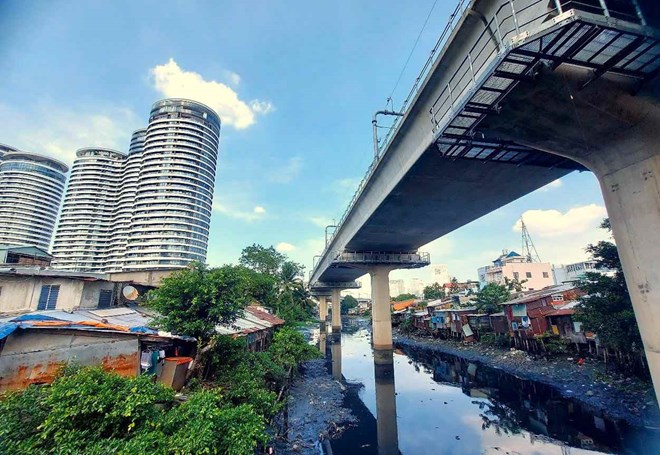
The Van Thanh canal renovation project was approved for investment policy by the Ho Chi Minh City People's Council in June 2025, with a total investment of more than 8,555 billion VND, deployed in the period 2026 - 2029.
In which, compensation, support and resettlement costs are more than 6,812 billion VND. The project will recover land from 1,077 cases, of which 749 households must be completely relocated.
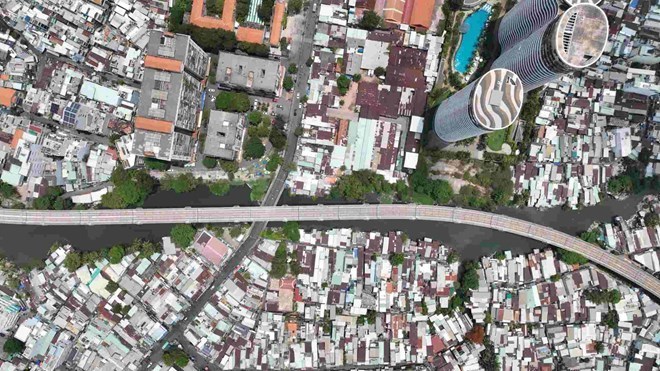
Many households living along Van Thanh canal expressed their joy when they are about to leave the polluted and degraded area. However, what worries them is whether the compensation level is enough to buy new houses or not, and whether the resettlement area is near or too far from the current livelihood.
Ms. Nguyen Thi Lieu (62 years old), who has lived here since 1990, said that her house of about 25 m2 is the living place of 5 members. Life along the canal is always suffocating because of the stench rising from the polluted water. "But we still have to live here because there is no other place" - Ms. Lieu shared.
According to Ms. Lieu, people all hope that the canal will be renovated soon and the living environment will improve. "I only hope that when implementing the project, the government will have a satisfactory compensation plan, enough for people to have a better new place to live and stabilize their lives" - Ms. Lieu said.
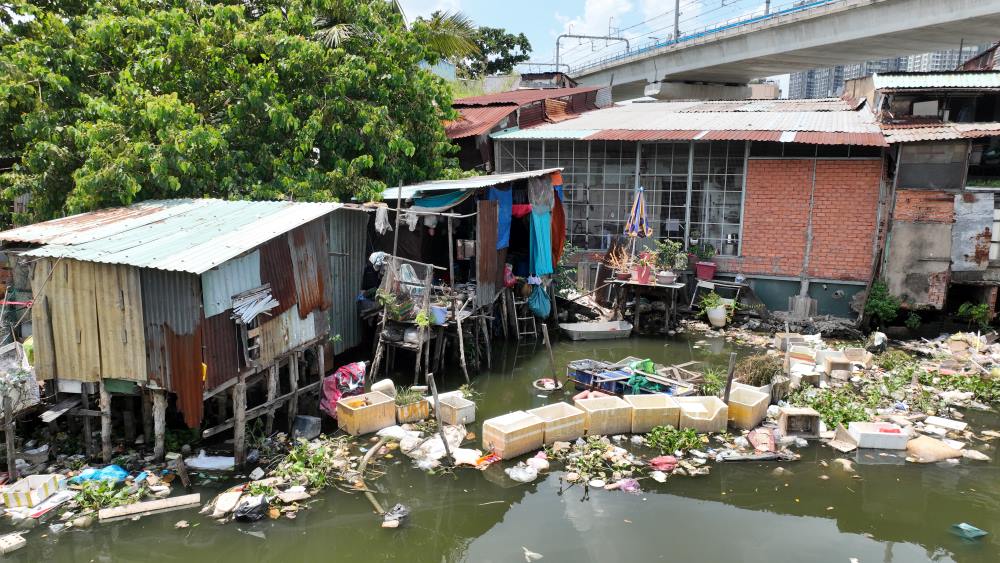
And Mr. Nguyen Dinh Khanh (65 years old), who has lived along Van Thanh canal for more than 40 years, said that the house he bought only has handwritten papers. "Looking at the tall buildings springing up, Metro Line 1 is completed, I just hope that one day the lives of people along the canal will also improve" - Mr. Khanh said.
However, Mr. Khanh is concerned that the lack of legal documents will make the compensation money not enough to buy resettlement houses. "If I get support, I hope to be resettled soon. Moving to a remote area is very inconvenient for my children to go to work," he expressed.
More than 5,800 households along the South bank of Doi canal await relocation
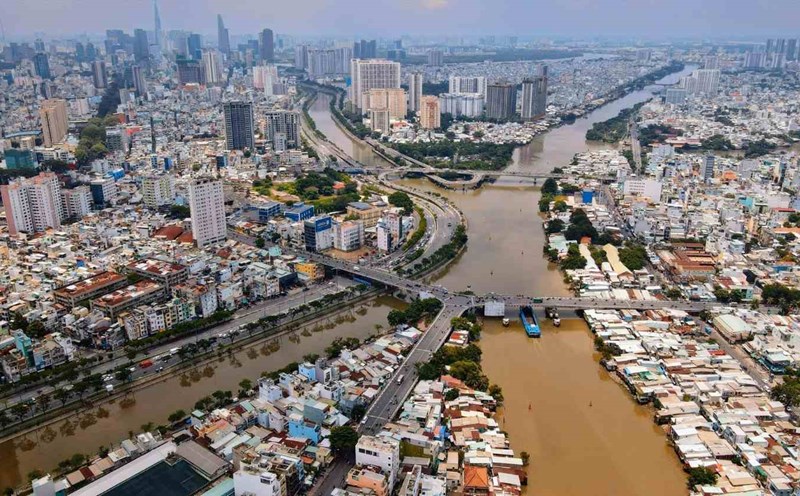
More than 10 km from Van Thanh canal, about 5,800 households living along the South bank of Doi canal, belonging to Chanh Hung and Binh Dong wards (formerly District 8), are also waiting for the relocation day.
Most of the houses here are temporarily built on wooden piles along the canal, the floors are precarious, and the wooden walls are rotten over time.
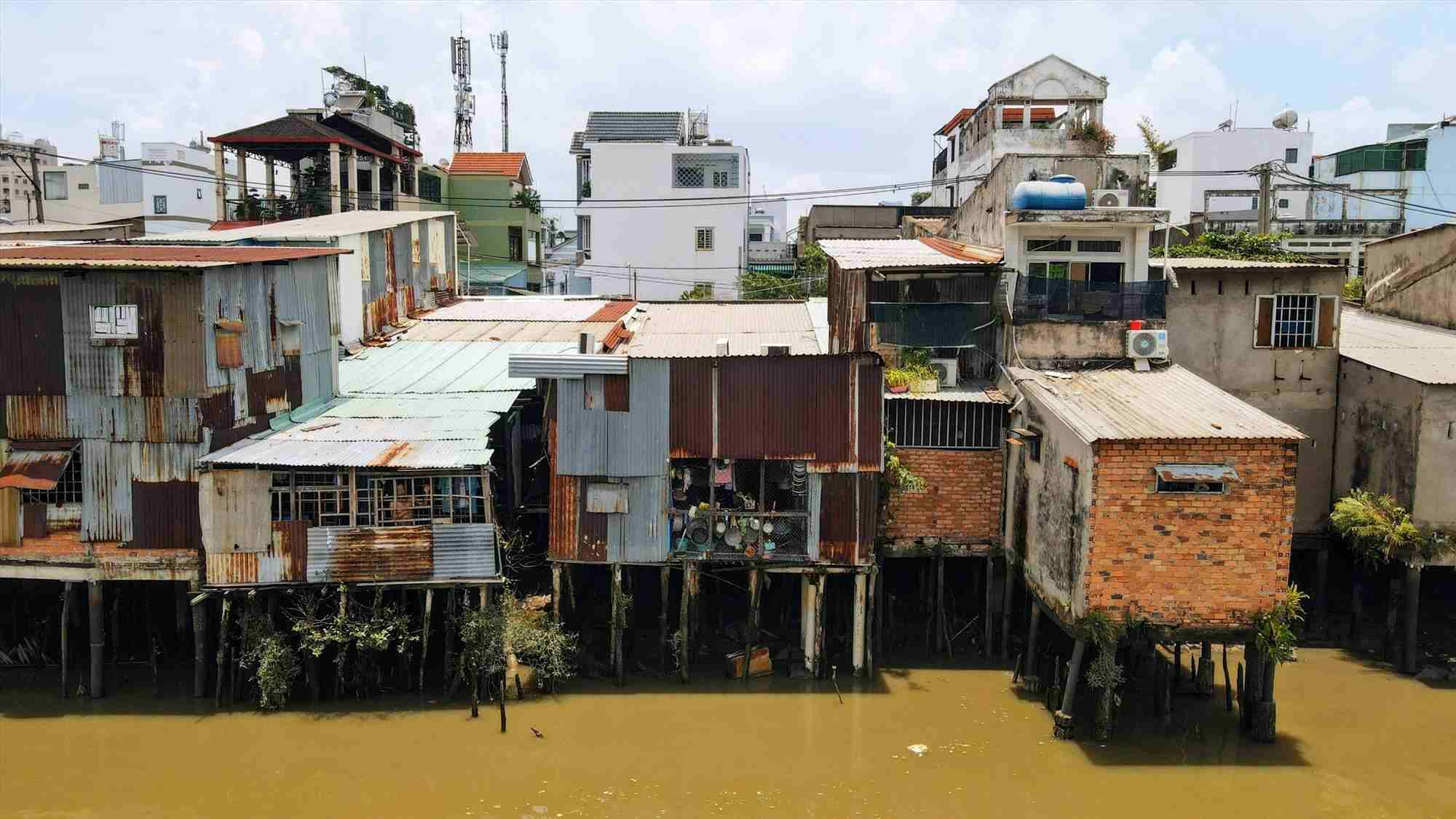
Mr. Nguyen Tan Binh (61 years old), who has lived on the south bank of the Doi canal for 36 years, said that his family is willing to leave if the support level is enough to buy a new place to live. The 28-m2 wooden house, temporarily roofed with corrugated iron, is currently home to 6 people.
The house has seriously deteriorated, the wood is rotten, moldy, and can collapse at any time. If compensation is better, I plan to go to Duc Hoa (Tay Ninh) to buy a small house to retire" - Mr. Binh said.
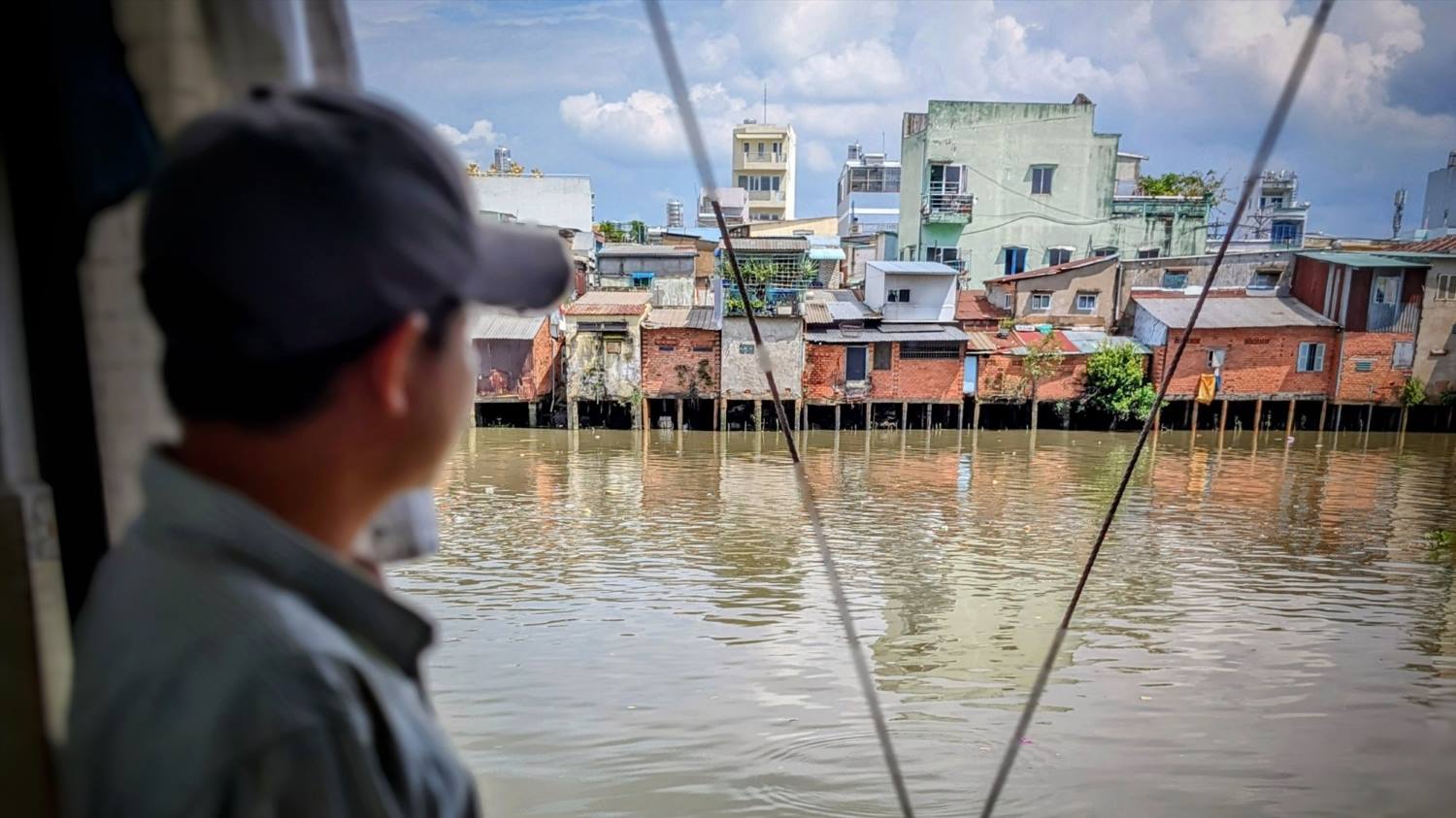
Living next to Mr. Binh's house, Ms. Nguyen Thi Oanh (63 years old) said that her family came to the Doi canal area in 1974, when this place was still vacant land. To have more living space, her family planted stakes encroaching on the canal bed to make a kitchen and toilet.
We have heard information about canal renovation for many years and also hope to be relocated. But the compensation money must be enough to buy resettlement slots. My husband and I are both old, working manual labor, and are raising two orphaned grandchildren, so all hope is based on compensation," Ms. Oanh shared.
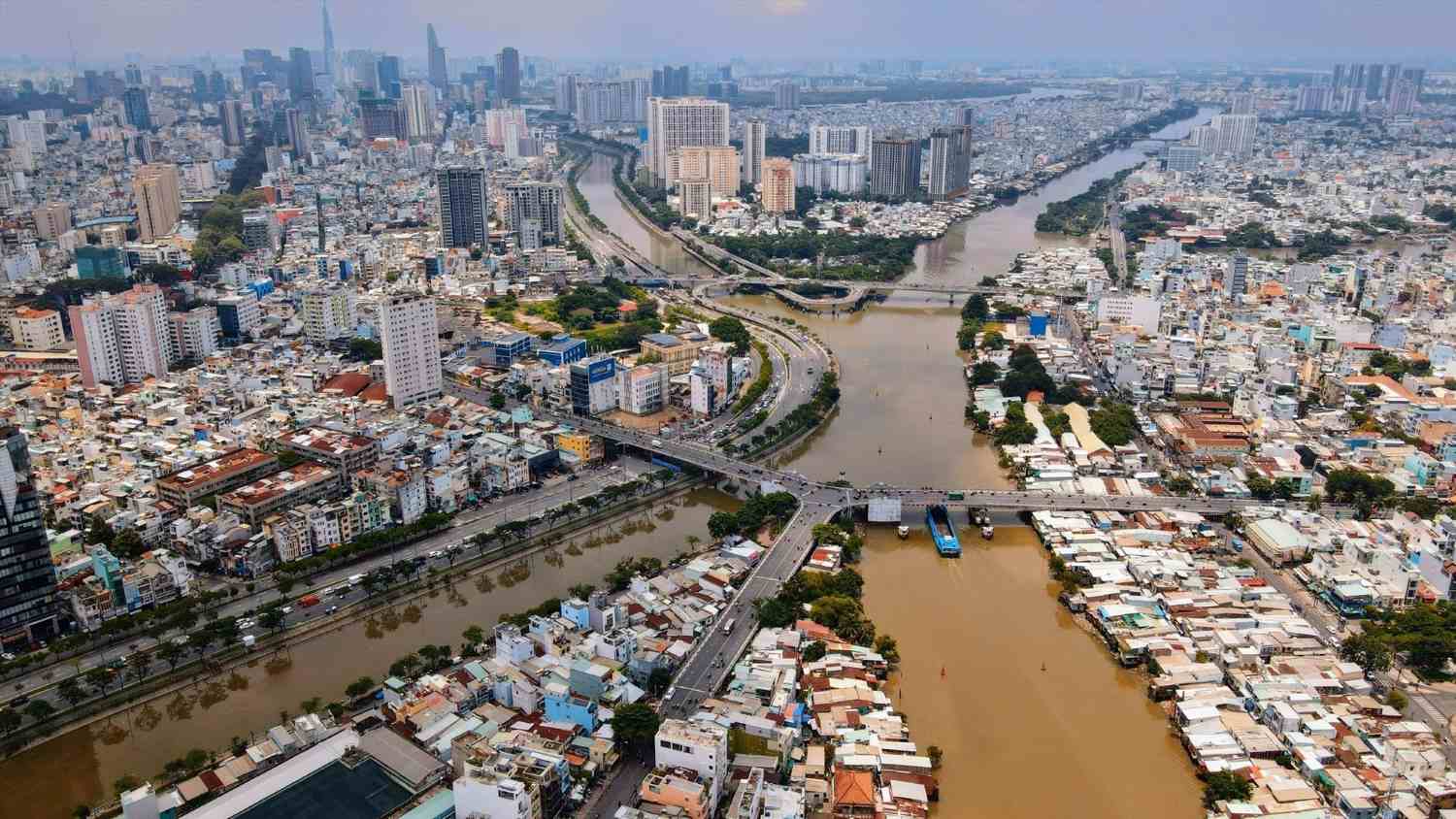
According to the plan, the project to renovate the south bank of the Doi canal is divided into 4 projects, implemented in the period 2026 - 2029. In which, the section from Rach Ong bridge to Mat bridge is expected to clear 860 houses, with a total capital of more than 5,400 billion VND; the section from Mat bridge to Hiep An bridge needs to be relocated 2,042 houses, with a capital of more than 10,000 billion VND.
In Binh Dong ward, the section from Hiep An bridge to Ba Tang bridge is expected to relocate 1,278 households, with a total capital of nearly 9,600 billion VND; the section from Ba Tang bridge to the south bank of the Doi canal needs to clear 1,627 households, with a total investment of more than 10,000 billion VND.
Relocating 20,000 houses along canals before 2030
According to the Ho Chi Minh City Department of Construction, the city currently has 398 rivers, canals, and ditches that have not been renovated, with about 39,600 houses that need to be relocated.
Ho Chi Minh City sets a target to complete the relocation of 20,000 houses along rivers, canals, and ditches by the end of 2030 to improve the quality of life of people, improve the environment, combat flooding and urban embellishment.
To achieve this goal, the city determines to synchronously implement compensation and resettlement support, associated with urban embellishment along both banks of rivers, canals, and ditches. In which, priority is given to canal routes passing through many wards, playing a connecting role in the area, especially canals and ditches in District 8 (formerly).