
The above information was given by Mr. Le Ngoc Linh - Deputy Director of Ho Chi Minh City Department of Construction - at the Workshop on flood control and drainage in urban development; solutions to implement targets on urban wastewater collection and treatment by 2030, held on the afternoon of September 15.
According to Mr. Le Ngoc Linh, after the merger, Ho Chi Minh City will have an area of about 6,778 km2, the terrain and hydrological regimes between the areas are very different. The whole city is divided into 23 main basins.
Ho Chi Minh City is increasingly clearly affected by extreme weather, high tides, sea level rise and land subsidence. Meanwhile, some previous plans are no longer suitable; the system of canals, drainage ditches and pumping stations is not synchronized, making the ability to control and allocate space for drainage limited.
After expanding administrative boundaries, Ho Chi Minh City currently has 159 frequent flooding points, including 76 points in the old Ho Chi Minh City area, 52 points belonging to the old Binh Duong and 31 points belonging to the old Ba Ria - Vung Tau.
To solve this situation, in the period 2026 - 2030, Ho Chi Minh City is expected to complete 87 projects with a total investment of about 140,000 billion VND, aiming to basically solve 50 flooded locations in the area.
In which, the Ho Chi Minh City area previously had 34 locations, Binh Duong previously had 9 locations and Ba Ria - Vung Tau previously had 7 locations.
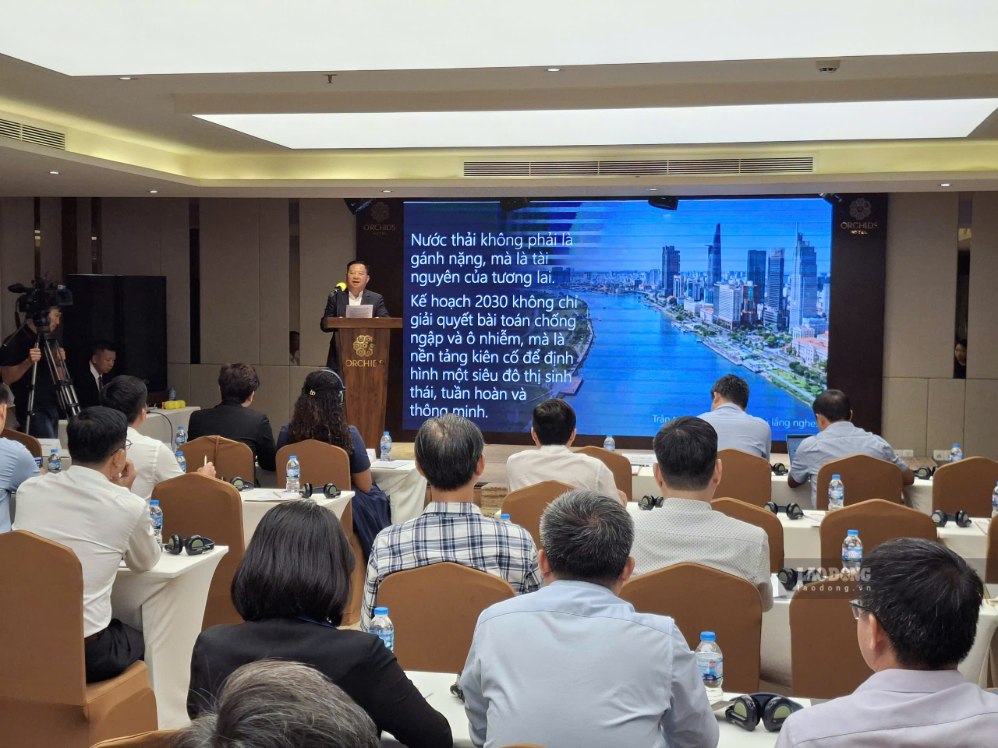
According to the leader of the Ho Chi Minh City Department of Construction, flood control in the coming time needs to shift from handling each point to overall management according to the basin.
Solutions must take into account extreme rain, high tides, sea level rise, land subsidence, urban planning and water storage space.
The city also aims to combine traditional drainage works with green infrastructure, regulating lakes, water storage spaces and natural-based solutions. Along with that is the application of digital data, forecasting and warning technology to improve management efficiency.


