
Late-lit windows at offices in Ho Chi Minh City
After merging 4 wards, Tan Hung Ward People's Committee had to handle a sharply increased workload. When the citizen reception area had turned off the lights, many offices inside the headquarters were still lit for officials to complete dossiers.
Ms. Nguyen Ngoc Thuy Giang - specialist of the Department of Culture and Social Affairs of Tan Hung ward, said that the unit takes on more tasks, including preparing dossiers, paying allowances to people with meritorious services, social protection, funeral support, and tuition fee exemption and reduction.
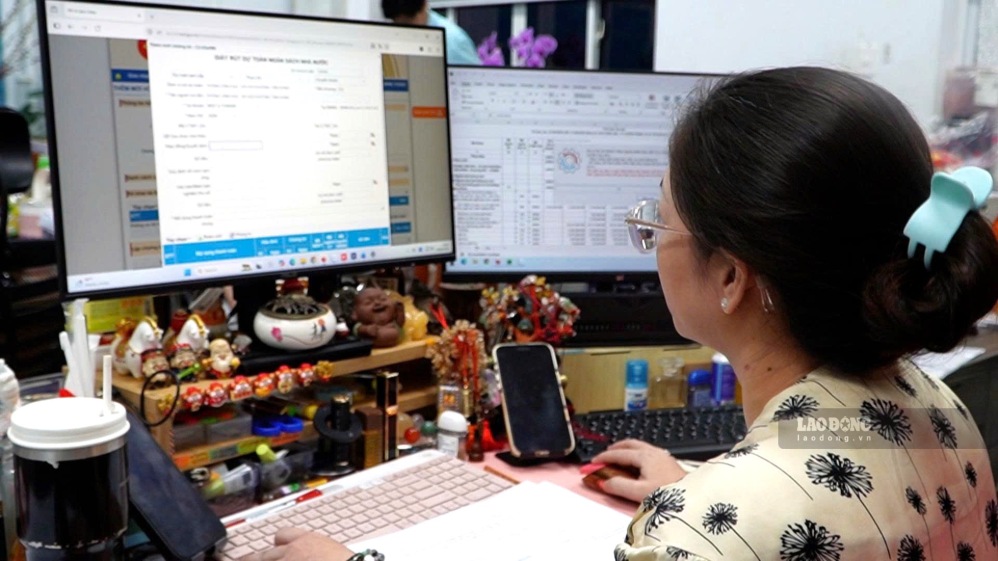
During peak periods, more than 1,000 people receive allowances, officials must review dossiers, submit signatures, update data to the State Treasury and organize payments, even directly to elderly people without accounts.
The workload makes Ms. Giang and her colleagues often work until 9 pm - 10 pm, at times closing financial books for nearly 11 pm to ensure timely payment.
Mr. Truong Thanh Tu - Director of the Tan Hung Ward Public Administrative Service Center said that the unit arranges 8 counters with 10 personnel, but officials still regularly work overtime. During the day, they focus on guiding and receiving dossiers; after receiving citizens, they process, enter data and return results.
In the certification stage alone, there are about 500 - 700 signatures per day. Large dossiers of businesses often have to be processed outside of working hours. In some cases, officials even come to houses to certify for the elderly and people with weak health after completing work at headquarters.
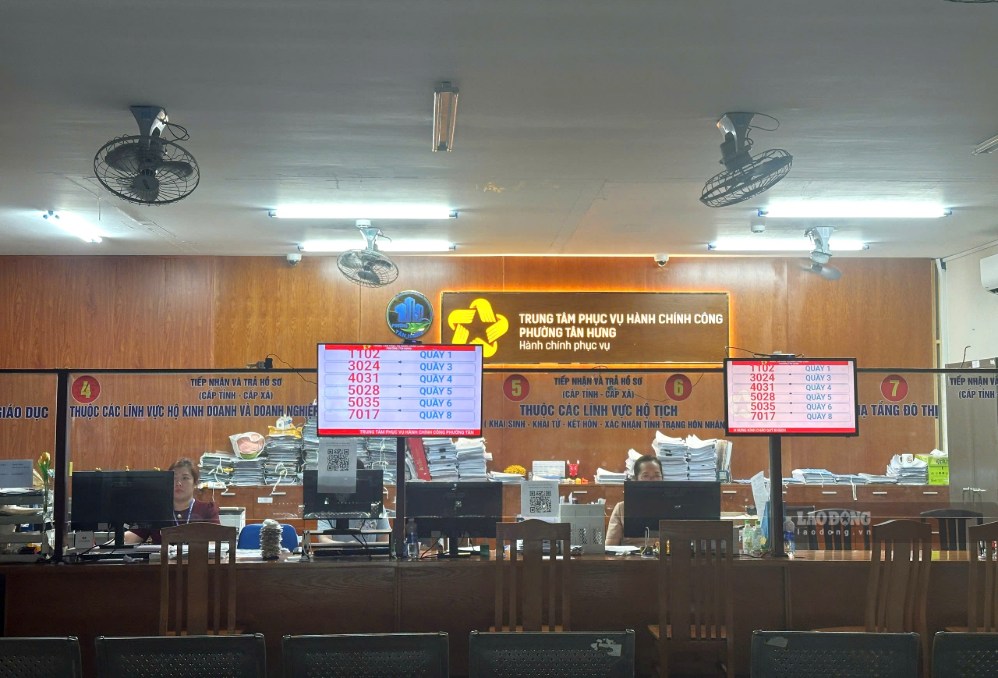
After the merger, Ho Chi Minh City has more than 11,600 people working at the stages of resolving administrative procedures under departments, branches and People's Committees of wards, communes, and special zones.
A survey by the Ho Chi Minh City People's Committee shows that 56% of civil servants and public employees directly handling dossiers have to work overtime, an average of 30 - 40 hours per month, including evenings, Saturdays and Sundays. In some agencies, more than 90% of personnel have to work overtime, with over 100 hours per month.
People have more choices, no more "second doors
Ho Chi Minh City is drafting a Resolution of the City People's Council on the mechanism for socializing professional and nghiệp vụ activities to support the settlement of administrative procedures, in order to be ready to implement the Urban Development Law immediately after it is passed by the National Assembly.
According to the draft resolution being developed by Ho Chi Minh City, organizations and businesses can participate in stages such as supporting people to complete dossiers, digitize papers, standardize data or some technical work under the supervision of state agencies.
Administrative power stages such as appraisal, decision, and approval still belong to the authority of public authorities.
This mechanism is expected to prioritize areas with large dossiers such as land, construction, investment, business registration and civil status.
According to Dr. Tran Quang Thang - Director of the Institute of Economics and Management of Ho Chi Minh City, if designed appropriately, socialization can help reduce the burden on officials, while reducing waiting time and the number of trips for people and businesses.
Instead of spending a lot of time on technical work, state officials can focus on core stages such as appraisal, decision-making and be responsible for the results of dossier resolution.

However, Mr. Thang noted that socialization should not be turned into an intermediate level, causing people to feel that if they want their dossiers to be resolved quickly, they must use the service. "This should be absolutely avoided" - Mr. Thang emphasized.
People must have the right to submit applications directly or online without being required to use support services. Socialization must also not change the authority and responsibility of state agencies.
Another risk is group interests if the selection of service providers is not transparent, or the organization both supports dossier preparation and has the ability to influence the appraisal stage.
Therefore, participating units must clearly meet the requirements for legal status, professional capacity, personnel, technology and data security. The selection needs to be public and competitive, with many units meeting the conditions for people and businesses to choose.
Ho Chi Minh City also needs to publicize service fees, scope of work, committed time, compensation responsibility and feedback channels; and periodically inspect, evaluate quality and remove violating units from the list.
According to Mr. Thang, people must know clearly which procedures are socialized, which stages external units are allowed to do, which parts of work belong to state agencies, and what the costs are.
The city can publicly disclose the quality of the unit based on the ratio of valid dossiers, support time, satisfaction level and number of violations.
Socialization is only truly meaningful when people have an additional convenient choice, not an additional'door' to go through" - Mr. Thang said.


