
Sir, from a growth model based heavily on resources to a green and sustainable development direction, Vietnam is facing many opportunities for green transformation. In particular, the documents of the 14th Party Congress consider environmental protection as one of the key contents, how do you assess the importance of green transformation in the current context?
- Green transition plays a very important role in sustainable development, especially in environmental protection. According to the 7th Global Environmental Outlook (GEO-7) recently released by the United Nations Environment Program (UNEP) at the end of 2025, the world is currently facing 4 major environmental crises, including: climate change, biodiversity reduction, land degradation and environmental pollution.
Scientists believe that the main reason is that environmental protection work in the past was carried out in an isolated manner, lacking systematicity and synchronization, from production to consumption. Environmental protection activities are mainly processing "the end of the pipeline", instead of being deployed throughout and synchronously right from the production, business, consumption and subsequent stages.
In Vietnam, we have been and are implementing many green transition activities. The clearest is promoting fair energy transition, while developing a circular economy and developing ecological, organic, low-emission, circular and sustainable agriculture.
The guidelines and policies on green transformation, especially in the documents of the 14th Party Congress, have been clearly emphasized. Our Party determines that environmental protection must be placed at the center, associated with socio-economic development; and at the same time promote green transformation, circular economy development and low-carbon economy. I think this is a very correct direction and needs to be strongly implemented in the coming time.
In the context that green transformation is no longer an option but has become a mandatory requirement, how do you see the opportunities and challenges that Vietnam is facing, especially when the energy market has just experienced many fluctuations?
- Regarding opportunities, the green transition trend is taking place strongly globally, creating pressure forcing countries to participate. For example, the European Union (EU) sets many trade barriers to imported goods such as the requirement to reduce greenhouse gas emissions through the Border Carbon Regulation Mechanism (CBAM), and the Deforestation Regulation (EUDR). These requirements are both challenges and opportunities forcing us to transform. Otherwise, we will eliminate ourselves from the global market and supply chain.
In addition, our Party has early identified trends and issued timely guidelines and policies on green transformation. Regarding natural conditions, Vietnam has many advantages, especially in the energy sector. As a country located in the tropics, we have advantages in sun and wind to develop renewable energy.
From a geopolitical perspective, such as the recent Middle East conflict, dependence on oil poses many risks. In fact, gasoline and oil prices fluctuate sharply, while electricity prices are relatively stable. People who use electric vehicles, such as electric car drivers, have a clear advantage in the context of rising fuel prices.
Sir, to make green transformation not just stop at slogans or trends, but truly go into life, in addition to the energy sector, what other factors do we need to change?
- Green transformation must be implemented in a systematic, synchronous and comprehensive manner. Not only technology transformation, but also behavior, lifestyle and consumption culture must be transformed. We need to reshape cultural norms and values in society, in which green consumption becomes a common value. Then, the green product market can develop.
For example, organic agricultural products, energy-saving products, electric vehicles... or the transition from gasoline and oil vehicles to electric vehicles - these are all necessary changes.
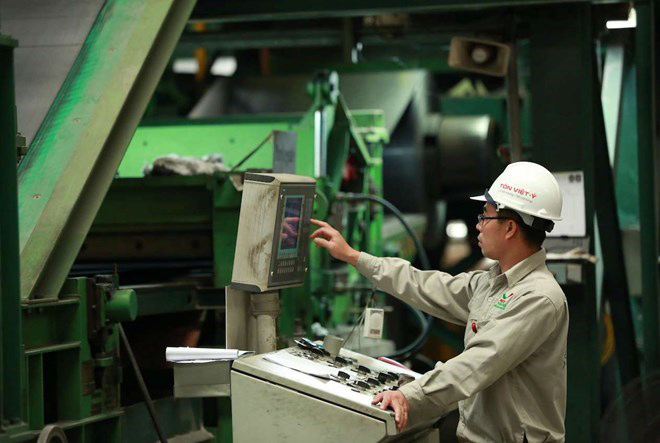
Green transformation must be systematic, not just stop at technology. Besides switching from gasoline cars to electric vehicles, we also need to change culture, behavior, social awareness, especially consumer awareness, from awareness transforming into action in consumption and daily lifestyle. GEO-7 report emphasizes that green transformation needs to be implemented in a systematic, comprehensive, and synchronous manner; technology transformation is closely combined with transformation in culture, awareness, and behavior. Focus on perfecting economic and financial policies to shift investment flows to green economic sectors and fields; create all necessary conditions for green transformation. Develop a circular economy, equitable energy transformation, and responsible sustainable food system transformation.
Sir, green transformation is not just a story of policy or business. So what role do people play, and what habits need to be changed to participate in this journey?
- The community plays an extremely important role in green transformation. People are both the subject and the force that creates demand for green products. From another perspective, through their actions, the community can directly contribute to environmental protection, such as sorting waste at source, saving electricity, saving water, and using environmentally friendly products. These actions help improve environmental protection efficiency, reduce greenhouse gas emissions, and better respond to climate change.
With the role of consumers, when choosing green products, people will promote the development of the green market, thereby creating motivation for businesses and investors to invest in green economic sectors and industries, contributing to promoting synchronous transformation.
When we change behavior and move towards a green lifestyle, in the long run, we will have a healthier living environment. For example, when each consumer chooses a product with a "green label", it means that the manufacturing enterprise has complied with environmental protection standards, saved resources, treated waste effectively and not harmed the environment.
At that time, consumers not only buy products, but also "buy" the quality of the protected environment. Benefits are not only limited to tangible values, but also a better living environment that we ourselves enjoy.
In the context of green transformation and digital transformation being strongly promoted, how do you assess the role and linkage between these two pillars in sustainable development?
- Green transformation and digital transformation can support each other. Digital transformation contributes to promoting green transformation through the application of digital technology in environmental management, environmental protection and climate change response. Thanks to that, these activities become more effective, updated in real time, and help save energy, resources and reduce emissions.
For example, in factories, IoT tools through sensors can track energy and raw material consumption levels by stage, thereby helping to optimize production. In environmental management, a monitoring system connected through a digital platform allows timely detection and warning of pollution.
However, digital transformation also creates certain pressure on the environment, such as the consumption of a lot of energy from data centers. Therefore, it is necessary to take advantage of the benefits of digital transformation to promote green transformation, while limiting negative impacts on the environment by developing renewable energy to provide to data processing centers. In other words, it is necessary to "green digital transformation" and "digital green transformation" so that these two processes accompany and support each other most effectively.
Thank you for your sharing!


