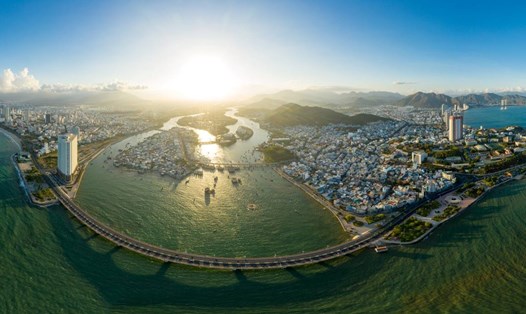
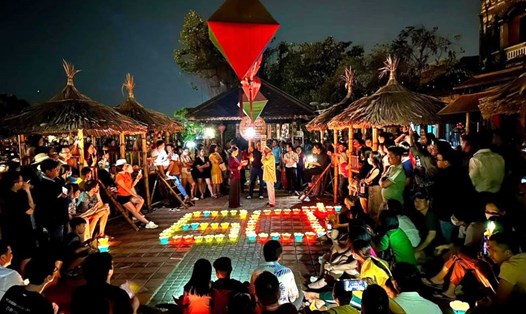
The Standing Committee of the Da Nang City Party Committee has just issued an Action Program to implement Resolution No. 80-NQ/TW dated January 7, 2026 of the Politburo on developing Vietnamese culture.
The program sets out a series of specific goals, from developing the cultural industry, digitizing heritage, to investing in large-scale institutions such as theaters, museums, and cultural centers.
Notably, with a vision to 2045, Da Nang aims to become a cultural - artistic - creative center of the Central region and the whole country, becoming a heritage - creative - culturally rich city, an attractive destination of the world.
This is a big goal, but also an ambitious goal. Because Da Nang's starting point in the field of culture - creativity is still modest. Da Nang has advantages in living environment, infrastructure and tourism, but the cultural industry is still not clearly defined.
Industries such as cinema, music, design, performing arts... have not created a strong enough impression to become a "brand" of the city. Even cultural life still has certain gaps between the central area and the suburbs.
Looking at reality, it can be seen that Da Nang is lacking three core elements.
First, there is a lack of a strong and large enough creative force. The city has not really become an attractive destination for artists, creators, and content businesses. Policies for this force are still limited and have not created motivation for them to stick with it for a long time.
Second, there is a lack of a cultural market that is dynamic enough. Cultural products are not diverse, performance, exhibition, and creative activities are still fragmented, and a value chain from creation - production - distribution - consumption has not been formed.
Third, there is a lack of a complete creative ecosystem. Creative space is still limited, the mechanism for ordering and supporting cultural products is not clear, and the connection between culture and tourism, technology, and education is still not close enough.
From those gaps, the road to achieving the 2045 goal cannot only stop at infrastructure investment, but most importantly, it must invest in people and the creative environment.
Da Nang needs to boldly build specific policies to attract and retain creative people; create open and flexible creative spaces where artists and communities can interact; develop regional and international cultural events to stimulate the market; and closely link culture with tourism to create a real economic flow.
In addition, narrowing the gap in cultural enjoyment between regions is also very important. A creative city cannot only focus on the center, but must spread to each residential area, each community, so that people are both the subject and the cultural beneficiary.
The goal of becoming a cultural - artistic - creative center is a right choice, but it will be difficult to become a reality if it is only based on large projects or quantitative indicators.
To go far, Da Nang not only needs to build institutions, but also must nurture the people who make up cultural life. Because after all, a creative center is not measured by the number of theaters or museums, but by how many people are creating and living by creation every day.